


 Share
Share

Hing or asafoetida, although used in tiny pinches, has been put under a much bigger spotlight by the recent FSSAI move. On August 29, 2026, the food controller issued the Prohibition of Sale orders against Everest Food Products and Laljee Godhoo & Company (LG Brand Unit) after the samples of their compounded hing were found to be substandard. The action was followed by a consumer complaint and subsequent market supervision surrounding major brands. FSSAI said Everest's tested compounded hing samples had only 0–3% alcohol-soluble extract, below the specified minimum of 5%. At the LG unit, samples of raw hing reportedly had 15–32% starch, despite the FSSAI limitation of 1%. The controller has asked both the companies to offer corrective action plans and advised voluntary recalls of substandard products.
The action, however, does not mean that every packet labelled “compounded hing” is substandard. Compounded asafoetida, or hing, is a recognised food type under Indian food regulations. The real question is whether it has the needed amount of raw hing and complies with the specified limits.
What Is Compounded Hing?
Pure or raw hing is the dried oleo-gum-resin that is extracted from the roots and rhizomes of Ferula species. As raw hing is extremely potent and costly, compounded hing is prepared by mixing one or more types of asafoetida with approved ingredients like gum arabic, edible starches or edible cereal flour. This makes the spices easy to powder and use in everyday cooking.
The important difference is that compounding is permitted; failing to meet the benchmark is definitely not. Under FSSAI's specifications, compounded asafoetida must have at least 5% alcohol-soluble extract, whereas the starch in the raw hing that is used for the product should not exceed more than 1%. The rules also ban certain foreign resins, coal-tar dyes and mineral pigments. Here are a few things that you look for while buying the hing and know whether it is compounded or pure:
Read The Label Before Looking At The Powder
The first assessment is very simple: read what you are buying. A compounded product should be recognised as compounded asafoetida rather than being handed off as raw or pure hing. FSSAI also demands packaged powdered spices to be sold in packed boxes, with compounded asafoetida above one kilogram in sealed containers and the labelling needs.
A label alone cannot verify purity, but vague definitions, missing ingredient information or a product that does not clearly determine its category should make you alert. Most notably, don't assume that “compounded” means it is adulterated. It is a legitimate formulation when prepared according to the prescribed standard.
(Credit: Freepik)
Don't Treat Colour As Proof Of Purity
Hing does not have one fixed colour that can be used as a purity marker. Raw asafoetida can appear to be different depending on its form and processing, whereas compounded hing naturally has a distinct appearance because other approved ingredients are added to it. A bright yellow powder, therefore, is not necessarily fake, just as a darker one is not automatically pure.
Colour can help you see whether a product looks unusually different from what you normally purchase. If purity is the concern, the label is more meaningful than judging by the shade of the powder.
Use Aroma To Check Freshness, Not Purity
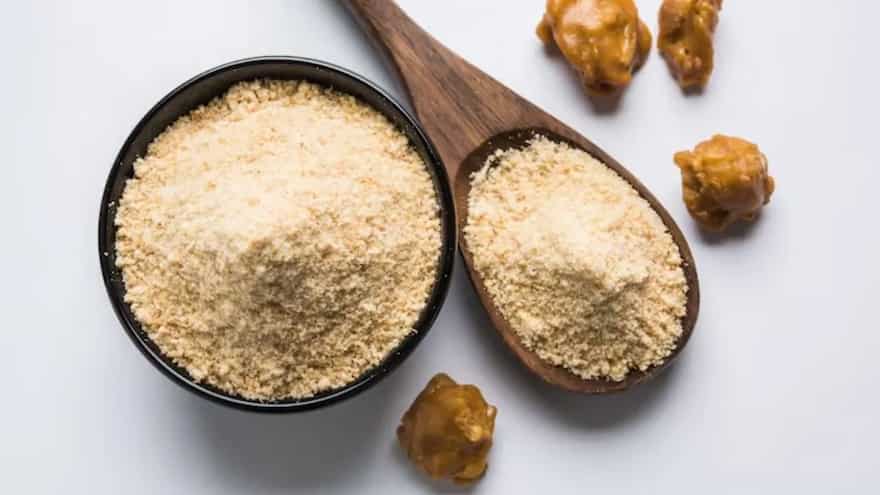
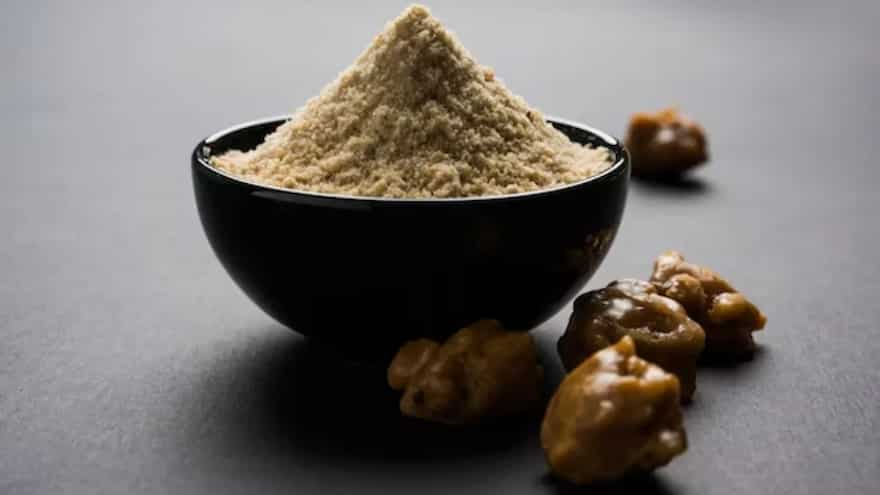
Raw asafoetida resin has to have a resinous, sticky or uneven texture, whereas compounded hing is generally more uniform and is powdery. Compounded products can also appear to be pale yellow, beige or brown relying on the formulation. If you open a packet and find a very fine, evenly textured powder that can be sprinkled easily, it is likely a compounded blend rather than straight hing resin. Colour alone cannot demonstrate the distinction, but texture and the form in which it is sold can give you a useful hint.
Compare How Strongly It Needs To Be Used
Pure asafoetida is extremely concentrated, so only a small amount is usually needed to flavour a dish. Its fragrance is sharp and penetrating even before you begin to cook and becomes stronger when it is heated in ghee or oil. Compounded hing is diluted with other ingredients, so a relatively larger pinch may be required to achieve the same flavour.
This is a useful kitchen hint when comparing products, but it is not a specific test of composition. A strong-smelling powder can still be compounded if it has a sufficient amount of asafoetida.
(Credit: Freepik)
Read “Compounded” As A Product Category, Not A Warning Sign
If the pack especially says “compounded asafoetida” or “compounded hing,” it means the product has asafoetida blended with other permitted edible items. That does not mean it is fake. If the label rather identifies the product as a raw or pure asafoetida blend and lists only the resin, you are purchasing the more concentrated form.
The important distinction is therefore clear: raw/pure hing is equal to asafoetida resin; compounded hing is equal to asafoetida mixed with permitted ingredients.




