


 Share
Share

“Aschhe Bachor Abar Hobe!” - Goodbyes are hard, and Uma leaving Earth to return to Kailash, is known as Dashami among Bengalis. Bijaya Dashami is the day when Bengalis bid goodbye to Maa Durga and wait for the next pujo to arrive. Again, new dresses, new shoes, new plans, and blisters on your feet, the count goes on like 365 days to go!
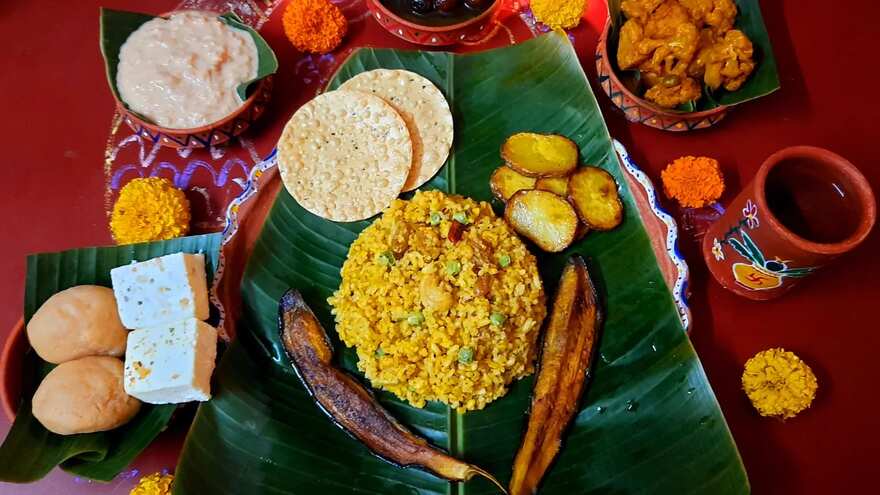
After Navami’s tummy-filling dinner with Kosha Mangsho, luchi, payesh, and overnight pandal hopping, Dashami calls for cooling your stomach and following the rituals.
From offerings to Maa Durga to the dishes shared among loved ones, Bijaya Dashami is as much about the food as it is about the rituals. The variety of food items reflects the diversity and warmth of Bengali hospitality, as families indulge in both traditional sweets and savoury delicacies to bid farewell to Maa Durga and usher in the next year.
The day begins with Sindoor Khela, as women smear vermillion on the Goddess's idol before immersing her in water to end the Puja. Celebrations revolve around food, which connects devotion, tradition, and community.
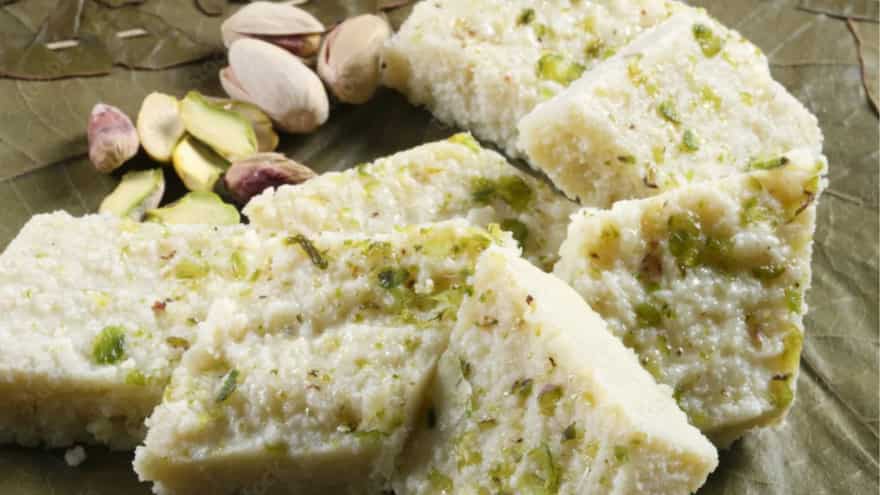
As the Goddess departs, the focus shifts to the food that will be served throughout the day, each dish carrying its own symbolism. In a typical Bengali household, after the emotional immersion ceremony, the Bijaya ritual begins, and that’s when food takes center stage. Traditionally, families exchange Shubho Bijoya greetings, often accompanied by plates of sweets like narkel naru (coconut and jaggery balls) and ghughni (yellow peas in a spiced coconut sauce). These delicacies signify the sweetness of life and the joy of being together with loved ones, even as the festive season ends.
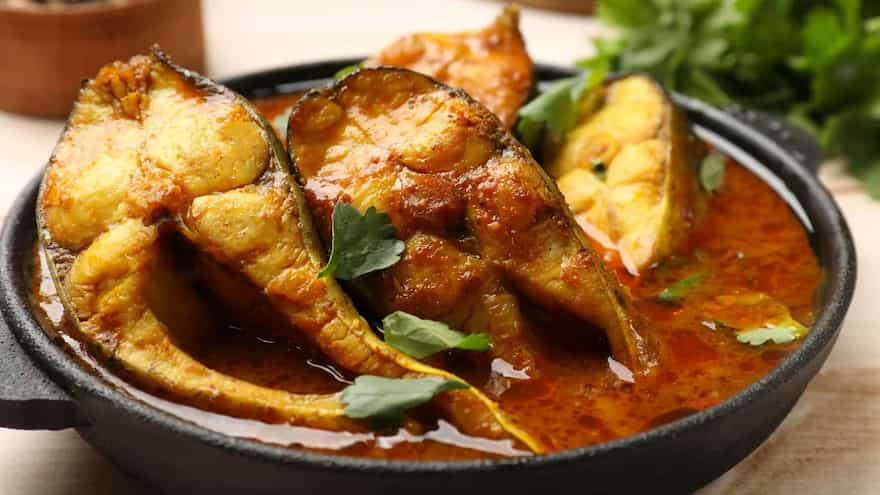
From Jatra Punti. Mourola, to ilish, Dashami is all about reviving the rituals with different traditional food items. Since childhood, our Dashami return from the mandap included the traditional Bijoya greetings. Kolakuli, giving hugs to your dear ones, seeking blessings from the elders, greeting 'Shubho Bijoya' and collecting as many sweets as you can, was more of a competition among cousins.
Originating from East Bengal, I have seen my grandmothers preparing traditional sweets on this day. These sweets include narkel narus with grated coconut and fragrant khejur gur, malpoas soaked in sugar syrup, crisp gojas flaked with crystallised sugar, and sondesh shaped like a conch made with fresh homemade chhana. Roshogolla, Kheer Kodombo, and ChomChoms were bought in large earthenware containers from the local mishtir dokan.
Chef Samita Halder Shares Her Memories Of Bijoya Dashami
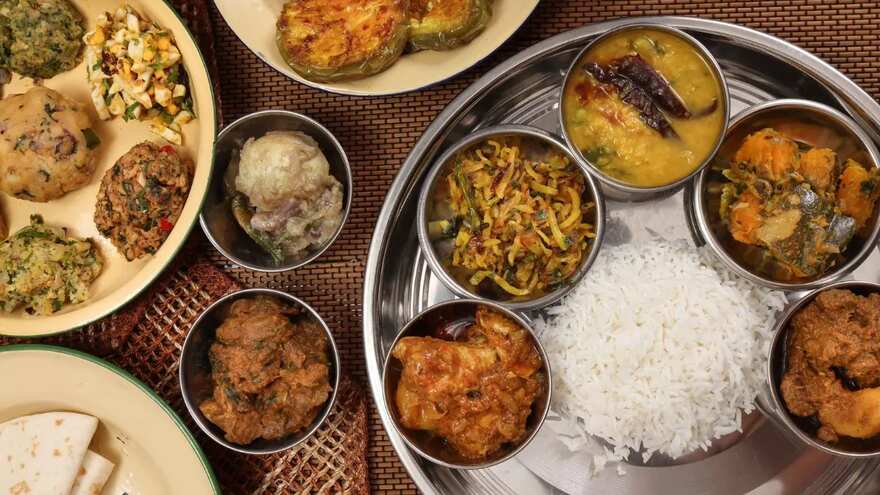
Image Credit: Wiki Commons
Slurrp reached out to Chef Samita Halder, the owner of SamitaCuriousCook, to know more about her memories and the recipes she has been preparing for Bijaya Dashami.
Slurrp: How is Dashami celebrated with traditional dishes in a Bengali household?
Durga Puja ends on Bijoya Dashami with tears, conch shells, and dhaak beats. Families host Bijoya mishti mukh at home after immersion. Homes traditionally smell like ghugni, nimki, narikel naru, chirer pulao, beguni, and sandesh or chamcham. Shubho bijoya greetings and plates of these delicacies are shared between relatives and neighbours over steaming tea. To ease the pain of leaving the Goddess, the food is always simple but celebratory.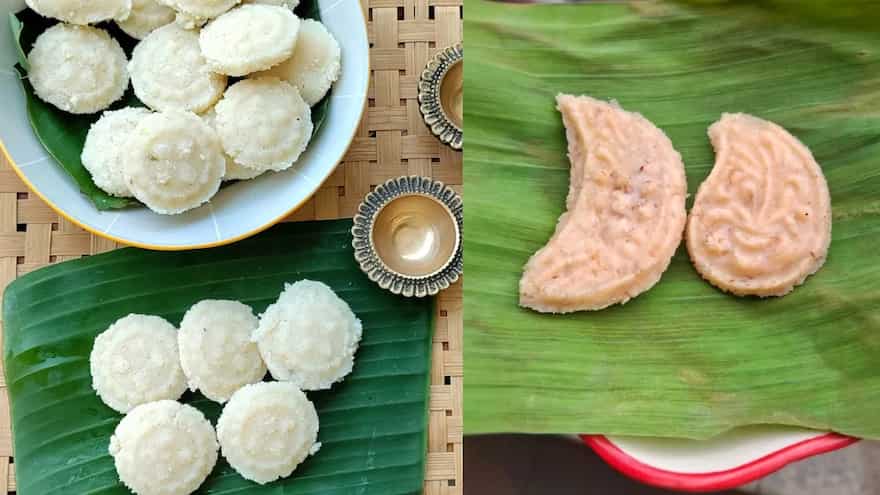
Image Credit: Chef Samita Halder
Dashami Special Spread
On Bijoya Dashami, the one dish that always takes center stage is Niramish Ghoogni—yellow peas simmered till soft, finished with grated coconut and a sprinkle of freshly ground bhaja moshla. Simple, yet so festive.
- The ghoogni is always accompanied by the classics—
- Narkel Naru: coconut and jaggery sweets rolled with love.
- Kucho Nimki: crisp, diamond-cut savouries that balance the sweetness.
Panta Bhat & Kachu Shaag
While Bijoya tables are often filled with sweets and savouries, in many Bengali homes the simplicity of panta bhat (fermented rice soaked overnight) paired with a humble stir of kachu shaag finds a special place. After the indulgence of the Pujo days, this cooling, earthy combination feels grounding—almost like returning to one’s roots.
It’s food that soothes the soul, a quiet reminder of Bengal’s agrarian heart, where even a festive farewell carries the comfort of rice, greens, and memories.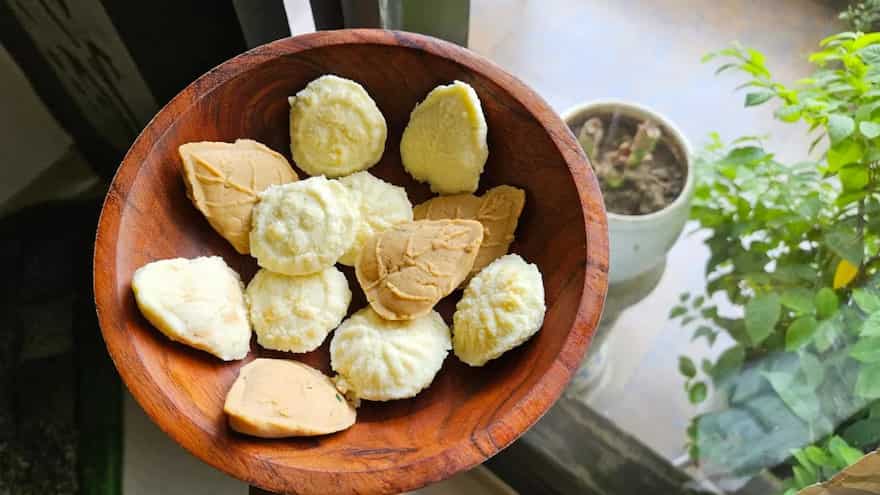
Image Credit: Chef Samita Halder
On Dashami, it is customary to offer Maa Durga panta bhat (fermented rice) and kachu shaag (colocasia greens) as part of the “Arandhan” ritual, which prescribes that no cooking is done on this day. Instead, food prepared on the previous day (Navami) is set aside and offered to the Goddess during her farewell.
This practice is predominantly observed in certain bonedi (aristocratic) households, where the Navami offerings—particularly panta bhat and kachu shaag—are reserved for presentation on Dashami.
As the festive season ends, with love and togetherness, Bengalis await the next year’s return of Maa Durga.
Home Chef Jayeeta Ghosh Some Bijaya Dashami Special Dishes

Another home chef, Jayeeta Ghosh, busy preparing for her Durga Puja pop-up event, shared her then and now Bijaya Dashami memories with Slurrp.
Slurrp: What are your memories of Bijaya Dashami from your childhood?
Jayeeta: These memories are deeply rooted in my childhood days at our village home in Gopi Nagar, Tarakeswar - Hooghly. It was a mandatory visit for the whole family during Bijoya, and everyone would return from Lokhi Pujo with a heavy heart, back to the routine. All the cousins would gather during this time, along with my Jethus, Jethimas, and Pishimas, and it was celebrated like a second Durga Pujo, filled with lots of hoihoi and fun. We would watch new movies on our VCRs, and that memory is inseparable from my childhood.
Slurrp: Do you want to mention any specific dishes that are prepared at home?
Jayeeta: Kochi pathar jhol was mandatory. Since childhood, I used to have kheer made from our own cow milk at home, Chandrapuli and both gurer and kheer er naru.
If you ask for present days, at my in-laws, it is a ritual to eat five types of bhaja and five types of fish for lunch. We try to continue it as much as possible because I find it extremely aesthetic as a ritual. They belong to Pabna (Bangladesh), and my mother-in-law, who is a Ghoti, never forgets to continue these family traditions.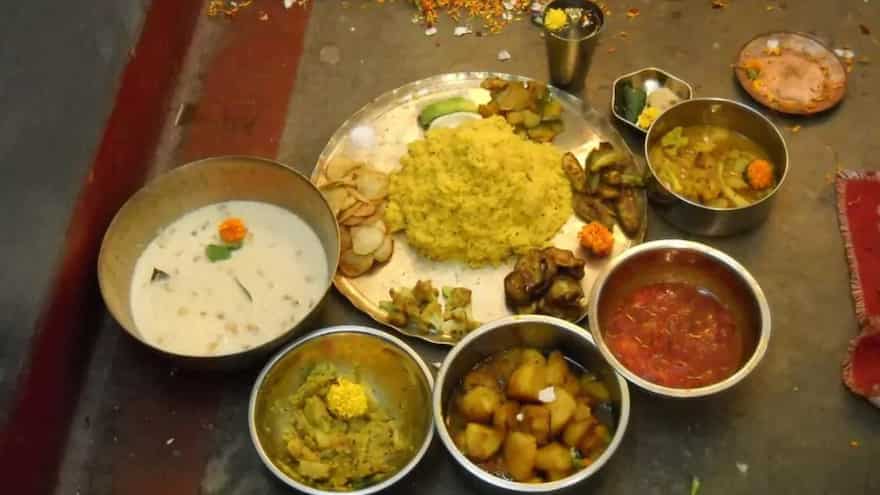
Slurrp: Is there any specific dish that you are preparing for Dashami?
Jayeeta: I keep pop-ups from Sasthi to Nabami. On Dashami, my kitchen is closed owing to family commitments.
In Bengali homes, Bijoya Dashami is associated with sweets and visiting elderly relatives to pay respect. Various mishti, nimkis, and naru are eaten. Though Kojagori Laxmi Puja is in just four days after Dashami, the atmosphere gets heavier with sorrow as Maa leaves her home. The vacation is also about to end. The best part remains after puja is to travel across town to visit distant relatives and bond over more sweets.




