


 Share
Share

To describe shortly, a vinaigrette can usually be defined as a mixture of vinegar, oil, salt and pepper - and other flavours, based on preference. However, the accuracy of a vinaigrette lies in part or full emulsification; a process which involves forcing two conflicting elements to blend into a homogenous mixture from whisking or incorporating air into it. In cooking, most emulsions take place between fat and water - or more specifically fat and acid (think lemon juice, vinegar) as well as a surfactant or emulsifying agent like egg yolks, mustard or honey. Surfactants usually contain a molecule that is attractive to water/acid (hydrophilic) and another that is attractive to oil (hydrophobic).
What this does essentially is bind the oil and water molecules to one another by forming a bridge - allowing the mixture to maintain its form throughout the duration of usage, as opposed to separating and disrupting the formation of layered flavour. When separated, acid wilts the leaves of a salad or delicate vegetables such as cucumber quicker - as opposed to a vinaigrette, which makes ingredients look slick and shiny. Similarly, greens or raw vegetables dressed with just oil and seasoning also tend to turn limp quicker since the thin, waxy cuticle on most salad leaves enables fats like olive oil to penetrate the walls much easily.
Also Read:
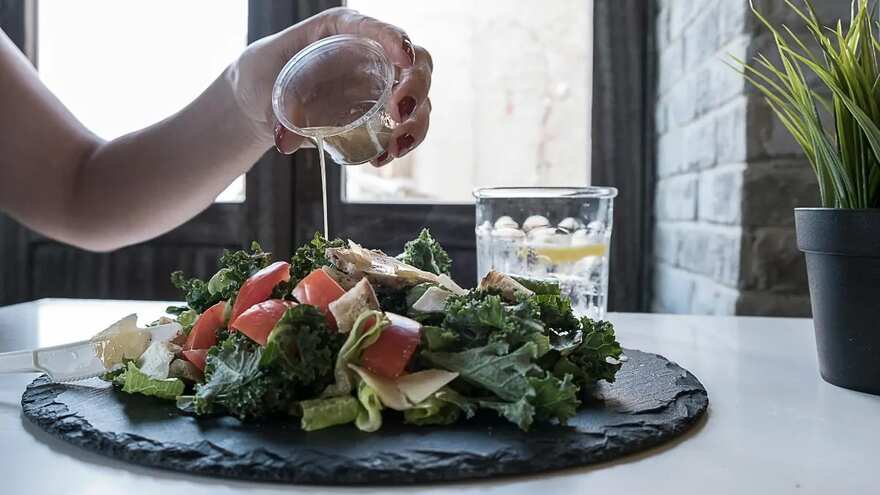
Thus, using an emulsified vinaigrette containing a surfactant aids in the acid and fat in clinging to salad ingredients more effectively. In addition to this, understanding the perfect ratio also plays a crucial role in providing the perfect emulsification aftermath to a vinaigrette. For the strongest emulsion, opt for two parts oil to one part vinegar, and a teaspoon of mustard for every tablespoon of vinegar. For a sweeter dressing, swap the mustard with a similar quantity of honey. While whisking the dressing with a gradual drizzle of oil seems to be the most common emulsion technique, other foolproof techniques involve shaking all the ingredients vigorously in an airtight jar or even using a blender for larger quantities of vinaigrette. The high speed blades of an electric blender are said to produce the most stable and long-lasting vinaigrette, structurally - unless it is a salad that is going to be eaten within a span of a few minutes or couple of hours.
Amplify the flavours of a basic vinaigrette using ingredients like soy sauce for a boost of umami notes, crushed almonds or toasted pine nuts for additional texture, fresh or dried Italian herbs for enhancing vegetal notes and lemon zest to highlight the acidity of the sour/tart element of the dressing. Acidic elements of a vinaigrette can be swapped with red or white wine vinegar, lime juice, champagne vinegar, orange or pomegranate juice as delicious and flavour-packed alternatives. One could also consider using pickle brine or canned tomato juice due to its higher acidity and sharpness, for an unusual flavour in salads containing fresh cheeses or spicy ingredients.




