


 Share
Share

As the crescent moon signals the end of Ramadan, kitchens across the Konkan belt of Maharashtra undergo a transformation. While the rest of India might be waking up to the aroma of Sheer Khurma, the households in districts like Ratnagiri, Raigad, and Sindhudurg are busy with a different kind of alchemy. They are preparing Saravle. To the uninitiated, Saravle might look like tiny, delicate rings of sun-dried dough. To a Konkani Muslim, however, these are not just food items; they are a vessel of heritage. These miniature hoops of flour are the backbone of the most cherished dessert served on Eid ul Fitr. They represent a labor of love that begins weeks, sometimes months, before the festival actually arrives.
What Exactly Is Saravle
Saravle is a traditional handmade pasta or vermicelli variant specific to the Konkani Muslim community. It is made from a simple dough of refined flour, water, and a pinch of salt. Some families might add a hint of milk or even eggs to the dough to enrich the texture, but the classic version remains elegantly simple. The defining characteristic of Saravle is its shape. Unlike the long, needle-like Sewiyan found in North India, Saravle are tiny rings. They are formed by taking a small portion of dough, rolling it into a thin strand, and then looping it around a finger or a thin wooden stick to create a circle. These rings are then laid out on large mats or trays to dry in the fierce tropical sun until they are brittle and shelf-stable.
The Cultural Heartbeat Of The Konkani Community
The making of Saravle is rarely a solitary task. It is a social event that binds the women of the neighborhood together. In the weeks leading up to Eid, you will often find groups of women gathered on verandas or in courtyards. As their fingers move with practiced, lightning-fast precision to form thousands of identical rings, they share stories, local gossip, and wedding plans. This communal aspect is vital. Making enough Saravle to feed an extended family and guests on Eid is a monumental task. A single kilogram of flour can yield thousands of these tiny rings. By working together, the community ensures that no household goes without this essential festive treat. It is a beautiful display of the collective spirit that defines coastal village life.
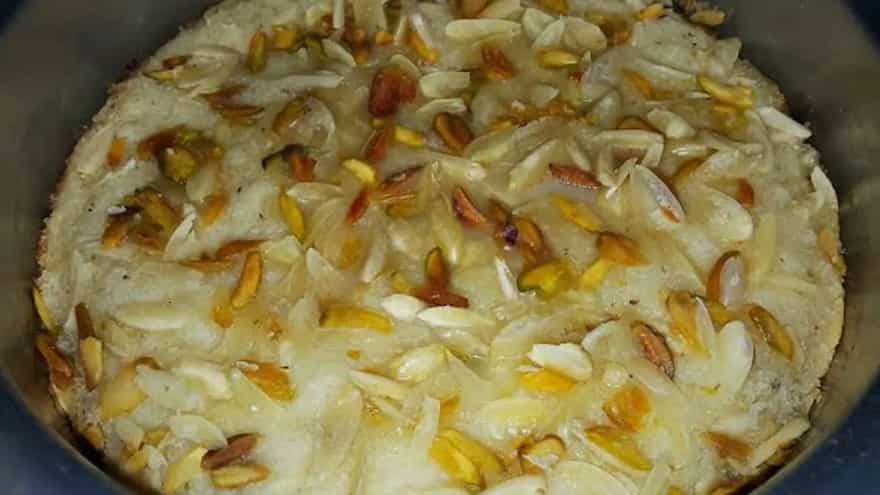
Image credit: Kokni Cuisine
The Italian Connection: An Indian Pasta Parallel
It is fascinating to observe how global culinary traditions often rhyme. If you were to place a bowl of dried Saravle next to a handful of Italian Anelli or Ditalini, the visual similarities would be striking. Both are wheat-based, shaped into small rings or tubes, and designed to hold onto the liquid they are cooked in. However, while Italian pasta is usually boiled in salted water and tossed with savory sauces, Saravle finds its soul in a sweet, milky embrace. One could argue that the Konkani people mastered the art of artisanal pasta long before global food chains made Penne and Fusilli household names in India. The technique of sun-drying dough to preserve it for months is a prehistoric method of food security that evolved into a sophisticated culinary art form in the Konkan.
The Anatomy Of A Perfect Saravle Kheer
The most popular way to consume these rings is in the form of Saravle Chi Kheer. Unlike the thick, pudding-like consistency of some rice-based desserts, a good Saravle dish is fluid, aromatic, and rich with the fats of nuts and coconut. The preparation involves lightly roasting the dried rings in pure ghee until they turn a delicate golden brown. They are then simmered in a mixture of milk and coconut milk, sweetened with sugar or jaggery, and flavored with cardamom and saffron. The result is a sophisticated balance of textures: the slippery, slightly chewy rings against the creamy, fragrant liquid.
The Authentic Saravle Recipe
If you wish to recreate this coastal magic in your own kitchen, follow these steps. Please note that while you can buy pre-made Saravle in some specialty stores in Mumbai or Pune, making the dough from scratch is where the true spirit lies.
Ingredients For The Saravle Dough
• 500 grams Refined flour (Maida)
• 1 tablespoon Pure Ghee
• A pinch of Salt
• Warm water as required for kneading
Ingredients For The Kheer
• 2 cups Sun-dried Saravle
• 1 liter Full-fat Milk
• 1 cup Fresh Coconut Milk (optional but recommended)
• 1 cup Sugar (adjust to taste)
• 1 teaspoon Cardamom powder
• A few strands of Saffron soaked in milk
• 2 tablespoons Ghee for roasting
• A handful of Cashews, Almonds, and Pistachios

Image credit: Home Chef Sayeeda
Step By Step Instructions
Phase One: Crafting The Rings
1. Sift the flour and salt into a large bowl. Add the ghee and rub it into the flour with your fingertips until it resembles breadcrumbs.
2. Gradually add warm water and knead into a stiff, smooth dough. Cover it with a damp cloth and let it rest for at least thirty minutes.
3. Take a small marble-sized ball of dough. Roll it between your palms to create a very thin long string.
4. Wrap a small section of this string around your index finger to form a ring, pinch the ends to seal, and break it off.
5. Place the rings on a clean cotton cloth. Repeat this until all the dough is used.
6. Dry these in the sun for two to three days until they are completely hard and make a clicking sound when dropped.
Phase Two: Preparing The Festive Kheer
1. Heat two tablespoons of ghee in a heavy-bottomed pot. Add the dried Saravle and roast on low heat. Ensure they turn golden but do not burn. Remove and set aside.
2. In the same pot, add the nuts and fry until crunchy. Remove them.
3. Pour the milk into the pot and bring it to a gentle boil.
4. Add the roasted Saravle to the boiling milk. Lower the heat and let them simmer. The rings will gradually soften and absorb the milk.
5. Once the Saravle are cooked through but still hold their shape, add the sugar and stir until dissolved.
6. Pour in the coconut milk and the saffron-infused milk. Let it simmer for another five minutes. Do not let it boil vigorously after adding coconut milk.
7. Finish with cardamom powder and the fried nuts.
8. Serve warm or chilled, depending on your preference.




