


 Share
Share

Eid is a celebration defined by community, gratitude, and the sharing of food. For generations, the centerpiece of these gatherings has been the array of decadent, syrup-soaked desserts that symbolise the sweetness of life. However, as our understanding of metabolic health evolves, many people find themselves at a crossroads. The traditional Indian palate is heavily accustomed to refined sugars, condensed milk, and high-glycemic flours, all of which can lead to inflammation and energy crashes. This is where the expertise of Rahul Kamra, Keto Coach and Founder of Ketorets, becomes invaluable. By reimagining these classics through a ketogenic lens, we can preserve the cultural essence of the festival while prioritising long-term wellness.
The transition to a keto-friendly Eid does not require a sacrifice of flavour. Instead, it involves a thoughtful substitution of ingredients. Traditional vermicelli is replaced with konjac, sugar is swapped for natural sweeteners like stevia, and high-carb flours make way for nutrient-dense almond and coconut alternatives. These ingredients are specifically chosen to keep insulin levels stable, ensuring that the joy of the festival is not followed by the typical post-holiday slump. For the Indian audience, where hospitality often revolves around sweets, offering these low-carb alternatives is a way to care for the health of guests who may be managing diabetes or pursuing weight loss goals.
Sheer Khorma
Ingredients
• 200 g konjac noodles
• 20 ml ghee
• 30 g soaked almonds
• 30 g chironji
• 30 g almond flour
• 500 ml almond milk
• 100 ml cream
• 3 to 4 saffron strands
• 1/2 tsp cardamom powder
• 3 to 4 sachets stevia
• Roasted almonds and chironji for garnish
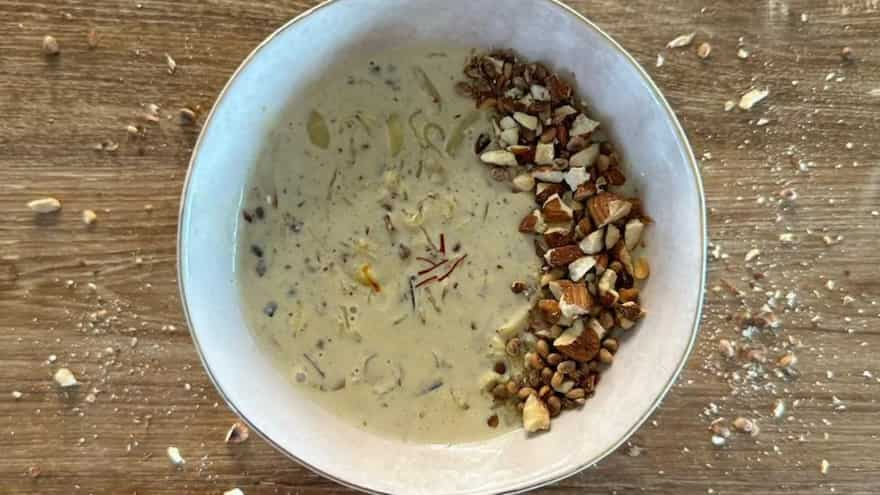
Image credit: Rahul Kamra
Method
1. Begin by rinsing the konjac noodles thoroughly under cold water to remove any scent from the packaging. Briefly soak them in a bowl with a little stevia to infuse a hint of sweetness into the base.
2. Place a heavy-bottomed pan over medium heat and add the ghee. Once melted, add the konjac noodles and sauté them for several minutes until they are well-coated and any excess moisture has evaporated.
3. Incorporate the soaked almonds, chironji, and almond flour into the pan. Continue to cook the mixture lightly until the almond flour releases a nutty, aromatic fragrance.
4. Carefully pour in the almond milk. Add the saffron strands and the cardamom powder, stirring gently to distribute the flavours.
5. Allow the mixture to come to a gentle simmer. Let it cook for a few minutes so the flavours can meld and the liquid starts to slightly reduce.
6. Pour in the fresh cream and stir well to achieve a rich, velvety consistency.
7. Taste the mixture and adjust the sweetness by adding more stevia if necessary.
8. Garnish the dish with a generous sprinkling of roasted almonds and chironji before serving.
Coconut Vanilla Pudding
Ingredients
• 75 g coconut flour
• 25 g fresh cream
• 50 ml coconut milk
• 3 to 4 drops vanilla essence
• 1 sachet stevia
• Roasted almonds for garnish
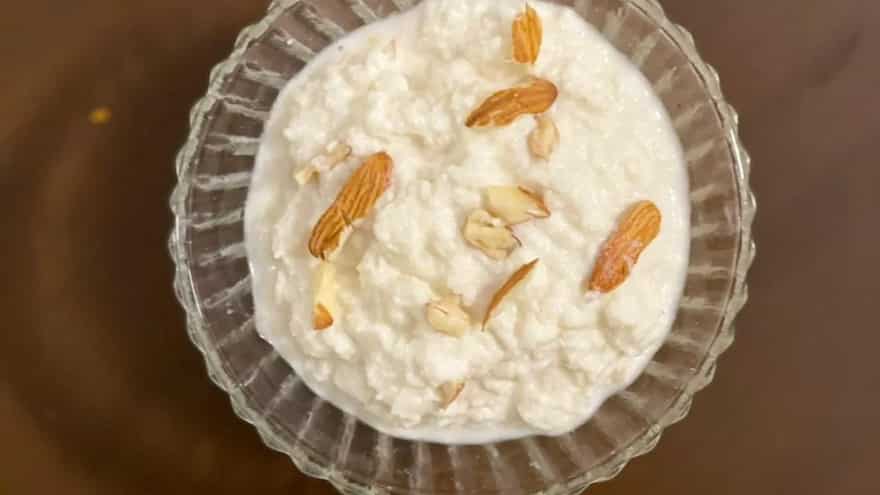
Image credit: Rahul Kamra
Method
1. In a medium-sized mixing bowl, combine the coconut flour, fresh cream, and coconut milk. Use a whisk to blend the ingredients until the texture is completely smooth and free of lumps.
2. Add the vanilla essence and the stevia sachet. Continue whisking until the sweetener is fully dissolved and the vanilla is evenly distributed throughout the pudding.
3. Portion the mixture into individual serving dishes or small bowls.
4. Top each portion with roasted almonds to provide a contrasting crunch to the smooth pudding.
5. For the best texture, place the dishes in the refrigerator and chill for at least 30 minutes before serving.
Almond Halwa
Ingredients
• 150 ml unsweetened almond milk
• 20 ml fresh cream
• 125 g almond flour
• 30 g ghee
• 1/4 tsp cardamom powder
• Stevia to taste
• Roughly chopped almonds for garnish
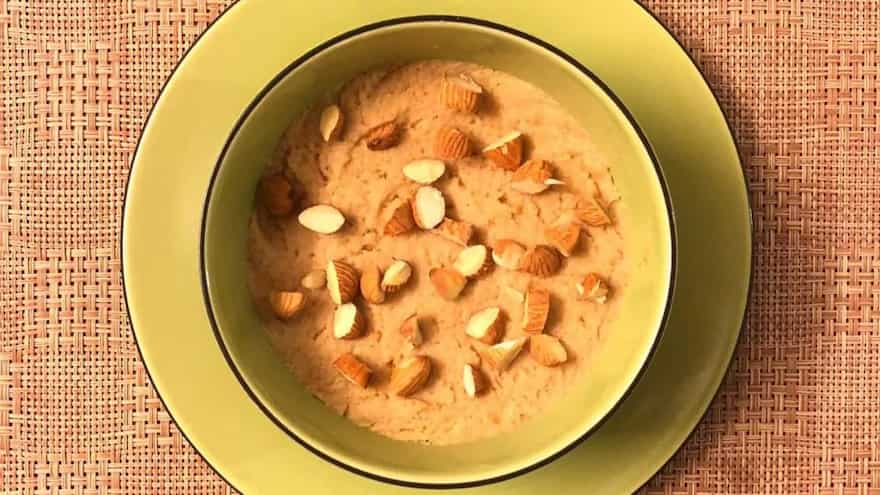
Image credit: Rahul Kamra
Method
1. Set a non-stick pan over low heat. Add the almond flour and roast it slowly, stirring constantly, until it turns a light golden colour and smells toasted.
2. Add the ghee to the pan and mix it thoroughly into the flour until a thick paste forms.
3. Pour in the almond milk in two separate stages. Stir continuously after each addition to ensure the liquid is fully absorbed and the mixture binds together without clumping.
4. Stir in the fresh cream and the cardamom powder. Continue to cook the halwa for about 2 minutes, allowing it to thicken to your preferred consistency.
5. Remove the pan from the heat. Stir in the stevia and mix well to ensure the sweetness is uniform.
6. Transfer to a serving bowl, garnish with the chopped almonds, and serve while it is still warm for the best experience.




