Share
Share

THE SAVOURY STUFF: MAINS THAT MEAN BUSINESS
If New Year’s resolutions had a flavour, it would be rich, comforting, and deeply symbolic. Across cultures, savoury dishes are engineered to look like money, move forward (literally), or arrive in generous quantities — because abundance loves company.
In Italy, midnight often means cotechino con lenticchie: pork sausage with lentils that resemble tiny coins. The fattiness of the pork signals abundance; the lentils promise wealth. It’s hearty, intentional, and eaten just as the year ticks over.
Head to the southern United States, and you’ll find Hoppin’ John — black-eyed peas, rice and pork — anchored in Civil War history. The peas stand for coins, collard greens for paper money, and cornbread for gold. It’s prosperity with a backstory.
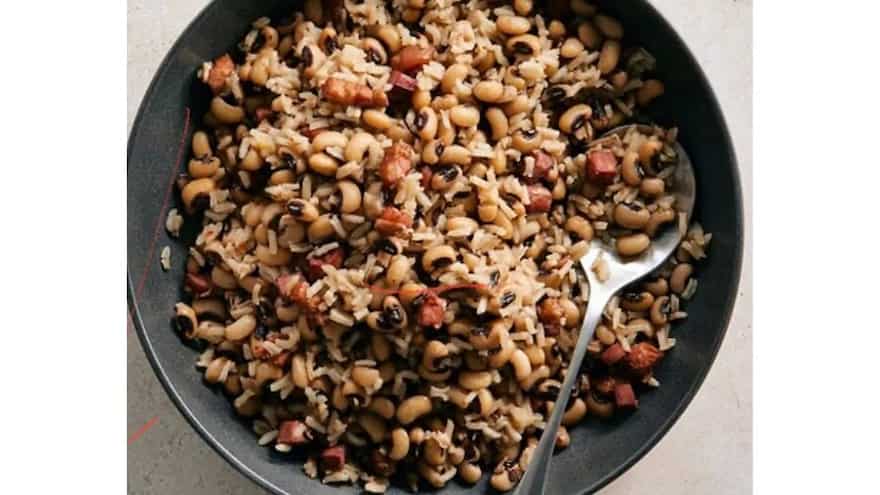
Lentils make another appearance in Brazil, stirred into rice as a quiet but firm wish for financial fortune.
Pork dominates parts of Europe and the Americas because pigs root forwards, never back. In Germany and Austria, pork with sauerkraut is traditional — the tangle of cabbage shreds said to multiply blessings. In Hungary and Cuba, roast suckling pig plays the same symbolic role.
Fish, too, swims into the picture. In Scandinavia and Poland, pickled herring is essential, its silver skin echoing coins. In Poland, sledzie marynowane is often eaten right at midnight. Meanwhile, in China, a whole fish is served — but never fully eaten. Leaving some behind symbolises surplus for the year ahead.
Noodles and rice mark time and longevity. In Japan, toshikoshi soba (“year-crossing noodles”) represent long life and resilience, while their easy break symbolises letting go of the past. Korea welcomes the year with tteokguk, a soup of coin-shaped rice cakes — so important that you’re said not to age a year until you’ve finished a bowl. In Sri Lanka, kiribath — rice cooked in coconut milk — signals celebration and new beginnings.
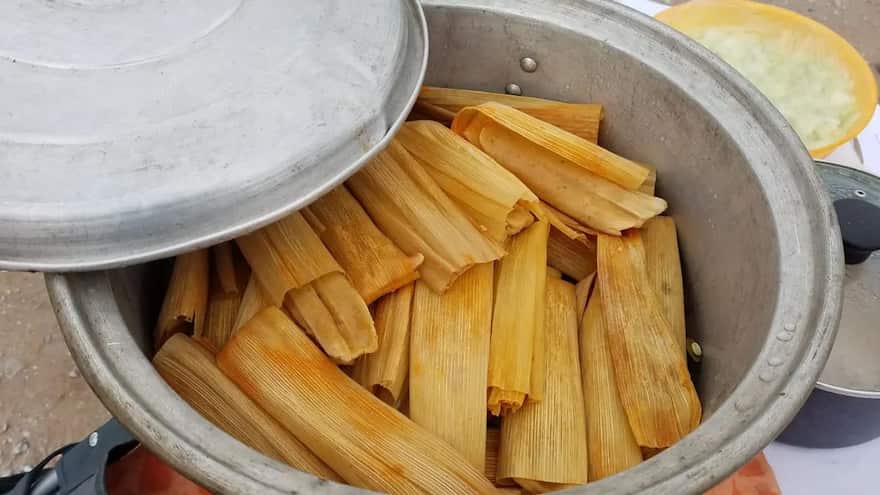
Some dishes are less about luck and more about memory and meaning. On January 1 in Haiti, soup joumou is eaten to commemorate independence in 1804, transforming a once-forbidden dish into a declaration of freedom. In Mexico, families gather to make tamales together, the labour itself becoming a ritual of unity.
SWEET THINGS: CAKES, COINS AND A LITTLE DRAMA
Desserts take the pressure off — then quietly sneak luck back in.
In Greece, Vasilopita is cut just after midnight. A coin is hidden inside, and slices are distributed in ceremonial order before anyone gets a bite. If your slice holds the coin, congratulations: the year is officially on your side.
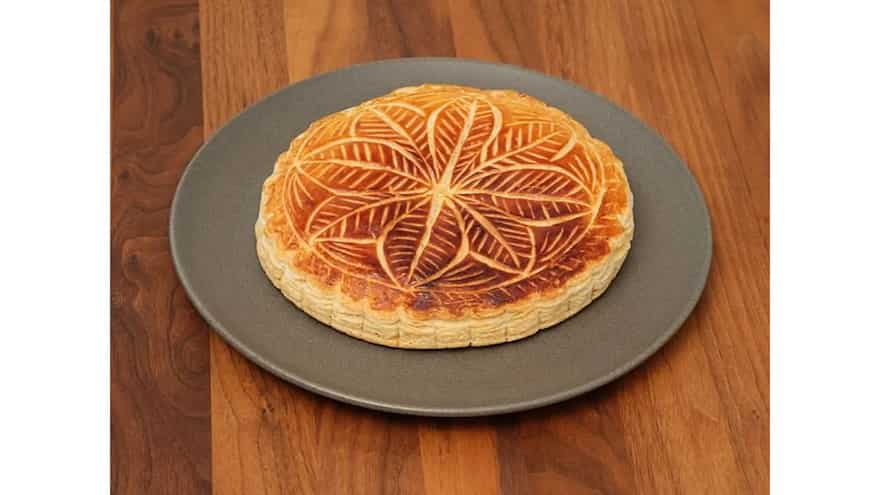
A similar thrill exists in France and beyond with galette des rois, where a hidden figurine crowns the day’s “king”.
Fried dough makes a strong case for indulgence. In the Netherlands, oliebollen — deep-fried, sugar-dusted dough balls — are eaten for luck and protection, thanks to old folklore involving a winter spirit and a conveniently greasy defence.
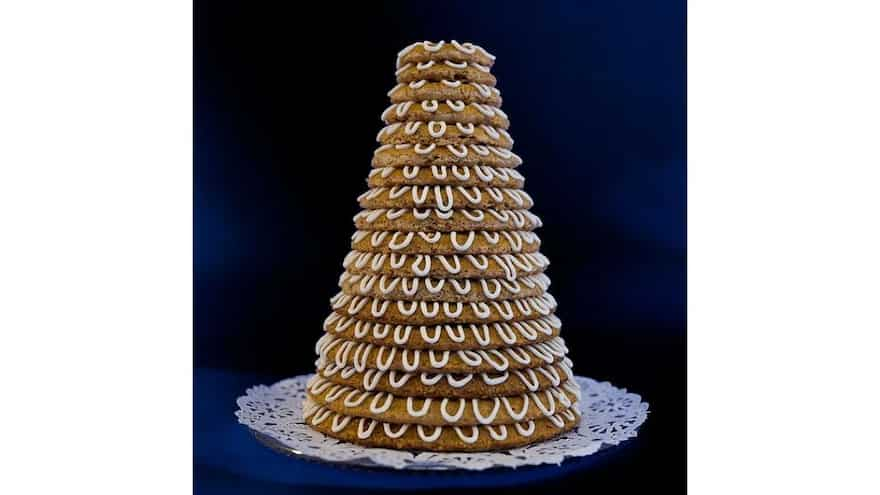
Scandinavia’s answer is kransekake, a tower of concentric marzipan rings stacked into a wreath shape, signalling continuity and celebration.
Elsewhere, symbolism goes abstract. In Switzerland, some mark midnight by dropping whipped cream or ice cream onto the floor, a gesture meant to invite abundance and richness into the year ahead.
FRUIT WITH FEELINGS: COUNT, SMASH, EAT FAST
Fruit rituals are where things get delightfully intense.
In Spain, revellers race the clock with las doce uvas de la suerte — twelve grapes eaten in time with the twelve chimes at midnight. Each grape predicts a month ahead; sweetness is celebrated, sourness politely noted.
Roundness matters in the Philippines, where households display and eat twelve (or thirteen) round fruits to mirror coins and attract prosperity.

Back in Greece and neighbouring Turkey, the pomegranate reigns. Smashed against the door at midnight, its scattering seeds predict the household’s luck — the more dramatic the spread, the better the year.
Greece adds one more detail: an onion hung on the door on New Year’s Day, symbolising rebirth, fertility, and the stubborn will to grow.
DRINKS & MIDNIGHT WISHES
In Scotland, Hogmanay traditions include “first footing”: the first person to enter a home after midnight brings gifts such as whisky to guarantee good cheer.
In Russia, wishes are written, burned, tipped into champagne, and drunk before the last chime fades — a full-body commitment to manifestation.

Everywhere else, champagne remains the universal shorthand for joy, overflow and celebration, a habit cemented in the 1800s and still going strong.
A QUICK NOTE ON WHAT NOT TO EAT
Luck isn’t just about what you invite in — it’s also about what you avoid. Lobster is skipped in many cultures because it moves backwards, symbolising setbacks. Chicken is often avoided too, thanks to its backward scratching and the fear of “scratching” for a living.
So whether you’re smashing fruit, hiding coins in cake, or slurping noodles for dear life, these traditions prove that hope, when seasoned well, is best eaten.