


 Share


Every year, we notice a choreography to the Diwali sweet box. It arrives in ribbon and foil, passes from hand to hand and lands open on the centre table, where kaju katli, motichoor laddoo and rose barfi are offered, declined, offered again and, eventually, accepted. The insistence is a form of love, and every Indian host knows the line by heart: bas ek aur. This year, in a growing number of homes, the box is circulating differently. A guest takes one piece, savours it slowly and sets down the napkin with a contented smile. Nobody asks if everything is all right. Part of the explanation lives in the pharmacy fridge. Since semaglutide, the molecule behind Ozempic and Wegovy, lost its patent in India in March 2026, generic versions have arrived at a fraction of the earlier price, and a medicine once within reach of a privileged few is travelling much further. Its influence reaches the festive table in quiet ways, from cravings that soften to plates that stay smaller, and it is nudging the people who feed us, from family cooks to wedding caterers, to rethink what abundance looks like.
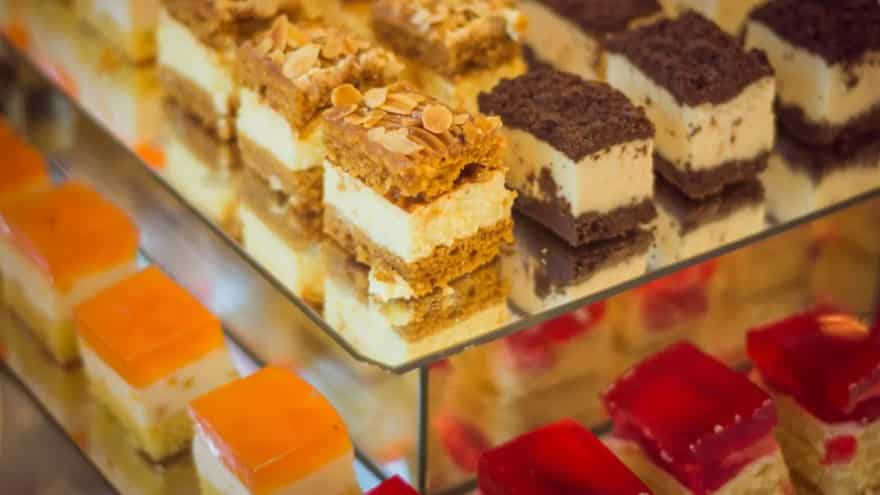 Image credit: Unsplash
The Patent That Changed The Pharmacy Shelf
Semaglutide's Indian patent lapsed in the third week of March 2026, and the market moved within a day. Sun Pharma, Dr Reddy's, Zydus, Glenmark and Natco were among the first to launch generic versions, and close to 40 Indian companies have since joined the race. A Diabetes Care review led by Dr V Mohan of the Madras Diabetes Research Foundation sets out the shift in plain numbers: a month's supply that once cost roughly ₹11,000 to ₹16,409 now sits at around ₹2,000 to ₹3,500. Sales followed the price down. About 25,000 units were sold in February, and by April the monthly figure had climbed to 170,000, a near sevenfold leap in two months.
A little context keeps the story honest. Novo Nordisk India's managing director, Vikrant Shrotriya, told ThePrint that only around 250,000 of an estimated 250 million Indians living with obesity are on a GLP-1 medicine, which works out to about 0.1 per cent. Kantar's GLP-1 Opportunity Index found that while 85 per cent of overweight individuals are actively trying to lose weight, only 4.99 per cent of urban Indians are aware of GLP-1 treatments. The circle of users is small, then, and widening fast, and this is its first Diwali with generics on the shelf. A small circle can still change the mood of a room, particularly when that room is a wedding hall full of guests and a long mithai counter.
What Happens To The Sweet Tooth
Semaglutide belongs to a class of medicines that mimic a hormone involved in regulating blood sugar, appetite and food intake. Dr Akash Kesari, a Delhi-based MBBS physician and obesity medicine specialist who is the founder and medical director of Metabolic, sees its effect in his clinic most clearly around sweets. "One of the interesting things we see with semaglutide is that people often experience a reduction in cravings, particularly for calorie-dense foods like sweets. It's not necessarily that they stop enjoying mithai, but that the urge to keep reaching for another piece becomes much less pronounced," he says.
The quietening reaches beyond the palate and into the mind. "These medications change more than just hunger. People often find that they feel full much sooner, and the constant thoughts about food become quieter," says Dr Kesari. Anyone who has spent an evening circling a plate of jalebis in a mental argument will recognise what a relief that must be.
The wider research points in the same direction. A Cornell University study of about 150,000 American households, published in the Journal of Marketing Research, found that grocery spending fell by an average of 5.3 per cent within six months of a household starting a GLP-1 medicine. Savoury snacks dropped by roughly 10 per cent, with similarly sharp dips in sweets, baked goods and cookies, while yoghurt, fresh fruit and nutrition bars edged upwards. The effect softens after the first six months. India has no comparable dataset yet, so these figures offer a direction of travel for the festive counter.
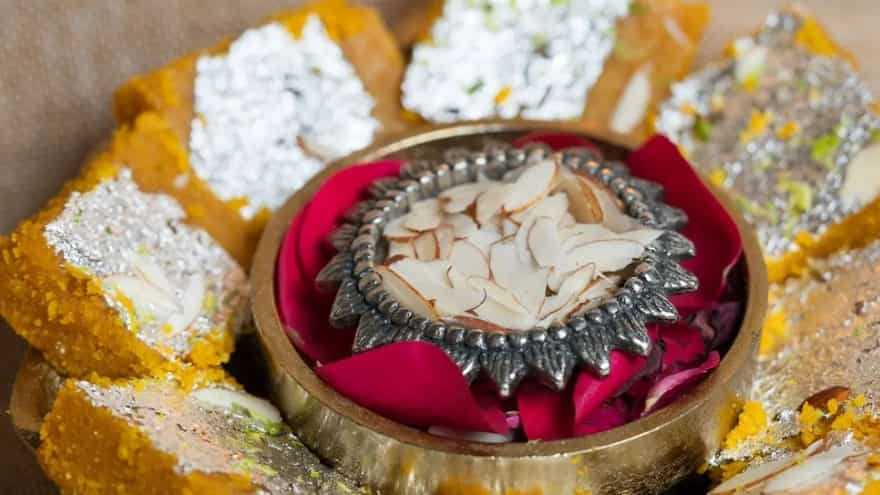 Image credit: Pexels
One Piece Is Plenty
Portion size is where the change turns visible. "One of the most noticeable changes is that people tend to feel satisfied with much smaller portions. Someone who might previously have eaten four or five pieces of mithai may now genuinely feel content with just one," says Dr Kesari. "And I think that's an important distinction. They're not necessarily restricting themselves, they're simply feeling satisfied sooner."
Dr Kesari also has a clear view on the biggest myth around these medicines. "I think the biggest misconception is that these medications work by forcing people to starve themselves or that you have to stop eating the foods you enjoy. That's simply not true. The goal isn't to eliminate the pleasure of eating. It's to help people develop a healthier relationship with hunger, fullness and food choices."
The pattern shows up in survey data too. PwC's 2024 GLP-1 survey of 3,000 American adults found that 47 per cent of users were eating smaller portions and 56 per cent were making healthier food choices. A single laddoo, eaten slowly and fully tasted, starts to look like a complete thought. Dr Kesari sees a lesson in that for everyone at the table, whether or not they take the medicine. "Definitely. I think one of the most valuable lessons people can learn is that enjoying food and eating large quantities of it are two very different things. You can appreciate the taste of your favourite mithai, enjoy a wonderful meal with your family and still be mindful of your health," he says.
When The Rich Meal Pushes Back
Diwali food is generous by design: puris and kachoris glossy with oil, farsan fried to a crackle, halwa finished with a spoonful of ghee. These medicines also slow the passage of food through the stomach, which helps explain why heavy dishes can land differently. Dr Kesari offers the other side of the story. "On the other hand, very rich, oily meals can sometimes cause nausea, bloating or discomfort," he says, and he sees the answer in attention. "So it's really about learning to recognise those signals and adjusting how much you eat accordingly." Business Today reported in June that dropouts are part of the Indian picture, since not everyone tolerates the side effects, which makes that listening all the more useful.
His festive playbook is short and friendly. "My advice is quite simple. Enjoy the festivities, eat the foods you love, but pay attention to how your body responds," he says. "Start with smaller portions, eat slowly and don't feel pressured to finish everything on your plate. Also, remember to prioritise protein, stay hydrated and avoid skipping meals just to compensate for a festive dinner."
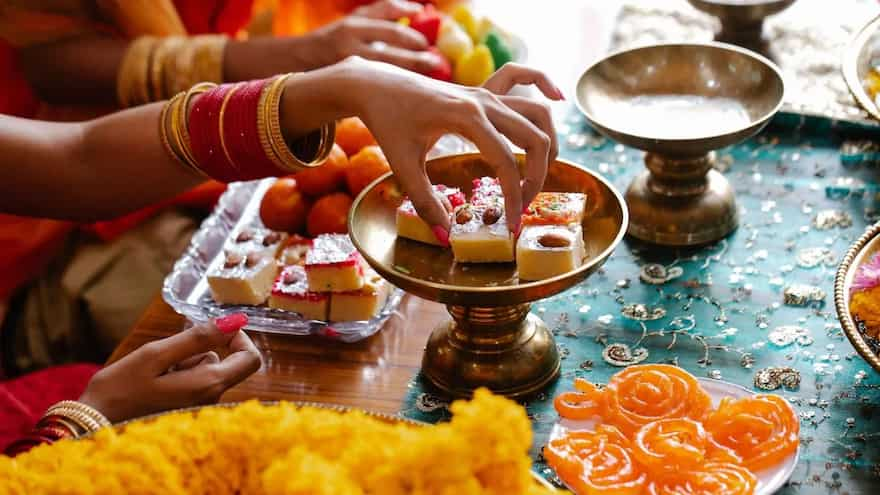 Image credit: Pexels
The Caterer's Notebook: Variety Over Volume
From the kitchen side of the celebration, Chef Harsh Shodhan, founder of The Gourmet Kitchen & Studio, a luxury catering house known for weddings and large-scale celebrations, has watched guests change how they approach the buffet. "We are noticing a gradual shift in how guests approach food at celebrations. People are becoming more conscious of what they eat, the portions they consume and how they feel after a meal. While indulgence continues to be an integral part of Indian celebrations, there is a growing preference for experiencing a wider variety of dishes rather than having large portions of a few," he says. "GLP-1 medications may have brought greater attention to this conversation, but the shift towards mindful eating has been underway for some time. As caterers, it is important for us to recognise these evolving preferences while retaining the joy and excitement associated with celebratory dining."
His menus are responding with bite-sized appetisers, tasting portions and curated food stations. "Menu planning today is increasingly centred around variety, experience and balance rather than simply the number of dishes being served. We are seeing greater relevance for smaller, thoughtfully presented portions that allow guests to explore more options without feeling overwhelmed," he explains. "Bite-sized appetisers, tasting portions and well-curated food stations offer guests the flexibility to experience different flavours at their own pace. Especially at weddings, I believe the focus should be on creating a memorable food experience, where every dish has a purpose, rather than overwhelming guests with an excessive spread." The old arithmetic of a wedding spread, in which more dishes and bigger servings signalled generosity, is being rewritten around variety and experience.
Abundance remains central to his thinking. "I have always believed that food at Indian celebrations should reflect generosity and abundance, but abundance does not necessarily mean excess. It is about offering diversity, quality and thoughtful curation. A well-planned menu can bring together traditional mithai, indulgent preparations, fresh seasonal ingredients and lighter alternatives, ensuring that guests have something suited to their preferences," he says. "We don't need to take away from the richness of our food traditions to accommodate changing eating habits. It is simply about creating a better balance while preserving the celebratory spirit of the occasion."
That calls for a looser mindset about appetite. "I think the catering industry needs to become more responsive to changing guest preferences and eating habits. We can no longer assume that every guest has the same appetite or wants multiple rounds of large portions. This calls for greater flexibility in how we approach menu planning and food service," says Chef Shodhan. He adds a caution that keeps the trend in proportion: "Abundance can be expressed through the variety of dishes, quality of ingredients, presentation and overall experience, rather than just the quantity served. At the same time, I wouldn't recommend designing menus exclusively around GLP-1 users. Our responsibility is to create an experience that accommodates different appetites and preferences while ensuring that everyone enjoys the celebration."
The aim, in his words, is quiet inclusion. "I believe personalisation is becoming an increasingly important part of luxury catering. Every celebration brings together people with different appetites, dietary requirements and food preferences, and the dining experience should be able to accommodate this diversity. This can be achieved through smaller tasting portions, thoughtfully curated food stations, vegetarian and protein-rich options, lighter alternatives and menus that offer greater flexibility. At The Gourmet Kitchen & Studio, menu planning goes beyond the food itself to include service formats, presentation and the overall guest experience. The idea is to make every guest feel equally considered, without making dietary preferences or specific requirements feel like an exception."
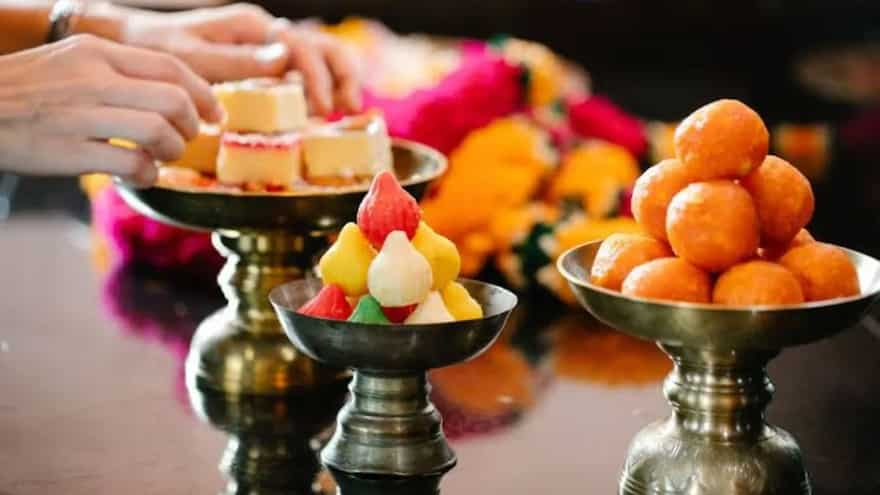 Image credit: Pexels
Lighter Mithai, Same Sparkle
The sweet counter is listening. Younger consumers are reaching for healthier options, with dry-fruit sweets and reduced-sugar mithai finding a place beside the classics, while traditional favourites keep their emotional hold. Ahmedabad Mirror noted last year that city firms and families were turning to sugar-free sweets and millet-based cookies for gifting. Chef Shodhan sees the same curiosity in his kitchen. "There is certainly a growing interest in healthier alternatives and more mindful food choices. We are noticing greater curiosity around reduced-sugar desserts, millet-based preparations, protein-rich options and the use of natural sweetness in desserts," he says. "However, I don't believe people want to sacrifice flavour in the pursuit of healthier eating. The challenge for us as chefs is to create alternatives that are just as appealing, indulgent and satisfying as their traditional counterparts. The idea is to expand the choices available to guests without taking away from the familiarity and enjoyment of festive favourites."
He holds the line on pleasure. "Experimentation is an important part of what we do as chefs, and we are constantly exploring ingredients, techniques and formats that can bring a fresh perspective to familiar dishes. This includes working with alternative grains, natural sweeteners, fruit-based desserts and lighter cooking methods. Even traditional Indian sweets offer plenty of scope for reinterpretation through their ingredients, textures and presentation," says the chef. "However, I believe innovation should enhance a dish rather than take away from its original identity. The food should still retain the flavours and character people associate with it. For me, flavour will always remain non-negotiable."
He wants a fruit-based dessert or a contemporary take on an Indian sweet to be as exciting as any conventional mithai, and he is clear about how to get there. "I believe presentation, creativity and flavour are equally important when developing healthier alternatives. They should never feel like a secondary option or a compromise. The same attention that goes into creating a traditional festive dessert should go into its lighter counterpart, from the choice of ingredients and flavour combinations to textures, colours and presentation. A thoughtfully crafted fruit-based dessert or a contemporary interpretation of a traditional Indian sweet can be just as exciting as a conventional mithai. Ultimately, food is an experience that begins with how it looks and ends with how it tastes. Both aspects need to be equally compelling."
A label deserves a second look before it earns trust. Sugar-free, low-sugar, no-added-sugar and naturally sweetened describe four different things. Business Standard has reported that many sugar-free sweets use sugar alcohols such as maltitol, erythritol or sorbitol, which can cause bloating when eaten in quantity, and that bases like khoya, dry fruit and refined flour still carry carbohydrates and calories. That is useful knowledge for anyone whose digestion is already sensitive.
Dr Kesari offers a reassuring counterpoint for the traditionalists. "Some people naturally gravitate towards lighter options, smaller portions or sweets made with less added sugar. But I always tell my patients that there's nothing wrong with enjoying a traditional Diwali sweet," he says. "You don't have to replace everything you enjoy with a healthier alternative. Sometimes having a small piece of your favourite mithai is perfectly fine."
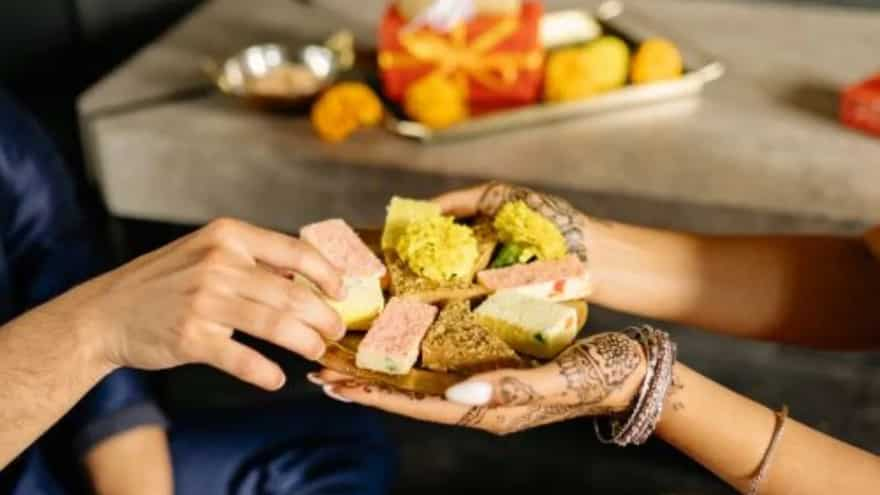 Image credit: Pexels
Eating Less, Explaining Nothing
Every Indian festive table has a gentle enforcer, usually an aunt holding a serving spoon, and the phrase thoda aur has ended many a firm resolution. A smaller appetite can feel awkward in that setting, which is why Dr Kesari wants the conversation to widen. "Festivals bring people together, and naturally, food becomes a big part of the conversation. I think it's a great opportunity to normalise the idea that different people have different appetites and nutritional needs. Someone eating less doesn't necessarily mean they're dieting or being antisocial. We should be comfortable allowing people to make their own food choices without questioning them," he says.
The larger picture explains the urgency. The Lancet estimates that nearly 180 million Indian adults aged 25 and over were overweight or living with obesity in 2021, and projects the number to cross 440 million by 2050. Dr Kesari argues that the way we talk about it has to mature alongside the numbers. "I think we need to stop treating weight management as a test of willpower," he says. "Excess weight is influenced by a complex combination of biological, environmental and behavioural factors. Using medication to address those factors shouldn't be something people feel embarrassed about."
He also offers hosts and fellow diners a simple courtesy. "And equally, nobody should feel obligated to explain their medical treatment at a dinner table," he says. A guest who takes one piece and smiles has given a complete answer.
A Gentler Way To Feast
Diwali has always been a festival of abundance, and that spirit is intact. What is changing is the unit of measurement. A table can overflow with colour, variety and care, and a guest can leave it delighted after a single perfect piece. "Ultimately, food is an important part of our culture and our celebrations. The goal should never be to take that joy away, but to find a healthier balance that allows us to enjoy it for years to come," says Dr Kesari, and nobody at the table needs to argue with that.
On what the season offers the industry, Chef Shodhan has a clear view. "Absolutely. The festive season, particularly Diwali, is about sharing, coming together and enjoying food, and that sense of indulgence should always remain. At the same time, it offers the industry an opportunity to introduce guests to more thoughtful food choices through seasonal ingredients, lighter preparations and greater variety on menus. I don't think the conversation should be about restricting what people eat, especially during celebrations. Instead, it should be about making more choices available and encouraging people to enjoy their favourite foods mindfully. As an industry, we can influence this positively through the way we plan, present and serve food."
Looking ahead, Chef Shodhan sees festive dining shaped by thoughtful curation. "I believe the future of festive dining will be shaped by how thoughtfully we curate the overall experience. Indulgence will always have its place, particularly in Indian celebrations where food is deeply connected to tradition and togetherness. However, personalisation, quality, seasonality and mindful menu planning will become increasingly important. As caterers, we need to evolve with our guests and understand that everyone experiences food differently. The real luxury lies in creating an experience that offers variety, celebrates flavour and gives guests the freedom to enjoy what they love, while still feeling comfortable and satisfied." So when the box comes round this Diwali, take the piece that catches your eye, give it your full attention and let it be enough. Offer the next guest the same freedom, whatever they choose.




