


 Share
Share

Every Diwali, without fail, the same dance unfolds. The doorbell rings, guests arrive bearing brightly wrapped boxes, and inside each one lies that familiar golden cube. Soan papdi. Again. Social media erupts with memes about the sweet that supposedly nobody wants but everybody gives. Comments fly about boxes making the rounds from house to house, like some kind of confectionery chain letter.
But here's the thing, for a sweet that everyone claims to despise, soan papdi has managed to become the undisputed champion of Indian festive gifting. The market was valued at USD 141.24 million in 2025 and is expected to nearly double by 2031. Clearly, someone's buying it. So perhaps it's time we stopped pretending and admitted the truth: soan papdi isn't the villain of Diwali. It's actually rather brilliant.
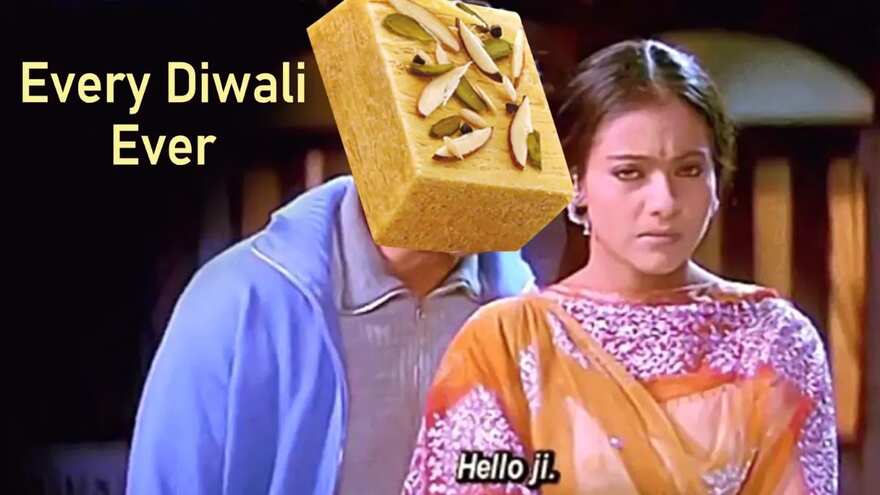 Image Credits: Memezar/Instagram
The Perfect Gift (Whether You Like It or Not)
Let's talk about what soan papdi actually does for us. You've got dozens of people to give sweets to. Your budget is reasonable but not unlimited. You need something that won't spoil during the three-hour commute to your relatives in the suburbs. You need it to look presentable. You need it yesterday because you forgot about your daughter's dance teacher.
Enter soan papdi, stage left.
Let's start with the practical genius of soan papdi. Unlike its syrupy cousins, it doesn't melt into a sticky puddle if left in the car. It doesn't need refrigeration. It won't leak through the box and ruin your lovely wrapping paper. It has a shelf life that would make other sweets weep with envy.
This is a sweet designed, whether intentionally or not, for the realities of modern Indian festival life. It’s like the Maruti 800 of sweets. Reliable, affordable, universally acceptable, and gets you where you need to go without fuss. Is it the most exciting option? No. Will it let you down? Also no.
The packaging deserves credit too. That shimmery gold wrapping isn't an accident. It looks festive enough to present to anyone, from your building's security staff to your company's managing director. There's a blessed equality to soan papdi that other sweets can't quite match. A fancy box of kaju katli creates expectations. Soan papdi simply says, "Happy Diwali, I thought of you."
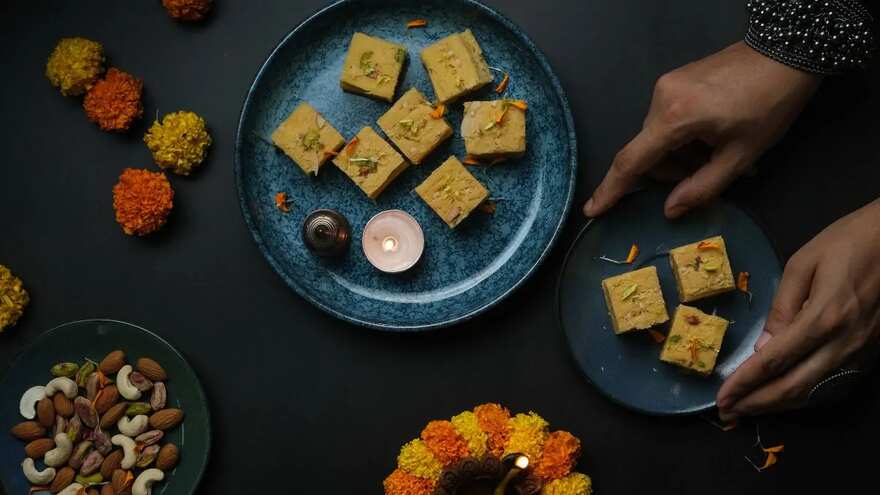 Image Credits: Canva
The Taste Of Nostalgia
Strip away the jokes for a moment, and many of us have rather fond memories of soan papdi. That distinctive flaky texture, the way it dissolves on your tongue, the subtle notes of cardamom and ghee. It's light enough to enjoy after a heavy festive meal, sweet but not cloying.
Made from gram flour, ghee, sugar, and milk, soan papdi requires genuine skill to create. Those delicate, thread-like layers don't just happen. Traditional sweet-makers spent hours perfecting the technique of stretching and layering the mixture to achieve that characteristic crisp-yet-soft texture. Modern manufacturers like Haldiram's and Bikano have scaled up production, but the essence remains the same.
The sweet's origins are wonderfully unclear, with Maharashtra, Uttar Pradesh, and Gujarat all claiming it as their own. Some food historians trace its lineage to Persian sohan pashmaki, linking it to similar sweets across Asia. This ambiguity only adds to its charm. Soan papdi belongs to everyone and no one, which perhaps explains why it's become the universal Diwali currency.
The Great Re-gifting Tradition
Yes, let's address the elephant in the room. Or rather, the box in the cupboard. Soan papdi gets re-gifted. A lot. But is that really such a terrible thing?
In many ways, the circulation of soan papdi boxes represents the very spirit of Diwali - sharing, community, and the gentle comedy of human nature. That box you received on Tuesday and passed along on Thursday isn't a symbol of laziness. It's a practical solution to the elaborate dance of festive obligations. Someone thought of you, you thought of someone else, and the sweet kept moving, spreading goodwill as it went.
The Cultural Glue
Soan papdi has become a cultural touchstone, a shared experience that unites Indians across regions, generations, and economic backgrounds. The memes that flood social media each Diwali aren't really mocking soan papdi. They're celebrating a collective understanding, an inside joke that millions of people are in on together.
Young people who've never met might bond over their families' soan papdi hoards. NRIs living abroad get nostalgic for that distinctive taste. Even those who genuinely don't enjoy eating it still appreciate what it represents - home, festival time, the warmth of tradition.
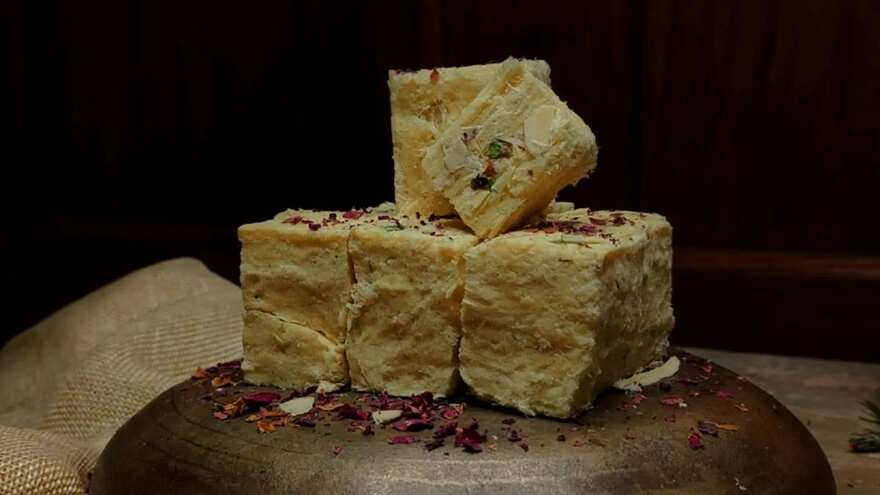 Image Credits: Pexels
A Global Success Story
Whilst we're busy joking about regifting, soan papdi has been quietly conquering international markets. Its light weight and durability make it ideal for export, and Indian diaspora communities worldwide have introduced it to new audiences. What began as a humble street sweet from Western India is now recognised globally as a signature Indian confection.
The industry continues to innovate, with manufacturers developing healthier versions, organic variants, and new flavour combinations with dry fruits. Some are reducing sugar content to appeal to health-conscious consumers. The best brands maintain strict hygiene standards and quality control, ensuring consistency whilst preserving authentic taste.
Perhaps We Protest Too Much
Here's a theory: we joke about soan papdi precisely because we care about it. If we truly didn't want it, the market wouldn't be growing at over 10% annually. We wouldn't immediately recognise it. It wouldn't feature so prominently in our festival memories.
In an age of artisanal everything and Instagram-worthy desserts, there's something refreshingly unpretentious about soan papdi. It's not trying to be trendy. It's not competing for likes. It simply exists, year after year, doing exactly what it's meant to do.
When you hand someone a box of soan papdi, you're acknowledging the festival, the relationship, the turning of another year. And sometimes, you're sharing a knowing smile about the fact that this box might well be at someone else's door next week.




