


 Share
Share

IN 16th-century Germany, a man condemned to death drank what was supposed to be a lethal dose of mercury. As a final request, he asked for a small clay tablet — a piece of terra sigillata, traditionally mined from the Greek island of Lemnos. The court, perhaps feeling magnanimous, obliged.
He didn't die. The mercury, apparently, didn't get the memo. Baffled and presumably a little embarrassed, the court banished him instead.
It is, depending on your sensibility, either a remarkable story about the medicinal properties of clay or the most creative jailbreak in recorded history. Either way, it's a good entry point into geophagy — the deliberate practice of eating soil — which turns out to have a history so old, so widespread, and so genuinely fascinating that it makes most food trends look deeply unimaginative.

Two million years of mitti
Geophagy isn't a fringe behaviour or a TikTok rabbit hole (though it's that too, now). Archaeological evidence from Kalambo Falls in Zambia suggests Homo habilis — a human ancestor who walked the earth between 2.2 and 1.6 million years ago — was already digging below the topsoil to mine clays. That's before agriculture, before cooking with fire, before essentially everything we consider foundational to food culture.
And here's the thing: it never really stopped. The practice continues today across every inhabited continent — including, and this might not surprise you as much as you think, right here in India.
It's closer to home than you'd think
Growing up in an Indian household, you've almost certainly encountered multani mitti — on your face, in your mother's skincare drawer, as the answer to approximately every summer skin complaint. What's less discussed is that a processed, food-grade version has been consumed in parts of India for generations. In Madhya Pradesh, Gujarat, Odisha, and Andhra Pradesh, roasted clay and black clay balls are eaten for their cooling properties Somerset House — not as an exotic experiment, but as an entirely ordinary part of local tradition. In Gujarat, edible clay is available at regular grocery vendors, sold as purified clay baked over wood. Somerset House
Pregnancy cravings for mitti are widely reported across India and largely treated as unremarkable by the people experiencing them — even if the medical establishment is less relaxed about it.
It's not just cravings. It's meaning.
Globally, the most documented context for geophagy is pregnancy, but the reasons go well beyond simple cravings. Among the Luo people of Kenya, pregnant women specifically seek out red clays, understood to replenish the blood passed to the growing foetus. The clay's role is named: remo ma ichweyogo nyathi — roughly, "the blood you form the child of."
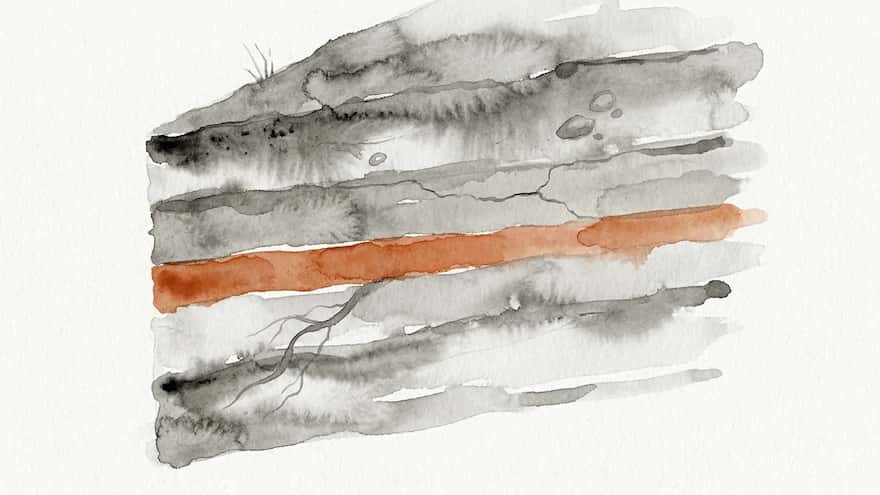
Soil also appears in origin stories across cultures — Adam, in the Biblical tradition, is literally formed from earth — and has historically served legal functions. In 20th-century Java, a crime with no witnesses could be resolved through geophagy: suspects would eat soil from their ancestors' graves, invoking them to bear witness to the truth. If someone fell ill in the following months, their guilt was considered established. Thinly sliced Javanese clay, incidentally, is still eaten today as a snack called ampo.
So what does it actually taste like?
Genuinely good, in some cases. Certain clays host Streptomyces — a genus of bacteria that produces geosmin, the compound responsible for that unmistakable smell of wet earth after rain. Petrichor, essentially, but edible. It's the same compound that gives certain natural wines, beetroot, and mushrooms their characteristic earthiness. Bentonite clay, popular in health food circles, is described by enthusiasts as clean and mineral — not unlike the finish of a particularly geological natural wine.
The Amsterdam-based Museum of Edible Earth has spent years cataloguing this world — over 600 soil samples from 44 countries, each with tasting notes, geological composition, and cultural context. It reads like an extremely unusual wine list. Highlights include melt-in-the-mouth pemba from Suriname and montmorillonite green clay from France, marketed as an anti-ageing treatment.
Should you eat dirt, though?
With significant caveats. Some soils contain heavy metals, parasites, or bacterial contamination. In India, as elsewhere, clay consumed during pregnancy isn't without risk — lead and arsenic can be present in unprocessed soils, and there are documented health concerns. The key distinction is sourcing and processing: food-grade, purified clays that are tested and certified are a different proposition from scooping something up out of the ground.
Researchers at the universities of Glasgow, Strathclyde and Crete are currently investigating whether Lemnian clays — the very ones that saved our mercury-poisoned prisoner — may help slow the progression of inflammatory diseases, though results so far have only been demonstrated in mice.
For now, the science is still catching up to the two-million-year head start. The practice, it turns out, was never as strange as it seemed — we just forgot we were doing it.
This piece is adapted from "Why do some people eat soil? From a prisoner's lifeline to a modern tasting menu, the history of geophagy" by Zander Simpson, published in The Conversation. Slurrp does not recommend the consumption of soil, clay, or earth in any form. If you are experiencing cravings for non-food substances during pregnancy or otherwise, please consult a qualified medical professional.




