


 Share
Share

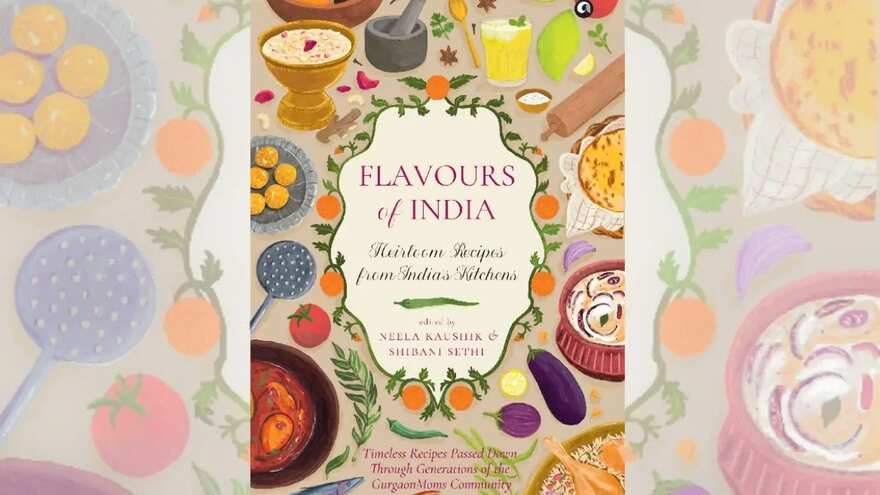
What began as casual recipe-sharing among members of the GurgaonMoms community has grown into Flavours of India: Heirloom Recipes from India’s Kitchens — a collection of fifty traditional dishes remembered, refined, and recorded by home cooks across the country.
The project is led by Neela Kaushik, founder of GurgaonMoms and a long-time advocate for women’s voices in everyday spaces, and Shibani Sethi, a corporate professional and literary enthusiast who helped shape the book’s tone. Both view food as memory — an archive of lived experience worth preserving.
This excerpt highlights recipes from Rajasthan, a region where cooking is shaped by climate and constraint. Dishes like Raab, Gunda Kachri ki Sabzi, Kacchi Haldi ki Sabzi, Pittor in Curd Gravy, and Masaladar Nimbu ka Achaar speak to a cuisine that is resourceful, bold, and deeply rooted in tradition. The excerpt below has been reproduced here with due permission of the publishers, Aleph Book Company.
***
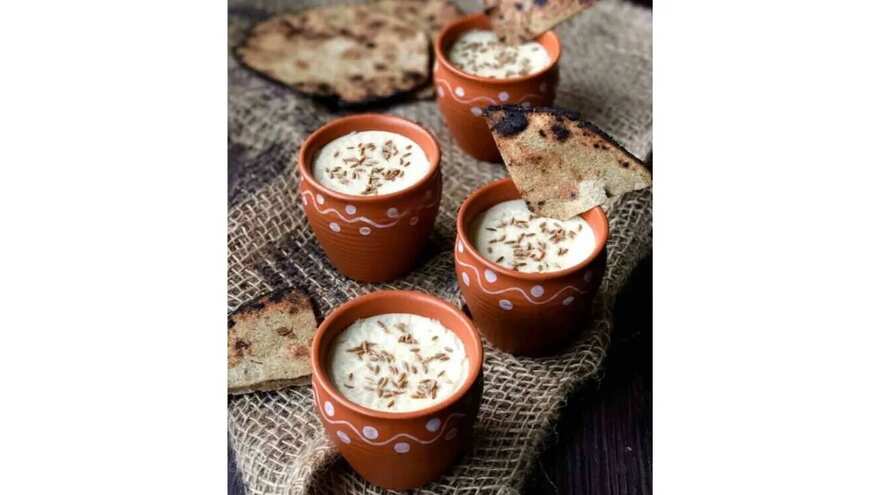
Rajasthani Bajra Raab by Surbhi Bhandari
RAAB is a cherished Marwari drink, steeped in tradition and versatility. The beauty of raab lies in its ability to adapt to the changing seasons — cold and refreshing in the summer, warm and comforting in the winter. I vividly remember my Dadi making it almost every day during the colder months. In the evenings, we would gather around, eagerly waiting for a warm bowl of raab, our version of ‘soup’ in those simpler times.
In the summer, raab is made with whole wheat and barley flours, and left to ferment overnight. The next day, it’s enjoyed chilled with chopped onions, dahi, and khakhra — a perfect way to beat the heat. But in the winter, the recipe changes. Dadi would use bajra flour, which brings warmth to the body, and serve it hot as a soup. The best part was the charcoal dhungaar, which added a distinct smoky flavour, making each sip deeply satisfying.
For us, raab wasn’t just a drink; it was a symbol of Dadi’s love, warmth, and the simple joys she brought into our home.
Recipe:
Serves: 4 Preparation Time: 20 minutes
Cook Time: 40-45 minutes
INGREDIENTS
Dahi (curd) 125 gms
Water 950 ml
Bajra flour (pearl millet flour) 30 gms
Ginger 1 tsp, grated
Cumin powder 1⁄2 tsp, roasted
Salt to taste
Coriander leaves to garnish
Charcoal 1 piece
Desi ghee 1 tsp
METHOD
In a pan, mix curd, water, bajra flour, salt, ginger, and cumin powder. Whisk thoroughly to ensure there are no lumps. Place the pan on the stove and stir continuously for the first 5–7 minutes to prevent curdling. Continue cooking for 15–20 minutes until the mixture thickens. Turn off the stove.
Heat a piece of charcoal over an open flame until it is red-hot. Place a small metal bowl in the centre of the raab pan. Make sure that the bowl is elevated enough so that the raab does not spill into it.
Carefully, place the hot charcoal in the bowl. Pour 1 tsp ghee on the charcoal and immediately cover the pan with a lid to trap the smoke. Let it sit for 15 minutes until the smoke infuses into the raab.
Uncover the pan and remove the bowl with the charcoal piece. Garnish with some chopped coriander and roasted cumin powder before serving.
Serving suggestion: Serve the raab hot for the best flavour and warmth.
*
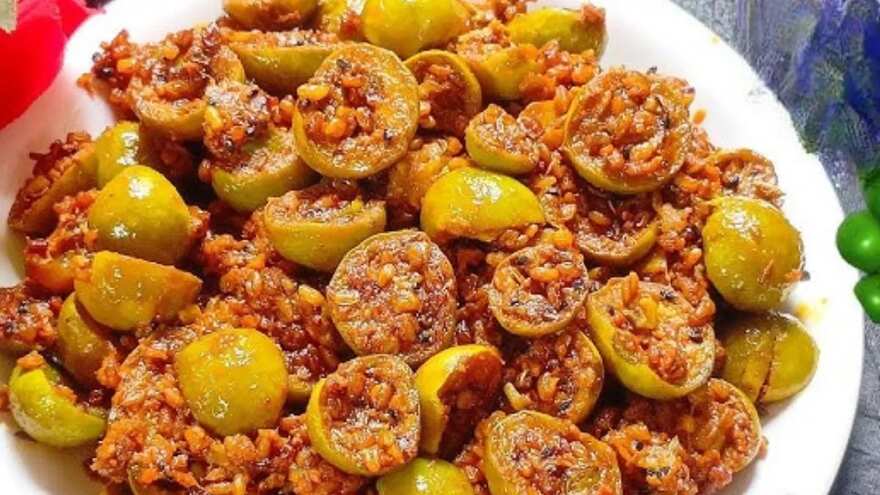
Gunda Kachri Ki Sabzi by Abhilasha Jain
AS I am from a Marwari household, certain flavours instantly transport me back to childhood, evoking memories of family gatherings, festivals, and the comforting aroma of home-cooked meals. One such dish is Gunda Kachri ki Sabzi — a dish that carries the essence of Rajasthan’s rustic charm and the simplicity and warmth of family ties. For many, gunda (or lasoda) and kachri are not just ingredients; they embody a tradition passed down through generations.
I remember my grandmother meticulously preparing this sabzi with such rhythm, honed through years of experience. She would often tell us stories of how she learned the recipe from her mother, who had learned it from hers.
Each bite of the sabzi was a connection to our roots, a taste of the land our ancestors called home. The tangy, slightly bitter taste of gunda, combined with the earthy spiciness of kachri, creates a symphony of unique Rajasthani flavours. It’s a dish that speaks of resilience, of making the most of the arid land and turning it into something extraordinary.
Preparing Gunda Kachri ki Sabzi isn’t just about cooking; it’s about preserving a legacy. It’s about remembering the hands that taught us, the stories shared around the kitchen fire, and the love infused into every meal. As I make this sabzi today, I am reminded of the times spent with my grandmother, learning not just how to cook but how to keep our traditions alive.
Recipe:
Serves: 5 Preparation Time: 2 hours
Cook Time: 45 minutes
INGREDIENTS
Gunda/Lasoda (glueberry) 200 gms
Kachri (wild melon) 100 gms, dried and crushed
Groundnut oil 2 tbsp
Cumin seeds 1 tsp
Mustard seeds 1 tsp
Asafoetida 1/4 tsp
Green chillies 2–3, slit longitudinally
Turmeric powder 1 tsp
Red chilli powder 1 tsp
Coriander powder 1 tsp
Amchoor (dry mango powder) 1 tsp
Water 500 ml (approx.)
Salt to taste
Coriander leaves chopped, to garnish
METHOD
To prepare the gunda, wash it thoroughly. Slit each one of them. Bring a pot of water to a boil, add a pinch of salt, and parboil the gunda for about 5-7 minutes until slightly tender. Drain and set aside.
Soak the crushed kachri in warm water for 15-20 minutes to soften it. Then, drain the water and keep it aside.
For tempering, heat groundnut oil in a heavy-bottomed pan until it starts to smoke. Lower the heat and add cumin seeds, mustard seeds, and asafoetida. Once the seeds crackle, add the slit green chillies and sauté for a minute.
Now, add the parboiled gunda to the pan and sauté for 5–7 minutes on medium heat until they turn golden. Add turmeric powder, red chilli powder, coriander powder, and salt to season the mixture. Stir well to coat the gunda with the spices.
Add the soaked kachri to the pan. Mix everything and cook for another 10–15 minutes on low heat, stirring occasionally.
For the final touch, sprinkle dry mango powder over the sabzi and give it a stir. This adds a bit of tanginess that balances the flavours. Garnish with chopped coriander leaves and serve hot.
Serving suggestion: Gunda Kachri ki Sabzi pairs beautifully with bajra roti or even with plain phulkas. A side of curd or buttermilk complements the meal, making it a wholesome experience.
*
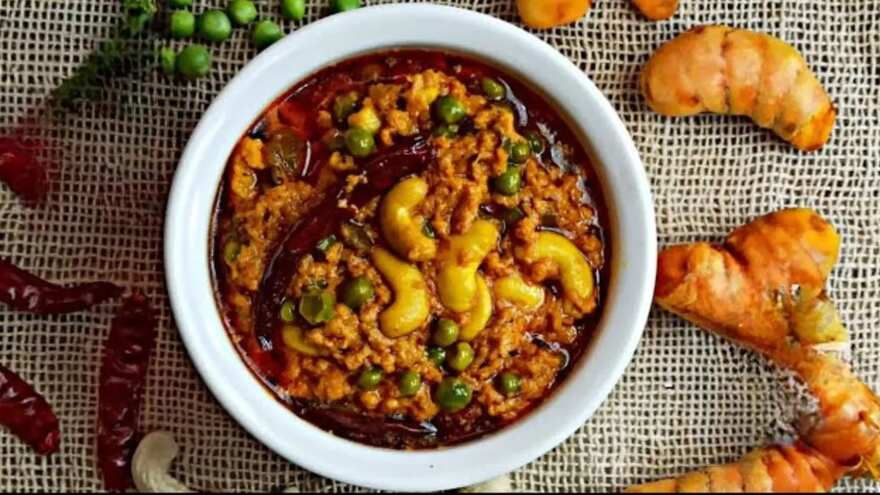
Kacchi Haldi Ki Sabzi by Deepti Bhatnagar
I come from Jodhpur, Rajasthan, a region renowned for its vibrant culture and indulgent use of desi ghee. One dish that holds a special place in my heart is Kacchi Haldi ki Sabzi.
Before I got married, I would often help my maa prepare this dish, and by the end of it, my hands would turn completely yellow. I loved it when she’d jokingly say, ‘Mere haath peele ho gaye,’ a comment which would always give me butterflies. Maa would even playfully add, ‘Jaldi kara do peele....’
Now, whenever I make this sabzi, my son teases me with, ‘Mummy, aapke haath phir se peele ho gaye.’
Recipe:
Serves: 4 Preparation Time: 20 minutes
Cook Time: 20 minutes
INGREDIENTS
Raw turmeric 200 gms, washed, peeled, and grated
Onion 1, big, chopped
Ginger 3-inch piece, washed, peeled, and grated
Garlic 8–9 cloves, chopped
Curd 1⁄2 cup, at room temperature
Desi ghee 1⁄2 cup
Cumin seeds 1 tsp
Peas 1⁄2 cup
Tomatoes 2, finely chopped
Salt to taste
Red chilli powder to taste
Coriander powder 1⁄2–1 tsp
Garam masala powder 1 tsp
Coriander leaves chopped, to garnish
Cashews (optional) 10–12, fried
Water 100 ml
METHOD
Heat desi ghee in a kadhai. Add cumin seeds and let them crackle. Then, add grated raw turmeric and fry for 5–6 minutes.
Mix in grated ginger, chopped onions, and chopped garlic cloves. Sauté the mixture for 2–3 minutes until aromatic. Add red chilli powder and coriander powder, and sauté for another minute.
Now, add the tomatoes and cook for 3–4 minutes until they soften. Add green peas, 100 ml of water, and salt to taste. Cover and cook on a low flame till the peas are tender and everything is well-cooked.
Beat the curd until smooth. Lower the flame and add the curd to the kadhai, stirring continuously to prevent it from splitting. Cover and cook for another 5–6 minutes.
Sprinkle some garam masala powder and freshly chopped coriander leaves. Your sabzi is now ready to serve! You can also garnish it with fried cashews.
Serving suggestion: Kacchi Haldi ki Sabzi pairs well with Khoba Roti or hot parathas.
*
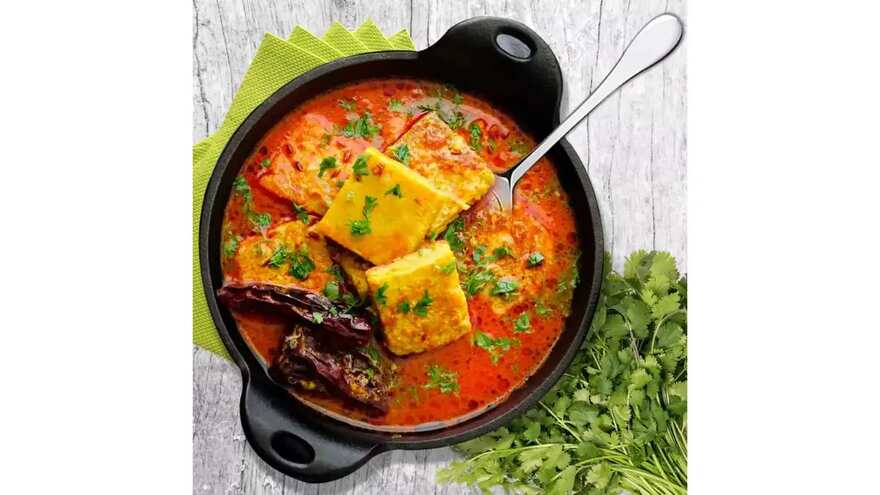
Pittor In Curd Gravy by Payal Nandwana
MY grandfather was a true foodie, especially when it came to dishes made with besan — a trait that has been passed down to me. I have fond memories from my childhood, watching my mom prepare a variety of besan-based recipes, and one of my favourites was Pittor in Curd Gravy. I loved the way she made it.
Sadly, I never had the chance to learn the exact measurements from her, as she passed away unexpectedly. For a long time, I yearned to recreate that same taste but struggled to find the exact recipe. After numerous attempts and countless trials, I think I have finally succeeded. Now, I’m thrilled to share that very recipe with you.
Recipe:
Serves: 5-6 Preparation Time: 15 minutes
Cook Time: 30 minutes
INGREDIENTS
For Pittor:
Besan (chickpea flour) 250 gms
Water 550 ml
Salt 1 tsp
Turmeric powder 1⁄2 tsp
Red chilli powder 1⁄2 tsp
Carom seeds 1⁄4 tsp
For Gravy:
Oil 1 tbsp
Cumin seeds 1⁄2 tsp
Asafoetida 1/8 tsp or a pinch
Green chillies 1–2, finely chopped
Curry leaves 10–12
Coriander powder 2 tsp
Red chilli powder 2 tsp or to taste
Turmeric powder 1 tsp
Water 2 litres
Sour curd 250 ml, blended at room temperature
Salt 2 tsp or to taste
Garam masala powder 1 tsp
Coriander leaves chopped, to garnish
METHOD
Pittor
Take besan and sieve it to remove any lumps. In a wok, add besan, salt, red chilli powder, turmeric powder, and carom seeds.
Gradually add water while stirring continuously to ensure no lumps are formed.
Turn on the stove. Place the wok over it and cook it for 6–7 minutes, stirring continuously. The besan will thicken as it cooks. To check if it’s ready, take half a teaspoon of cooked besan, flatten it on a plate, and try to lift it with your finger. If it comes off easily without sticking, it’s done.
Quickly, spread this besan in a thin layer on a large flat plate or the back of the plate. Allow it to cool and dry for a few minutes.
Once dried, cut the besan layer into small cubes or diamond-shaped pieces. Pittor is ready.
Gravy
Heat oil in a wok, add asafoetida and cumin seeds. Let them splutter. Add green chillies and curry leaves. Sauté briefly.
In a bowl, mix red chilli powder, coriander powder, and turmeric powder with some water. Gently add this mixture to the prepared tempering and stir well. Add more water to it and bring it to a boil, cooking for 5–6 minutes.
Now, add the blended curd and keep stirring till it starts boiling. Let it boil for 2–3 minutes.
Gently add the prepared pittor pieces to this gravy and let the mixture simmer for 2–3 minutes. Finally, add salt and garam masala. Garnish with fresh chopped coriander leaves.
Serving suggestion: Serve it hot with plain parathas or rotis. Dry Pittor can also be fried and served as snacks.
Note: Adding salt at the end helps thicken the gravy. Adjust the consistency with more water as needed.
*
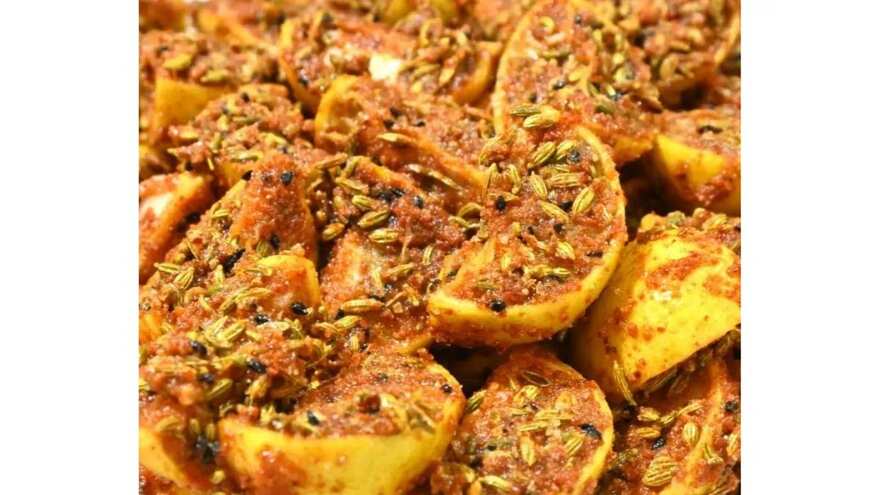
Khatta Masaledar Nimbu Ka Achaar by Monalika Sabharwal
MY mom was incredibly fortunate to inherit a recipe for an oil-free whole lemon pickle, crafted with a blend of spices and special techniques from her father-in-law. He, in turn, had received it from the royal head chef of the king of Bharatpur, Rajasthan.
This recipe holds a special place in my heart. I remember my grandfather, grandmother, and mom preparing this pickle together for the entire family and extended relatives. Every year, everyone eagerly anticipated the chance to savour these exquisite whole lemons!
I feel truly blessed to have received this recipe a few years ago and to be able to carry on the tradition with some measure of success and a lot of pride!
Recipe:
Makes: 500 gms Preparation Time: 30 minutes
Cook Time: 3-4 days
INGREDIENTS
Lemons 10, large, juicy
Dry Spices:
Salt 3 tbsp
Black salt 1 tbsp
Red chilli powder 1 tbsp
Fennel seeds 11⁄2 tbsp, coarsely ground
Fenugreek seeds 1 tbsp
Carom seeds 1 tsp
Turmeric powder 1 tsp
Asafoetida 1⁄2 tsp
METHOD
Wash and clean the lemons thoroughly. Ensure they are completely dry by wiping them with a clean cloth.
In a bowl, combine all the dry spices like red chilli powder, turmeric powder, fenugreek seeds, carom seeds, coarsely ground fennel seeds, and asafoetida.
Slit each lemon into four equal parts, ensuring the lemon stays joint at one end. Squeeze the lemons to get about half the juice out, but leave some juice in the lemons. This will make the achaar taste better. Use a sieve to strain the juice and take out any seeds.
Generously fill the dry spice mixture into the slits in the lemons.
Clean a glass jar using a dry cloth. Sprinkle some of the dry spice mixture inside it. Place the spice-filled lemons in the jar and pour the strained lemon juice on top of the lemons, covering them. Sprinkle some more of the dry spice mix on top of the lemons in the jar.
Close the lid of the jar tightly and shake it gently. Store the jar in a cool, dry place for 3–4 days, avoiding direct sunlight. The lemon pickle is ready to be enjoyed.
Serving suggestion: This delicious lemon pickle can be enjoyed with warm parathas, chapatis, or rice, along with any curry or vegetables.
Note: The lemons should be large and juicy. All utensils used in the preparation must be clean and completely dry, with no moisture present in them.
***
Flavours of India: Heirloom Recipes from India's Kitchens (Pages 200, Rs 699) by Neela Kaushik and Shibani Sethi is published by Aleph Book Company.




