


 Share
Share

“Unlike clubs, where you have age restrictions, profiling at the door and people arriving in groups, a coffee rave is wide open; no age bar, no social barrier, no alcohol buffer—people just show up with pure enthusiasm and move together as one,” Nagpur-based multidisciplinary artist Mudra Kumar points out about the distinction between what one would essentially classify as a ‘gig’ in the conventional sense of the term and a sober rave. The phenomenon of ‘soft clubbing’—a term coined in 2024 by writer and creative strategist Yusuf Ntahilaja—refers to a rising shift amongst younger millennials and the subsequent generation as a social trend, where the consumption of alcohol and mind-altering substances is replaced by coffee; while conventional club or party spaces make way for music events to be hosted in unusual venues such as bookstores, cafés and parks.
Tracing back to a time when the early mushrooming of swanky coffee shops across India was considered a place for anyone who thought themselves of a more ‘refined’ social status, the notion of these spaces being used for purposes beyond their primary existence meant that they were the foundations for business as well as social conventions. Different than the coffee houses which were few and far between in the early 20th century, coffee shops, as we know them today, have consistently been upgrading their core product by exposing the avid consumer to a variety of strains, techniques and styles. In the process, adapting methods of blending the bean extract with other ingredients in the same way one would imagine treating a craft cocktail, added weightage to the sober-curious lifestyle that a new generation of drinkers seemed to be warming up to in recent years.
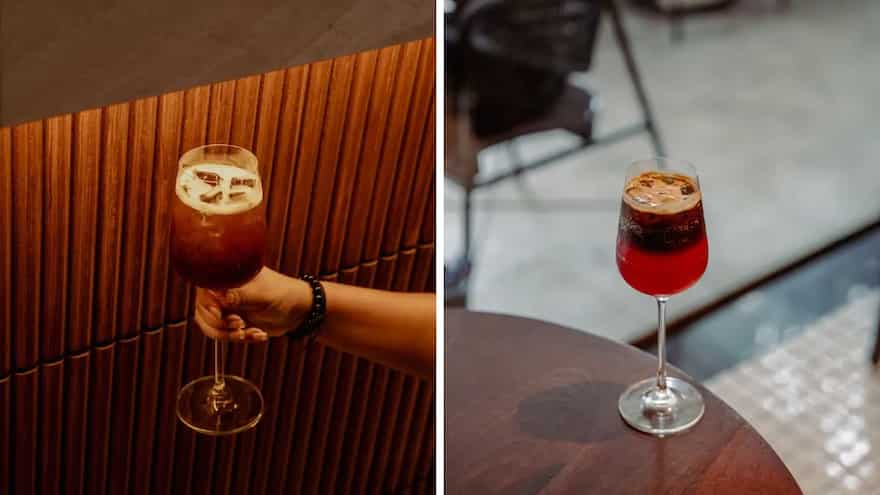
Image Credits: Journal Bombay [Woody Brew (L), Brown Berry (R)]
“When we first started exploring coffee mixology, the idea was to make it more exciting for people; to move beyond what most were used to. Traditionally, coffee was seen in fairly fixed ways, either (served) with milk, in desserts or as a shake, but we wanted to show that it could be more versatile,” co-founder Ateet Singh of Mumbai’s Journal Café says. Singh, who teamed up with co-founder Ronak Maheshwari to design a coffee menu with approaches commonly witnessed in mixology, added that his goal was to make the beverage feel limitless and surprise coffee lovers as well as non-drinkers with options that were approachable yet balanced—as one would expect a cocktail to be. Creating the opportunity for people to experience coffee in a new way meant that guests weren’t simply paying a visit to the space to get their caffeine fix—everyone was seeking to get a taste of the next best thing.
“The inspiration really came from seeing how cafés abroad, especially in places like Vienna and Hong Kong were blurring lines between the coffee counter and the cocktail bar. They were experimenting with ingredients, textures and techniques usually reserved for alcohol, and it completely changed how people perceived coffee,” Singh quips, when quizzed about noticing noteworthy consumer preferences. He also adds, “Another big shift we’ve noticed is that people are drinking less alcohol during the week, but they still want something that feels social, refreshing and thoughtfully made. That’s where coffee fits perfectly in mixology.” Delving deeper into the aspect of how these zero-proof coffee drinks are concocted, Singh notes that there is an overlap between making coffee and making cocktails when comprehended through the lens of building flavour gradually. “It’s not just about how the drink tastes, but how it looks and unfolds with every sip. We experiment with cold brews, espresso concentrates and flavoured infusions the same way you’d work with different spirits or liqueurs. At its core, zero-proof coffee mixology is about applying the precision and creativity of a bar program to coffee, treating it not as a base ingredient, but as a medium for expression.”
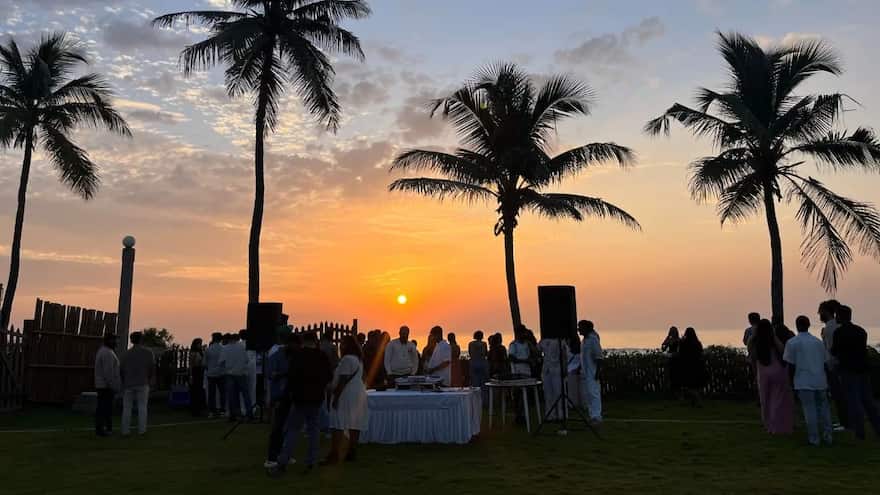
Image Credits: Private Society
In the same vein, Richard Noel, co-founder and director of the Chennai-based Private Society, decided to exercise his notion that huge gatherings would soon be traded for encounters of a more intimate nature, in the years to come. Noel, who began his career curating the three-day Kappa Cultr music festival for Mathrubhumi in Kochi, conceived the Homegrown Privates IP to focus solely on organising invite-only sunrise raves in a city that wasn’t particularly known for its party hotspots—where cups of steaming filter coffee and music are accompanied by a breathtaking view of the coast. “I understood that the next generation was completely out of favour towards liquor and we wondered whether there is going to be a party lifestyle that could exist without it,” he says. Although he believed initially that the event should be arranged within a closed space, the idea of having attendees watch the sunrise while enjoying music, coffee and breakfast seemed lucrative as an option.
Homegrown Privates, which hosted its first edition at the Paris Plage bakery in Palavakkam for 30 people in April 2025, has since held ten theme-centric sunrise raves across different sea-facing venues. “Usually in (music) festivals, the chances of networking are thin, so we have some ice-breakers on-ground during each of these editions. What we were very clear about was that we didn’t want a lot of people coming in, so we had to block a lot of walk-ins. The whole point of a private party is that there are no promotions or marketing that happens before the event; we only released footage once it was concluded. This helped us build our own database of people who were interested in attending the following chapters and that’s how we’ve been able to understand that this would work as a concept.” Noel also observes that many of the people attending the daytime rave are often friends who’ve known each other from having common nightlife interests and so, the conversations that arise in a setting that’s different than a standard club also varies greatly.
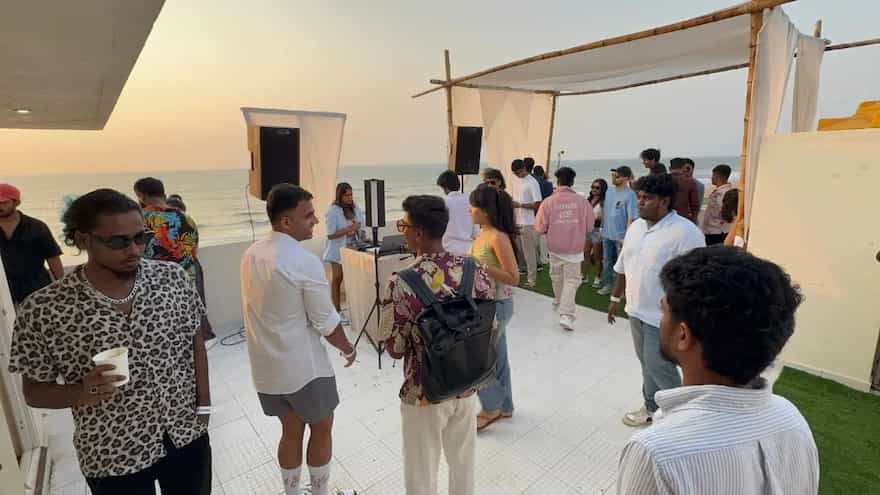
Image Credits: Private Society
Narrowing his gaze further into the economics involved for making these events as beneficial to the audience, he affirms that they must feel special and welcome. This means that a one-time payment where they reserve their slot takes care of add-ons such as a cup of coffee and foods to pick from—all while grooving to music and enjoying the atmosphere. He also makes note that while Chennai has essentially lost its breakfast market, Homegrown Privates is also re-introducing the culture while converting it into an income stream for the host properties. “It has become an experience where people want to attend without really needing to know which artist is playing, or attending for a specific motive other than simply because it is a unique way to feel communal.” Furthermore, Mudra Kumar notices that the age diversity of sober parties make them appealing across different groups and for people from various backgrounds.
“Coffee raves attract a lot of younger people who can’t enter clubs yet, and for many of them this is their first high-energy music experience. That brings an honesty and excitement you don’t always get in nightlife spaces,” he says. Kumar’s training as a multi-instrumentalist laid the foundation for his foray into DJing, which then led him to co-create the country’s first coffee rave with Corridor 7 and DJ Tanishq in Nagpur. Speaking about how the reception to music is different in soft clubbing events, he adds that, “The biggest difference is the quality of attention. People arrive with a kind of fresh, unfiltered enthusiasm because the whole concept is still new in India. Unlike clubs, where the format is familiar and the audience subconsciously knows what to expect, a coffee rave has this sense of discovery built into it.” Noel further explains that his collective knowledge in working with music enabled him to improvise and develop frequencies that work according to the type of event he’s putting together.
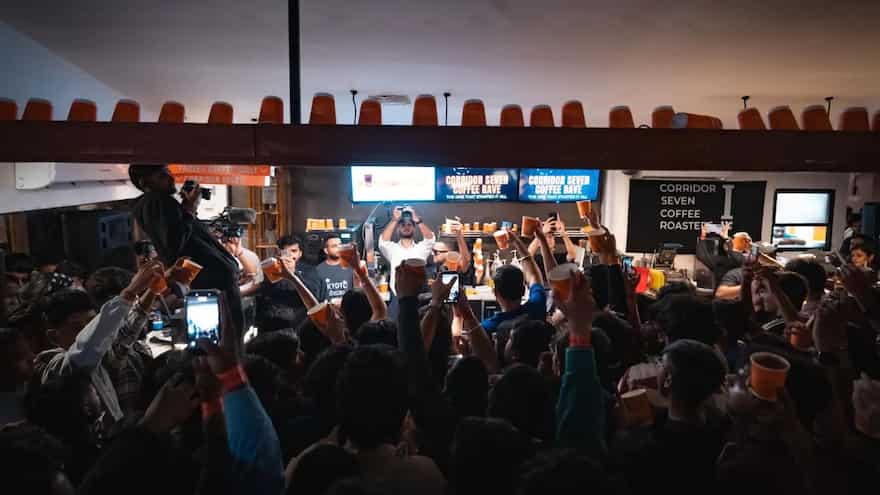
Image Credits: Prathamesh Deshkar (Pro Media)
“Right from the beginning, the music people are hearing is very much concentrated and deliberate. We have a very positive approach to morning events which creates a nice ambience. This has now become a community where there are a bunch of people who come for the sunrise, some who come for the breakfast and some who come for the music—but collectively everyone is here together. There are also a lot of non-Chennai people that we started tapping into; those for whom the city was nothing but two beaches and three malls. This is also a generation where people who moved countries are coming back; so for them to meet like-minded people in a communal space works out. We started rooting the venue aggregation in a way where it had nothing to do with us or for us. It’s basically what they’re looking for that we act as a bridge to and also focussed on a niche that was looking for something better,” Noel quips. The arduous process of picking guests to attend these sunrise raves that takes place once a month involves filling out a questionnaire, the basis of which his team handpicks a collection of people they think might have similar mindsets.
Speaking about how social parameters vary in his soft clubbing events, Noel says that early wakers are always interested in meeting other early wakers, since they aren’t typically awake in the late hours of the night. He jokes that it’s easy to spot those who pulled an all-nighter before heading to the event, as they’re usually the ones wearing sunglasses before the crack of dawn. In addition, de-centering the consumption of alcohol means that loyal listeners of music make it a point to show up diligently. Kicking off with mellow music, Noel mentions that the tempo changes gradually and moves into a more energetic pace as the hours progress. Kumar seconds this by adding, “There’s no alcohol dulling the senses—so the crowd’s reactions are sharper; every moment as an artist has to be earned. People are alert, present and responsive. At a sober rave, the set has to be tight. Caffeine makes people sharper, so a sober audience picks up on mistakes instantly. I ensure the flow is clean, the transitions are intentional and the overall journey has a clear emotional arc.”
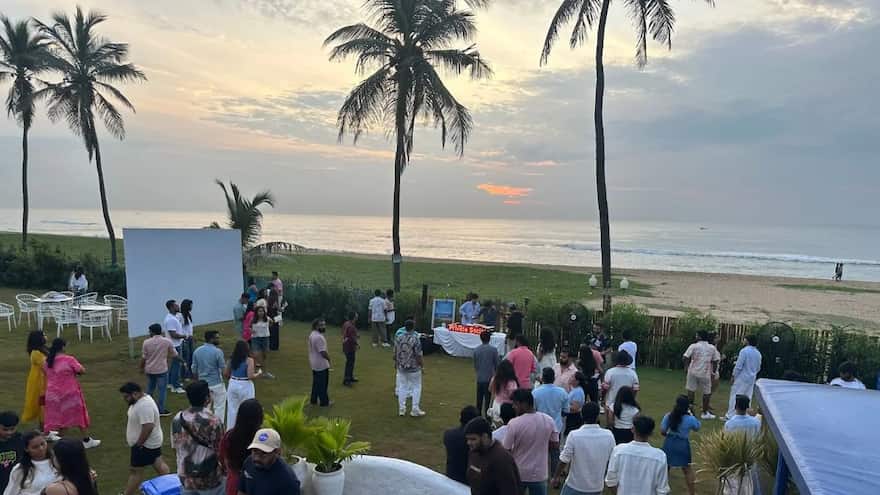
Image Credits: Private Society
Explaining his process of compiling a set further, Kumar focuses on capturing the attention of a younger audience in attendance with a bit of experimentation. “As the energy rises, I weave in recognisable, viral moments—songs people know from edits and reels—without ever becoming predictable. It’s a balance between giving them what they want and surprising them at the right moments.” The communal aspect cultivated by coffee at the epicentre of interpersonal connections also finds familiar territory in Journal’s patronage—one that Singh believes ‘fits effortlessly into different moments of people’s days.’ Elaborating further upon this he says that when the coffee program was developed since the time of their inception in January 2024, the idea was to build on a pre-existing culture. “Over time, these everyday rituals have formed their own little ecosystem—familiar faces, conversations that start at the counter and turn into friendships or even people who work from the same corner every day. Having a distinct coffee program also helps spark conversations between our patrons and baristas. Because the drinks are a little different—whether it’s a mixology-style cold brew or a fruit-forward coffee drink, people get curious, they ask questions, they engage. That exchange builds a sense of connection and belonging.”
With special care taken to source good-quality ingredients, Singh suggests that seasonality plays a huge role in keeping the menu dynamic and ensuring better flavour for the beverages. “We also think about how an ingredient fits the local palate. For instance, something like a jamun tonic works beautifully here because it feels familiar. When it comes to zero-proof coffee drinks, freshness is something that really can’t be compromised. Using packeted juices or pre-mixed bases takes away from the vibrancy and balance that make these beverages special. Another non-negotiable is brewing coffee fresh for each drink rather than relying on large-batch or on-tap mixtures,” he adds. Since coffee oxidises quickly, it loses its natural character, leading to a flatter profile. However, according to Singh, the priority for the menu is always to emphasise quality over convenience.
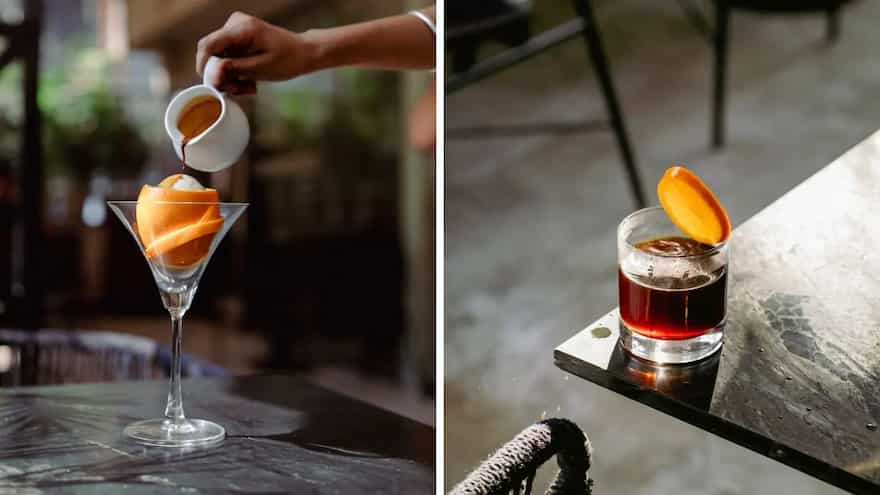
Image Credits: Journal Bombay [Orange Affogato (L), Orange-Basil Pour Over (R)]
Expounding why coffee makes for a compelling ingredient to treat using mixological methods, he points that like a good spirit, coffee possesses depth and complexity as a result of being shaped by the influences of the soil, climate and altitude it has been cultivated in. “In mixology, we talk about balance, acidity, sweetness, bitterness and body; and coffee naturally brings all of that to the table. When you start thinking about coffee this way, it stops being a supporting element and starts becoming the hero ingredient.” Within the spectrum of Noel’s work, while the promise of coffee isn’t what drives people to make their presence felt in the wee hours of the morning, he doesn’t take away from the fact that it is one of the elements introduced as a way of fuelling conversations about the genres of music played at these chapters—for people who consume a certain type of music on a regular basis as well as those who are new to it. Moreover, he also says that the absence of liquor at these experiences means that the chances of misdemeanour is reduced significantly, helping create a safe environment. “It’s also one way to understand that people are very nice in the mornings,” Noel chuckles.
That said, even music has a key role to play in regulating the energy levels of a well-caffeinated audience—something that Kumar does not take for granted. He says, “The challenge is to balance their energy with your own instincts. It can be very tempting to keep pushing higher and higher, but a great set isn’t a sprint—it needs pauses, dips, build-ups and moments where the room can reset before the next big wave hits.” He implies that the real test is internal and hence, resisting the urge to bombard them with bangers and guiding them through a journey that breathes is crucial. “You learn to pay attention to the feel of the room and adjust in real time. It’s a living, moving conversation between the artist and the crowd, and you have to stay sensitive to that dialogue from start to finish.” For Noel, the challenge also has plenty to do with an incompatible infrastructure in Chennai, when it comes to organising sunrise gatherings.
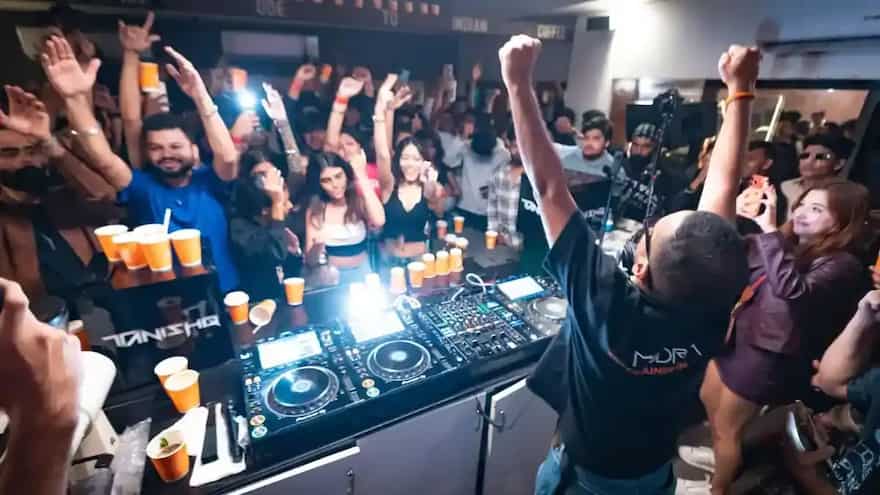
Image Credits: Prathamesh Deshkar (Pro Media)
Despite having the second-longest urban beach worldwide, the open space isn’t viable to host events akin to Homegrown Privates. “We really want to provide an amazing experience. That’s one of the reasons why we don’t do it regularly because we want to have a different place each time so the secrecy is maintained and people get to have a different sunrise experience—the sunrise in Palavakkam is different than the sunrise in Neelangarai,” he adds. Additionally, Noel also says that there’s always something distinct to look forward to with each chapter; whether it is the coffee drinks, the food, the music and even the mood at each venue. He believes that sober raves are shaping the next decade of partying because of how receptive people are to the changing rhythms of what the culture constitutes.
As for the zero-proof movement taking form within India, Singh notes that like most beverage trends, the metro cities are becoming the foundation for it to take root. “Cities like Mumbai, Delhi and Bangalore already have a strong café culture, and people are becoming far more conscious about what they consume. There’s a growing audience that enjoys the ritual of a good drink but doesn’t necessarily want alcohol to be a part of it. As the awareness around health, ingredients and mindful consumption grows, the category will only get more refined.” Bass for breakfast, the promise of connection and community without the burnout? We’ll take it!




