


 Share
Share

A simmer pot is simply a heated infusion: fruit peel, spices, herbs, and dried botanicals placed in water and left to release their scent at a low, continuous bubble. The method has roots in households across colder regions where heating kitchens served a dual purpose: warmth and aromatic freshness. Households relied on simmered spices and citrus during winter, both to clean the air and to align a home with the season’s food cues. These infusions work as a practical, natural approach to home scenting, drawing from the same instinct that guides spice roasting, herbal brewing, and seasonal cooking traditions across many Indian kitchens. The idea aligns naturally with long-standing practices that use heat to unlock aroma; think of how cloves and cinnamon are warmed during winter, how tulsi is gently brewed for immunity, or how citrus peels are dried for later use. A simmer pot follows that same logic but adapts it for home fragrance rather than consumption. It offers an ingredient-first method that suits festive gatherings, cooler evenings, and the general shift toward richer, spiced aromas during December.
Recommended utensil:
A small stainless-steel saucepan, wide-bottomed milk pot, or kadai works best, as the open surface allows fragrance to disperse evenly.
1. Clementine Peel, Cinnamon Bark & Black Cardamom
Combine the peel of two clementines (or Indian mandarins), one stick of cinnamon bark, one lightly crushed black cardamom pod, and three cups of water. Let the pot come to a slow simmer and maintain it on low heat for 45–60 minutes, adding more water as needed. The clementine peel releases bright citrus oils almost instantly, creating an uplifting top note, while the cinnamon introduces a warm, grounding aroma that deepens with time. Black cardamom brings a smoky, resinous layer that adds depth to the blend, resulting in a festive scent that feels grounding and nuanced.

Image credit: Adobe Stock
2. Ginger Slices, Tulsi Leaves & Jasmine
Add 8–10 thin slices of ginger, a small handful of fresh tulsi leaves (or a tablespoon dried), a few drops of jasmine essential oil, and three cups of water to a simmer. Let the mixture bubble on low heat for 30–40 minutes, adding the jaggery after the first ten minutes so it dissolves gradually. Ginger produces a clear, invigorating sharpness; tulsi contributes an herbal, slightly medicinal freshness that travels well across open spaces; and the jasmine softens the aroma, giving the brew a lush, floral edge that sits well during cooler evenings.

Image credit: Pexels
3. Pine Needles, Bay Leaf & Lemon Peel
Place a small handful of pine needles (or a sprig from a real Christmas tree), one Indian bay leaf, a teaspoon of green peppercorns, and three cups of water in your pot, and simmer for 50–70 minutes. Pine needles release their fragrance slowly, creating a clean, resin-forward aroma reminiscent of winter foliage. The bay leaf adds an earthy undertone, while the lemon introduces a bright, subtle lift that surfaces midway through the brew, giving the fragrance a crisp structure.
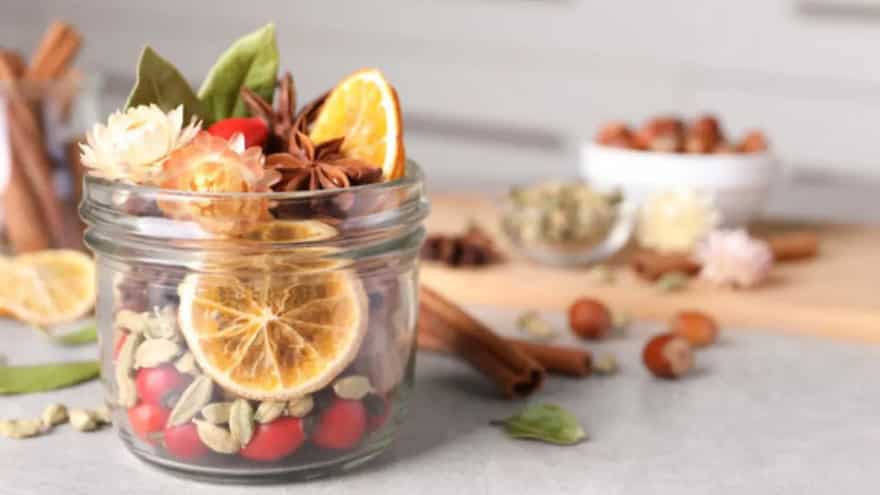
Image credit: Adobe Stock
4. Dried Cranberries, Star Anise & Clove Buds
Add two tablespoons of dried cranberries, one whole star anise, four or five clove buds, and three cups of water. Let the pot simmer uncovered for 35–50 minutes, stirring once or twice so the cranberries hydrate evenly. The star anise introduces a clear, aromatic lift within the first ten minutes, followed by the deeper, sharper edge of cloves. As the cranberries soften, they release a tart, lightly jammy scent that balances the spice notes, producing a fragrance that feels festive without becoming heavy.
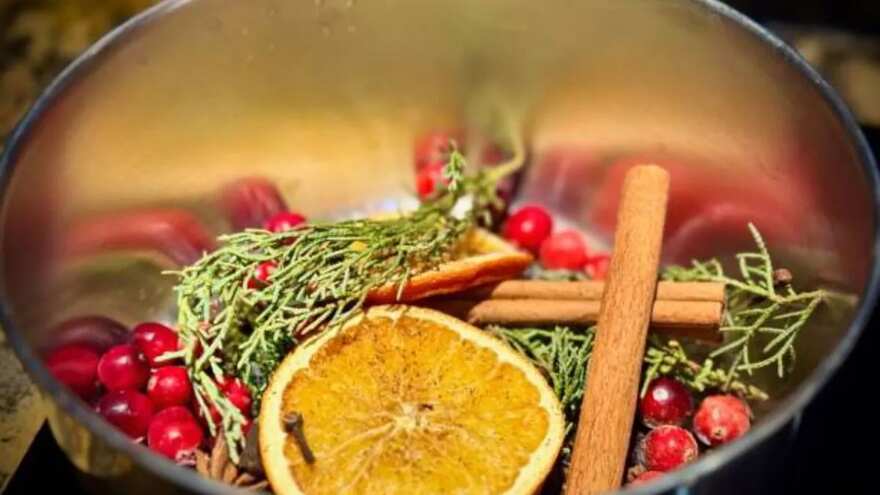
Image credit: Adobe Stock
5. Apple Peel, Vanilla Bean & Rosemary
Use the peel of one apple, half a split vanilla bean, one rosemary sprig, and three cups of water, simmering the mixture for 40–55 minutes and adding the rosemary after the first ten minutes so it doesn’t dominate the blend. The apple peel offers a mild orchard note, the vanilla provides warmth and subtle sweetness, and the rosemary adds a fresh, herbal clarity that prevents the aroma from drifting toward confectionary territory. The result is a layered, clean winter scent that suits both daytime and evening brewing.
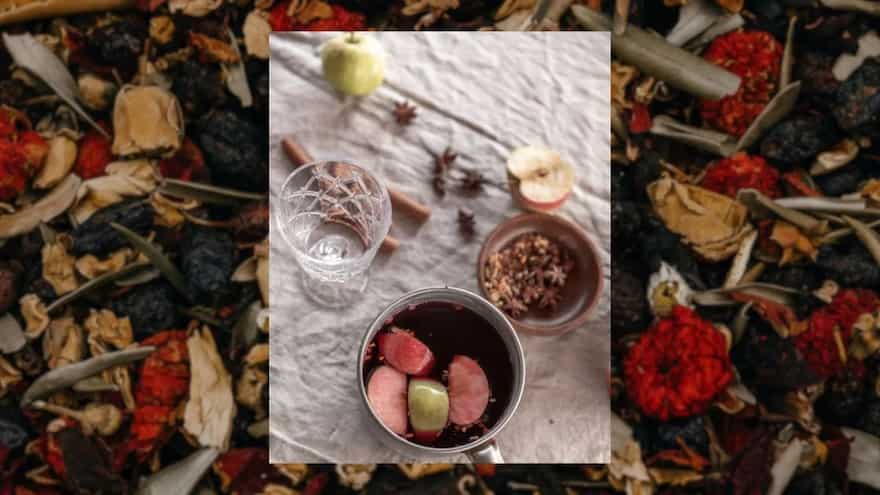
Image credit: Pexels
6. Cocoa Husk, Rose & Nutmeg
Combine two tablespoons of cocoa husk (or the outer shells from good-quality cocoa nibs), a small handful of dried rose petals or rose essential oil, a generous sliver of nutmeg, and three cups of water. Let the mixture simmer on low heat for 45–60 minutes, replenishing the water when needed. The cocoa husk releases a warm, chocolate-adjacent aroma that develops gradually, creating a soft gourmand base. The rose petals add a gentle floral note that blends smoothly with the cocoa, resulting in a nuanced sweetness. Nutmeg becomes the defining evening element, offering a warm, round spice note that grows more pronounced as the brew continues. The final fragrance feels mellow, indulgent, and suited to winter nights; sweet without tipping into dessert territory.

Image credit: Wikimedia Commons




