


 Share
Share

Chhath Puja is one of the most deeply spiritual festivals in the Indian calendar, observed primarily in Bihar, Jharkhand, and parts of eastern Uttar Pradesh. The rituals extend over four days, marked by fasting, bathing, offering arghya to the setting and rising sun, and preparing food without salt, onion, or garlic. Each element in this festival has a distinct purpose and meaning. The food, particularly, follows principles of purity, balance, and devotion. Thekua has long stood as the symbolic sweet of the festival, but several other dishes once formed an essential part of the offering and family meal. Many of these recipes have quietly faded over time, though they remain significant in understanding how communities preserved culture through food. Exploring these forgotten preparations brings a deeper awareness of how traditional cooking practices aligned with faith and local ecology.
1. Rasiyaw Kheer
Rasiyaw Kheer, a humble yet revered dish, is traditionally made on the final day of Chhath Puja. This kheer uses jaggery instead of sugar, offering a deep caramel hue and earthy sweetness. The dish is prepared using newly harvested rice, fresh milk, and gur, cooked slowly over a wood or cow-dung stove that infuses a faint smokiness. The simplicity of its ingredients reflects the festival’s emphasis on purity, while the method of slow cooking ensures the kheer thickens naturally without additives. In older homes, women used earthen pots to achieve a flavour that cannot be replicated in modern cookware. Rasiyaw Kheer was once shared among family and neighbours as prasad, marking both gratitude and the completion of the festival’s vows.
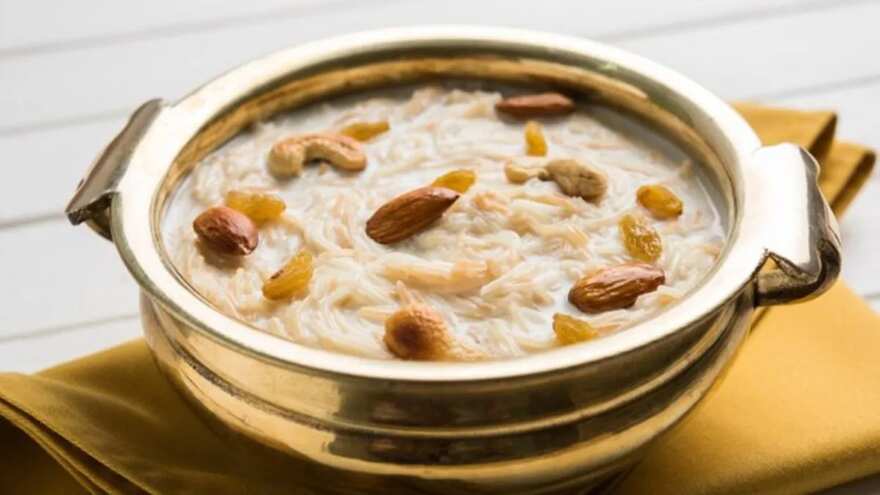
Image credit: Freepik
2. Kaddu Bhaat
Kaddu Bhaat, a mild pumpkin curry paired with plain rice, once held a place on the Chhath menu for its simplicity and nutritional value. Cooked without onion or garlic, the curry uses rock salt, green chillies, and pure ghee. The pumpkin is softened till it breaks down gently, creating a sweet-savoury consistency that complements steamed rice. This combination was believed to cleanse the system after long fasting and to prepare the body for the concluding rituals. The use of seasonal vegetables also underlined the festival’s agricultural roots. Pumpkin, being locally available after harvest, was considered auspicious. In many households, Kaddu Bhaat was eaten before beginning the Nirjala fast, serving as a wholesome meal that sustained devotees through the demanding rituals ahead.
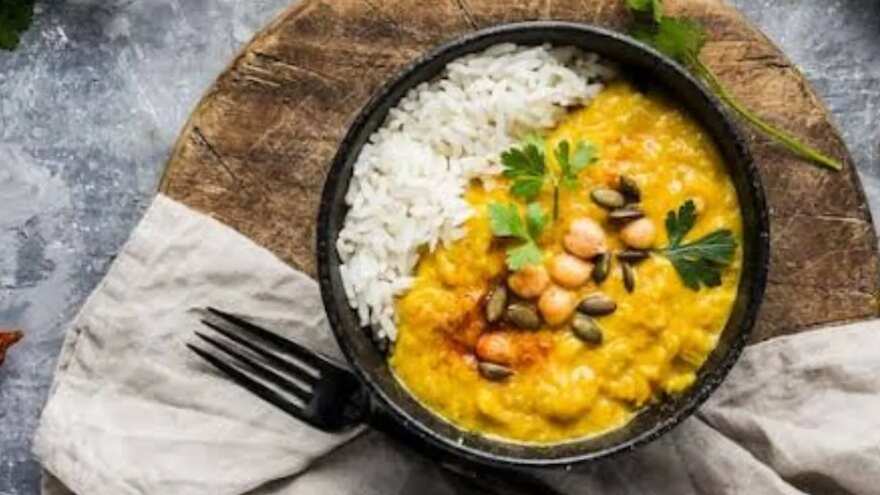
Image credit: Freepik
3. Laai And Tilkut
Laai and Tilkut, made with puffed grains and jaggery, represent the connection between the harvest and worship. Laai uses puffed rice or murmura mixed with melted jaggery that binds the grains together as it cools. Tilkut, on the other hand, uses sesame seeds ground with jaggery to form dense, nutty sweets. Both are prepared during the festival as offerings to Surya Devta and distributed after the arghya. The process of making Tilkut, once a community activity, required precision and patience. The jaggery had to reach the perfect consistency to hold the seeds without hardening too quickly. These sweets are high in energy and nutrients, reflecting how traditional festive foods were practical as well as symbolic. They celebrated abundance but remained grounded in moderation, avoiding excess while ensuring sustenance.
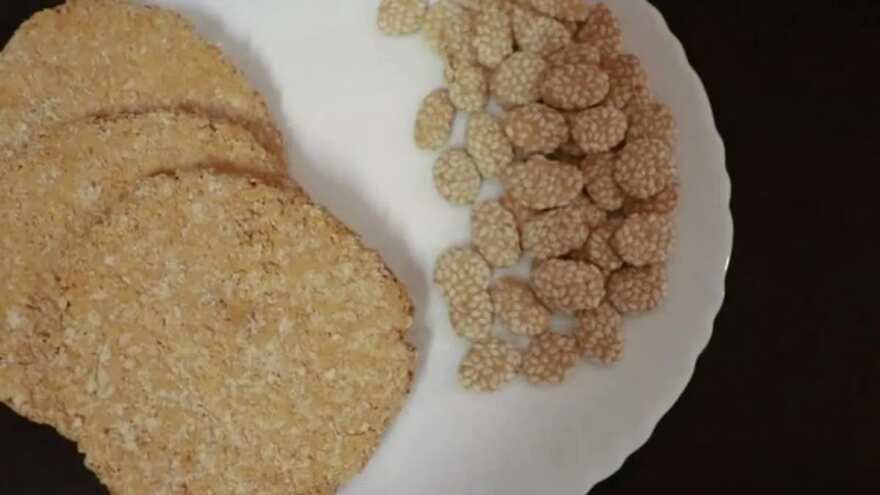
Image credit: Wikimedia Commons
4. Sooji Ka Pua
Before thekua gained widespread recognition, Sooji Ka Pua was equally cherished during Chhath Puja. This preparation uses semolina, jaggery, milk, and a few drops of ghee, creating a soft, mildly sweet fritter. The batter rests for several hours to allow fermentation, which gives the puas a light texture. Unlike deep-fried thekua, these are shallow-fried, resulting in a crisp edge and soft interior. The dish symbolises simplicity and devotion, as it is made without rich flavouring agents. In older households, puas were prepared at dawn on the third day of Chhath, offered to Chhathi Maiya along with fruits and sugarcane. Though rarely seen today, Sooji Ka Pua once reflected how home cooks balanced taste with sacred restraint.
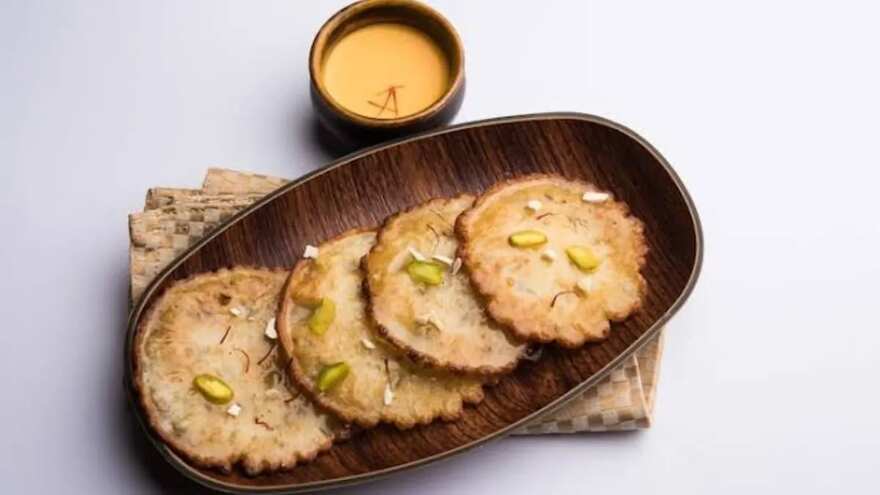
Image credit: Freepik
5. Sathi Ka Roti And Dahi
After the rituals conclude, devotees break their fast with Sathi Ka Roti and Dahi. The flour used for this roti is made from a special variety of rice known as Sathi, which is harvested before the festival season. The dough is kneaded using water and a touch of ghee, then rolled into thick rotis that are cooked on a clay griddle. Paired with fresh curd, this meal restores energy after the demanding fast. The combination of fermented dairy and simple grain supports digestion and replenishment. Sathi Ka Roti also holds cultural significance, as it marks the completion of Chhath Puja with humility and gratitude. In earlier generations, this meal represented a quiet return to normal life after days of abstinence and ritual dedication.




