


 Share
Share

On the eighth day of the Navratri festival, Durga Ashtami takes place, which holds an auspicious meaning during this divine time. This year, Ashtami will take place on March 26, 2026. This day is devoted to Maa Mahagauri, representing purity and calmness, and is celebrated by performing rituals such as Kanya Pujan, where young small girls are worshipped, assuming them to be the form of the divinity.
The bhog thali prepared on Ashtami day carries deep significance as it is not just another food that you can make and offer to the Goddess. Every food item that is put on the thali is purely sattvic in nature, has no onion or garlic and is deeply rooted in tradition. From staples such as halwa and puri to dishes like kala chana ghungani, the bhog thali for Ashtami is prepared with devotion and in adherence with the guidelines of the day.
What To Keep In Ashtami Bhog Thali
The foods prepared on Ashtami are not just about feeding the Goddess, but it’s about offering food that symbolises purity, energy, and devotion. Here is a look at what makes a traditional Ashtami bhog thali and the importance of each element.
Halwa For Sweetness
Sooji or atta halwa is the core of the Ashtami bhog that is offered to the Goddess on the day and then later consumed as prasad. Those who follow a nine-day fast often have this as the first thing before proceeding to normal eating food. The sweetness is considered to bring positivity and sacred grace into the household. Traditionally, halwa is offered to young girls during Kanya Pujan. The fragrance of roasting suji or semolina in ghee fills the house, giving a sense of festivity. Making halwa is easy, but also comforting, nostalgic, and deeply linked to childhood memories during Navratri.
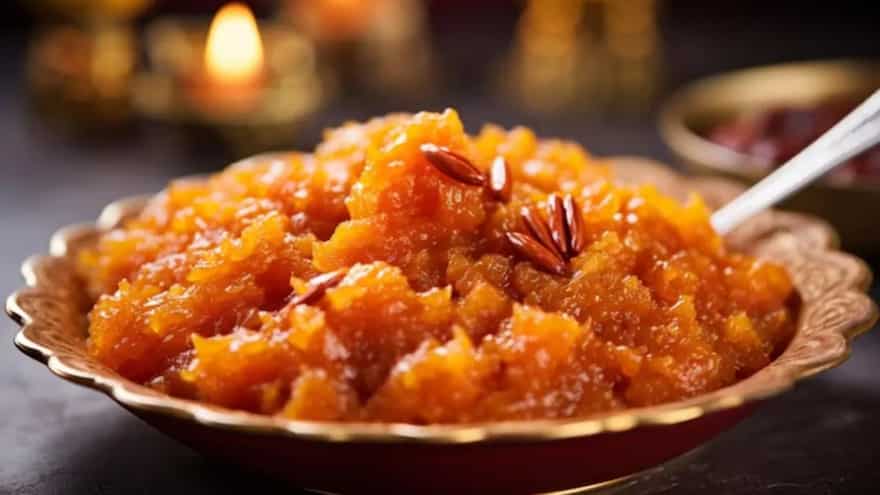
(Image credit: Freepik)
Black Chana For Strength And Energy
Have you ever thought why only kala chana is offered to the Goddess as the bhog on the Ashtami? It is more than just a protein-rich addition, and it symbolises strength and stability. Cook it simply with basic spices, often using just cumin seeds or rock salt, and it aligns thoroughly with the sattvic nature of Navratri food. It tastes earthy and perfectly balances the sweetness of halwa. In almost every household, kala chana is an important part of the Kanya Pujan, as it represents nourishment and nutrition. It is also prepared for those who complete their fast after 9 days of fasting, and should get a full source of protein instantly.
Puri For Completeness And Celebration
Puri can give a festive touch to anything. Made with wheat or atta flour and deep-fried in ghee or oil, puri symbolises celebration. Its crisp and soft texture perfectly pairs with halwa as well as kala chana, making it a whole meal together. Puri is not just a side, but completes the meal, which you can offer to the divinity with generosity and later have as prasad. It changes the simple bhog into something festive without having to make anything extravagant.
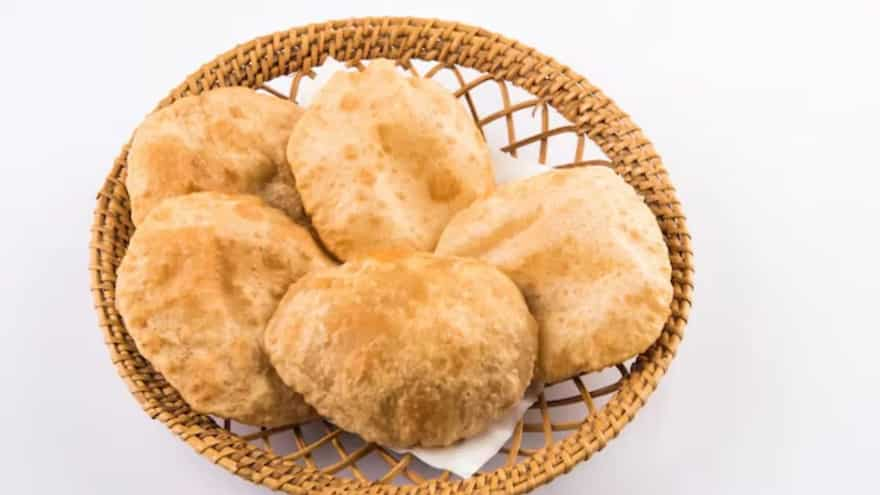
(Image credit: Freepik)
Coconut: Purity And Sacred Offering
Coconut has a very sacred place in almost every Hindu ritual. Often offered whole or in pieces in the thali, it represents purity and selflessness. Coconut is mildly sweet, and its fresh taste adds a cooling balance to the meal. In many homes, coconut is also given to the kanya along with the prasad offering, strengthening its role as both a ritual and a nourishing ingredient.
Fruits
Seasonal fruits are an important part of the bhog, symbolising simplicity and natural nourishment. Bananas, apples, or pomegranates are commonly used, relying on availability. Fruits represent purity because they are unaffected by heavy cooking and stay close to their natural state. They also do not boost the sugar level, and they also represent gratitude for nature’s abundance. Adding fruits to the bhog thali provides balance to other fried items, such as puri or sweet like halwa. It brings a refreshing contrast and aligns with the concept of sattvic eating during Navratri.
Kheer
In some homes, kheer is prepared in place of halwa. Made with milk, sugar, and rice or makhana, kheer represents peace and emotional comfort. Milk-based bhog are supposed to be of a cooling and pure nature, making them fit for devotional rituals. The slow cooking of kheer also represents patience and care, qualities that are often connected with prayer and devotion.




