


 Share
Share

FROM SHAADI FEASTS and Sunday brunches to the beloved thali refill, buffets promise freedom — try a little of everything, go back for more, no questions asked. But all that abundance comes at a hidden cost: buffets are often breeding grounds for bacteria, and your gut may be the one footing the bill.
Here’s why buffets, no matter how tempting, can be a breeding ground for bacteria and bellyaches:
1. Cross-Contamination Is Inevitable
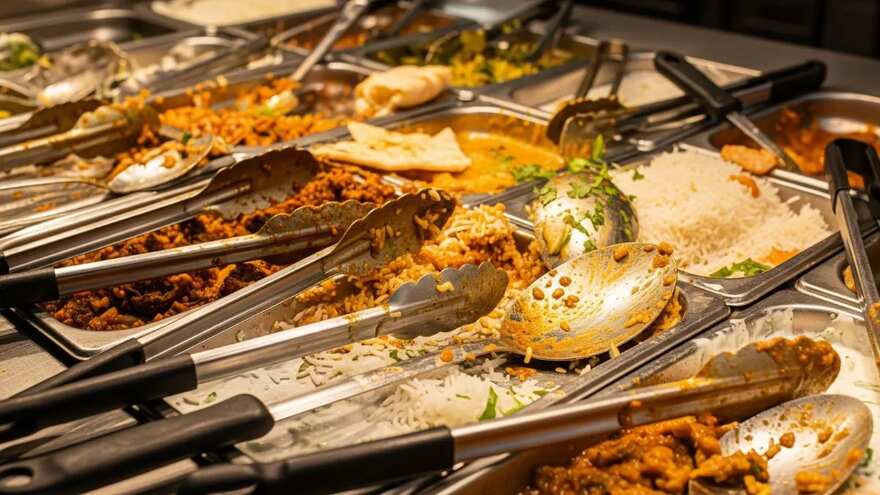
At a buffet, everyone shares everything — from serving spoons to sneeze zones. A single contaminated dish (say, undercooked chicken or spoiled chutney) can spread bacteria across an entire lineup. Even in well-run establishments, people often use the same spoon for multiple dishes or touch food directly. That’s a recipe for trouble.
In Indian buffets, where hands-on eating is common, the risk is even higher — especially if diners skip washing their hands between rounds.
2. Allergens Can Be Everywhere
If you have food allergies, buffets are like navigating a minefield. A spoon used in a peanut-based sabzi and then dunked into a plain dal? That’s all it takes to trigger a serious reaction.
Clear allergen labels and separate serving utensils are rare in most Indian buffet setups, and awareness among staff can be low. Until allergy sensitivity becomes standard practice in kitchens here, caution is your best friend.
3. Lukewarm Lasagne, Tepid Tandoori — Temperature Is a Killer
The “danger zone” for food safety lies between 8°C and 63°C — a range in which harmful bacteria multiply fast. And guess what? Many buffet dishes linger right there.
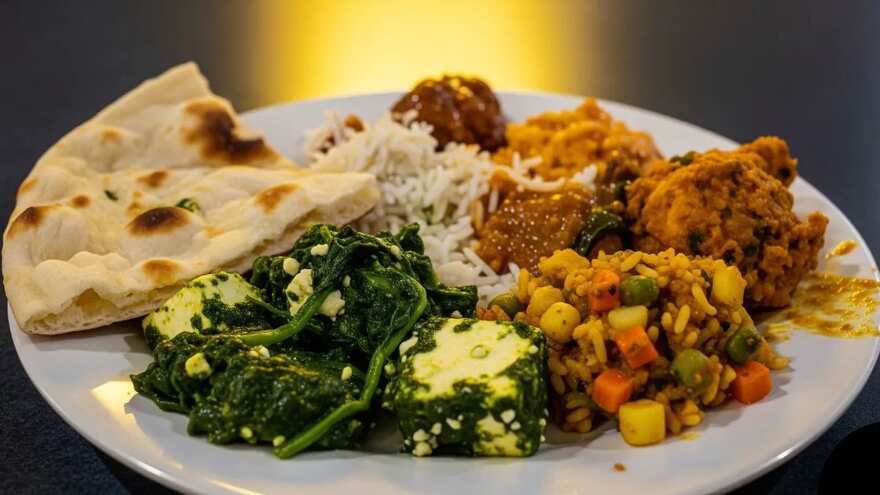
Whether it’s cold dahi vada or a hot biryani that’s been out too long, poor temperature control is a major cause of food-borne illness. In India’s warm climate, where ACs may not always be reliable or even present, maintaining safe food temperatures is doubly challenging.
4. Old Food Gets “Recycled”
To reduce waste and costs, buffet staff may top off half-empty trays instead of replacing them — especially in high-traffic Indian weddings or events where there’s pressure to keep food flowing. This leads to mixing fresh and stale batches, creating ideal conditions for contamination.
5. Questionable Hygiene Behind the Scenes
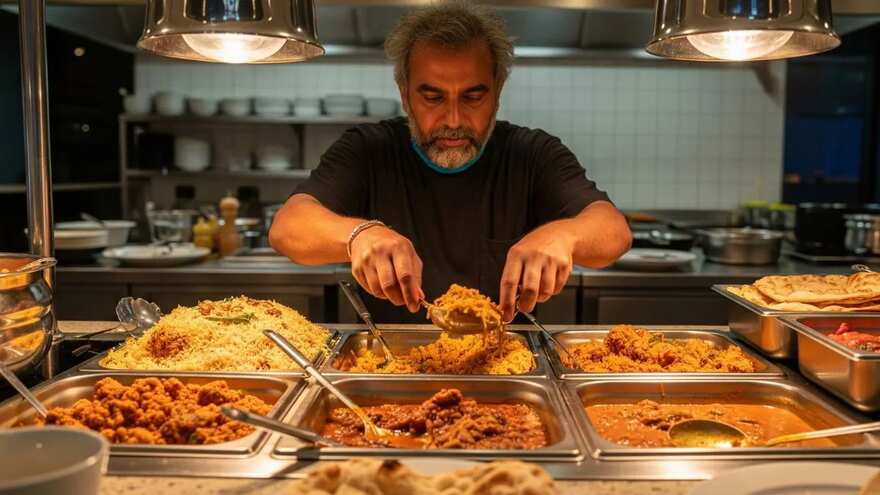
While the buffet layout may look clean, what happens behind the counter matters. Are the kitchen staff using gloves? Are vegetables properly washed? In many small eateries or outdoor buffets (think college canteens, dhabas, or roadside events), hygiene practices are hard to monitor and even harder to trust.
6. Some Bacteria Are India’s Regulars
Here are a few usual suspects in Indian buffet settings:
Salmonella: Lurks in eggs, poultry, and dairy-based gravies.
E. coli: Often comes from undercooked meat or raw veggies like sprouts and salad.
Clostridium perfringens: Loves those buffet-style curries and stews kept warm for hours.
Staphylococcus aureus: Found on human skin — spreads easily via shared utensils or bare hands.
7. The “Jugaad” Mentality Can Compromise Safety
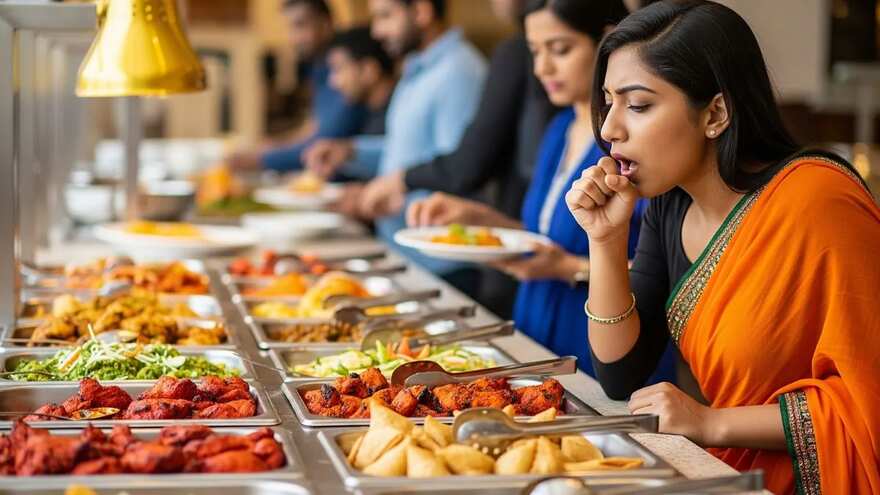
India’s famous improvisational spirit sometimes backfires. From repurposing leftovers between events to serving curd rice hours after it’s been sitting out in the sun, food safety rules are often bent in the name of practicality. Sadly, what works logistically may not always work for your stomach.
How to Stay Safe
- Pick hot food that’s actually hot and cold dishes that are properly chilled.
- Avoid trays that look mixed, messy, or underfilled.
- Don’t use shared utensils between dishes.
- Wash your hands before you hit the line.
- If the food looks suspicious, trust your gut — and skip it.
Buffets can be fun, flavourful, and full of surprises. Just make sure that none of those surprises come from the toilet later.




