


 Share
Share

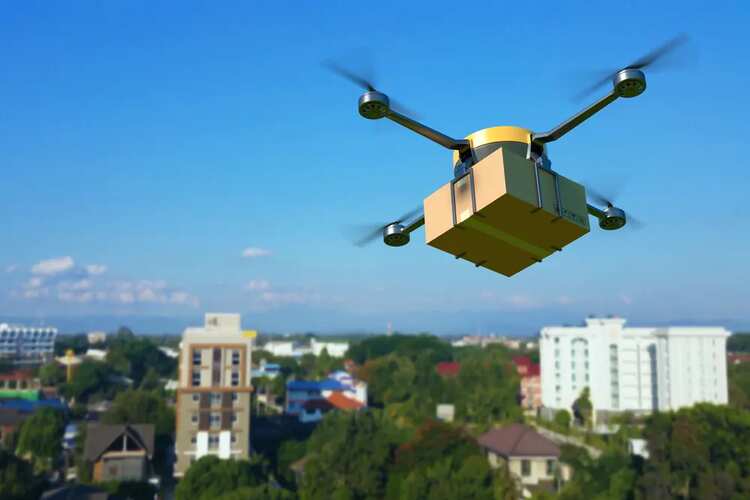
Last month, the city skies of Hyderabad came alive with the sound of drones in a few localities, such as Tolichowki, Masab Tank, Kukatpally and Manikonda. At the centre of all the air-borne, decibel-raising excitement, was a modest-looking clay handi, bearing Hyderabad’s iconic Kucchi Gosht Dum Biryani, clamped to the drone. A Gurgaon-based biryani chain chose the biryani-obsessed Hyderabad, over all its other metro locations to do pilot runs of its drone delivery, for reasons other than the fact that the biryani capital of India is rather emotional about its biryani.
While the chain recently opened its 100th outlet in Kolkata (in Behala, with an all-women managed restaurant, smart move in a city known for its powerful women, including its woman CM) and has branches across all six metros as well as smaller cities and towns like Bhubaneswar, Patna, Jamshedpur, Guwahati, Margao (Goa) and Nashik, how would its dine-in launch in Banjara Hills compete with local home-grown biryani brands?
So, they used the idea of drone delivery of biryani to announce the launch of their first dine-in outlet (in addition to the 8 cloud kitchens already there in Hyderabad). A few influencers were roped in, to join an outreach program, which involved filming a video of them receiving the biryani on the terrace or roofs of their homes and sharing their feedback on the same.
One influencer, who does not want to be named, recalls how the technical team did a recce thrice at his house, as it involved a lot of clearances, including from the local police station. Finally, the drone could only land on the rooftop as against the earlier planned landing on the balcony of the influencer’s home, as the drone was too large and bulky to be maneuvered. That it had eventually employed a smart marketing strategy was evidenced from the fact that the video garnered about 2.5 million views across social media channels and saw a much higher than expected rise in sales (at 44 percent) at their outlets. Faraaz Siddiqui, food blogger and digital marketeer, recalls a camera crew of near to 18 team members being on hand at his house to film the video.
As a Hyderabadi and an absolute ardent devotee of biryani, he felt that the biryani delivered by drone felt as fresh and hot as it would be at the restaurant. The reason could be the “aanch” or mini angeethis which came along with the order on which you can keep the handi on for 8 to 10 minutes for the biryani to stay hot.
The Indian food service market is expected to grow at almost 11 percent during the period 2022-27. Food delivery aggregator Swiggy’s annual report on the country’s food deliveries showed that India ordered on average of 115 biryanis per minute, surpassing pizzas and burgers in the fast-food segment.
The world’s first drone delivery of food recorded was in 2016 when Domino’s Pizza partnered with drone start up Flirtey for pizza delivery in New Zealand. Six years later, analysts aver that the skies worldwide are not exactly buzzing with drones delivering food and the reasons are many, including the whetting of green zones or safe take-off, flying landing area and other security concerns.
The advantages of drone delivery, besides saving cost and time, are that there is no scope of pilferage or spoilage, incurred by mishandling of the food package. After the Indian government gave its nod to the private sector for drone delivery in adherence to the updated (and liberalized) Drone Rules 2021, home-grown drone operator firms are now eyeing Indian skies. More so, after the Indian government banned the import of drones (except for defence, security and R&D purposes) in a bid to promote made in India drones. In fact, Union civil aviation minister Jyotiraditya Scindia even announced at a press meet that India has the potential of becoming a global drone hub by 2030, adding that India will need a lakh drone pilots in the coming years as the sector, already dubbed a sunrise industry is on the path of “exponential growth”.
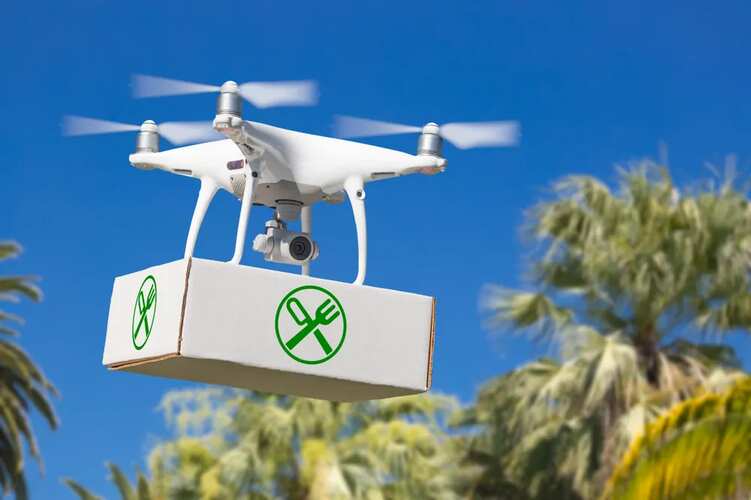
Food delivery aggregator Zomato successfully completed their drone delivery test by carrying a payload of 5 kg, which covered 5 km in 10 minutes. The food delivery chain aims to deliver food to customers in less than 15 minutes through drones in future as it is believed that the aerial route is the future of food delivery. Swiggy has also done a test run to expedite drone delivery of grocery and essential items, as well as food. The drones deployed in food deliveries are not the camera-loading ones, but the larger agricultural ones used to spray pesticides and manure on plants in farm fields. Those can load weights up to 3 kg, and a bit more.
However, using drones in urban areas will require meticulous planning of routes and paths, performing pre-flight checks, scouting, assigned safe landing areas and other systems to be put in place. Drone flying is also restricted in and around airports, military installations, etc. The mission in Hyderabad was also limited by constraints like, being allowed to fly within a radius of 10 km, flying up to a maximum height of 3 km from the ground and factoring in the important fact of besides the Shamshabad airport, the old Begumpet airport located in the centre of the city, which is still used for defence purposes and ferrying VIPs. In fact, with less than 10 drone deliveries, the team was absolutely a spent force.
Delivery by drone is an exciting option, once the grey areas are sorted and that is going to take a year or two. Despite the not-yet-ready outlook for the moment, I would surely enjoy ordering in the near future, my biryani on drone, and basking in the aura of excitement waiting for my order to be dropped from the skies, literally! Bon Appetit!




