


 Share
Share

The map of human history is often drawn with ink and paper but the map of human movement is best traced through the steam rising from a kitchen. Port cities like Surat and Karachi do not exist as isolated bastions of land. They are living entities that have always looked toward the horizon, their identities forged by the rhythmic arrival of ships and the stories of those who sailed them. In the narrow lanes of Rander or the vibrant markets of Karachi, there is a scent that bridges the gap between the two cities and the distant shores of the East. It is the fragrance of coconut milk and toasted garlic. This is the scent of Khausa, a dish that is frequently called Burmese but which truly belongs to the salt air and the maritime routes of the Indian Ocean. To view Khausa as a foreign loan is to misunderstand the nature of a port city. Locations like Surat have never merely borrowed culture. They take the raw materials of the world and refine them until they become something entirely local. Khausa is the perfect example of this process as it was an outcome of the deep economic and social ties that linked the merchants of Gujarat and Sindh to the bustling ports of Burma during the nineteenth and early twentieth centuries.
The Great Migration: From Rangoon To Rander
The historical context of this dish is rooted in the movement of the Memon community and other trading groups who established massive business empires in Burma. For decades, these families lived between two worlds, maintaining homes in their ancestral villages in India while building lives in the tropical humidity of Rangoon. They became part of the local fabric, and in doing so, they developed a taste for a Burmese breakfast staple known as Ohn No Khow Suey. This was a simple, comforting noodle soup made with coconut milk and chicken, designed to provide a hearty start to a long day of labour.
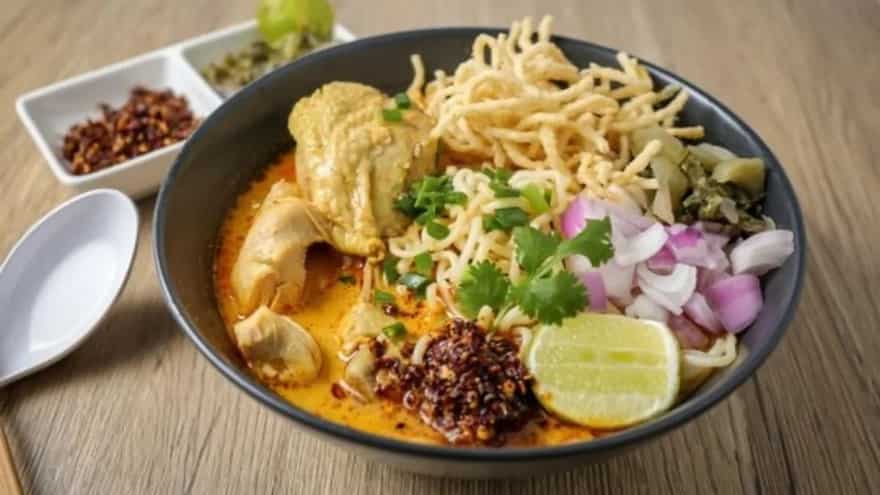
Image credit: Adobe Stock
When the political landscape of Southeast Asia shifted during the mid-twentieth century, many of these families returned to their roots in Surat and Karachi. They brought with them a memory of that soup, but as they recreated it on the shores of the Arabian Sea, the dish began to change. It was no longer just Ohn No Khow Suey. It became Khausa, a name that shortened the original Burmese title and adapted it to the tongues of those living along the western coast of the subcontinent. In this transition, the dish shed its status as a foreign curiosity and became a symbol of the port city experience.
The Surti Metamorphosis: Spice And Crunch
In Surat, specifically in the historic suburb of Rander, Khausa underwent a radical street food makeover. The Surti version is unapologetically bold. The local community, known for its love of intricate flavours and heavy garnishes, turned the volume up on every ingredient. The most significant departure in Surat is the addition of Papdi. This crunchy, fried flour cracker is a staple of Gujarati snack culture. By crushing papdi over a bowl of steaming Khausa, the locals anchored the dish to the soil of Gujarat. It became a sensory experience of soft noodles against the sharp snap of local crackers, all tied together by a coconut broth that was now spiked with a pungent garlic chutney.
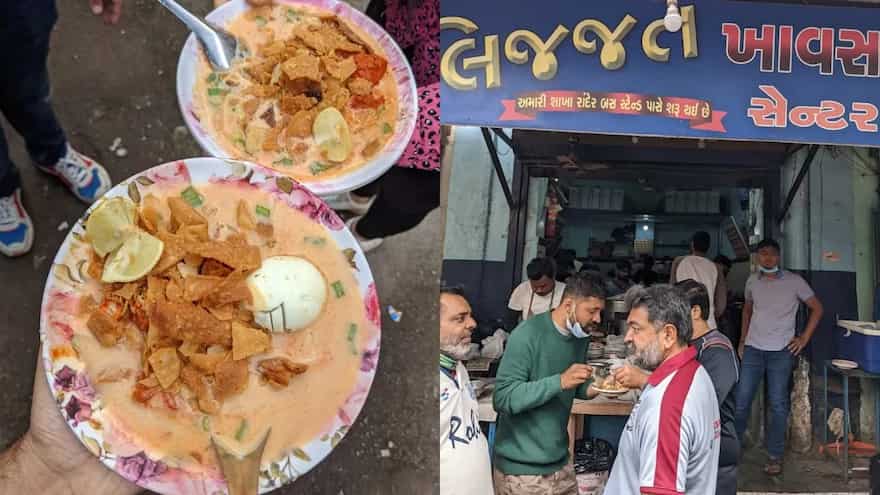
Image credit: Saransh Goila
The Karachi Connection: A Coastal Parallel
Across the border in Karachi, a similar evolution occurred. Karachi, much like Surat, is a city defined by its harbour. The Memon and Ghanchi communities who settled there brought the same Burmese memories but adapted them to the sprawling, spicy street food culture of Sindh. In Karachi, Khausa is often served as a deconstructed assembly. The noodles are placed first, followed by a thick, almost gravy like meat curry, and finally drowned in the coconut broth. The use of spaghetti instead of traditional egg noodles became a common adaptation here, showcasing how port cities use whatever global trade provides to maintain their traditions. The garnish game in Karachi is equally fierce, featuring fried garlic bits that have been toasted to a dark, nutty brown, providing a bitter contrast to the sweet coconut milk.
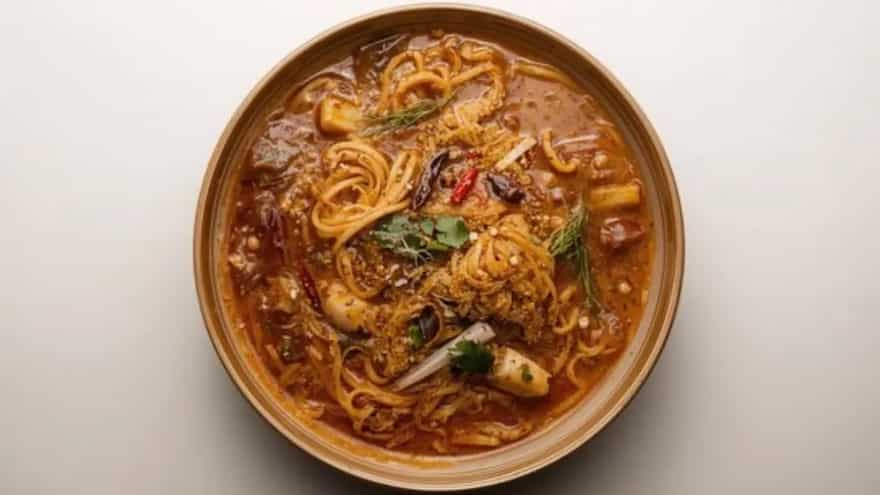
Image credit: Adobe Stock
The Alchemy Of The Dockside
Why did Khausa take root so deeply in these specific cities? The answer lies in the nature of port city labour. Dock workers and traders require meals that are:
1. One-Pot Wonders: Easy to serve in high volumes at a rapid pace.
2. Highly Customisable: A base broth that can be adjusted with garnishes to suit the individual’s taste or budget.
3. Nutritionally Dense: The combination of fats from coconut, carbohydrates from noodles, and protein from meat provided the stamina needed for maritime work.
Khausa flourished because it was the perfect fuel for a city that never slept and a port that was always hauling. It was a dish born of necessity but refined by the sophisticated palates of people who had seen the world. It represents a time when the sea was a highway, not a barrier.
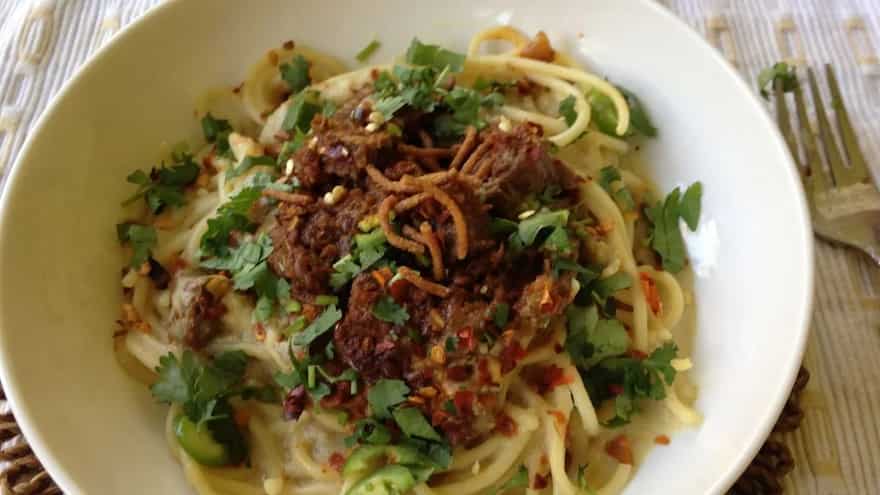
Image credit: My Magic Kitchen
Reclaiming The Narrative
To call Khausa just a Burmese dish is to ignore the decades of local innovation that have happened on the shores of the Arabian Sea. The people of Surat and Karachi did not just copy a recipe; they performed an act of culinary translation. They took the grammar of Burmese cooking and wrote a new story using the vocabulary of the Indian coast.
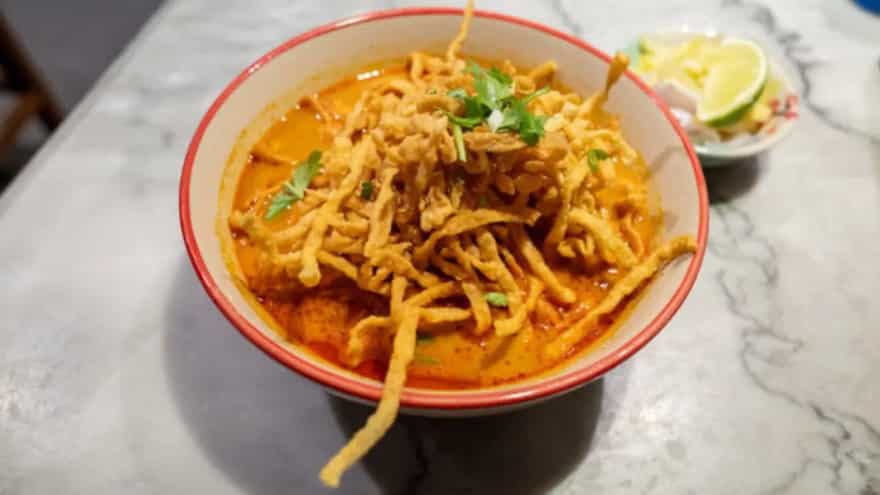
Image credit: Adobe Stock
The legacy of Khausa is a reminder that culture is not a static thing to be preserved in a jar. It is a living process of exchange. The sailors and traders who brought this dish across the Indian Ocean did not just bring a recipe: they brought a way of life. They showed that a city is defined by what it welcomes and how it transforms those arrivals. Surat and Karachi remain linked by this shared love, a connection that is renewed every time a fresh pot of coconut broth begins to simmer.




