


 Share
Share

Chandannagar's Jolbhora Sandesh and Janai's Manohara, two iconic Bengali sweets, have recently made it to the GI recognition list. The honour is more than just a certificate. It acknowledges that these sweets have qualities that are deeply associated with the places where they were first prepared and have been preserved by the local confectioners.
Jolbhora Sandesh is loved as it has a liquid jaggery syrup that is filled with a delicate chhena shell, which amazes you with every bite. Janai's Manohara, on the other hand, is loved for its special sugar layer that locks in freshness and lets the sweet last longer. Both of these sweets symbolise centuries of skills in making them, local dairy cultures, and practices that have been carefully preserved for ages.
For traditional sweets, a GI tag supports the local economy, which promotes food tourism and identifies the craftsmen who have guarded these delicacies for years.
6 GI-Tagged Indian Sweets That Deserve Your Attention
Listed below are GI-tagged sweets that highlight India's impressive dessert heritage while preserving the traditions that make each of them distinctive from others.
Joynagar Moa, West Bengal
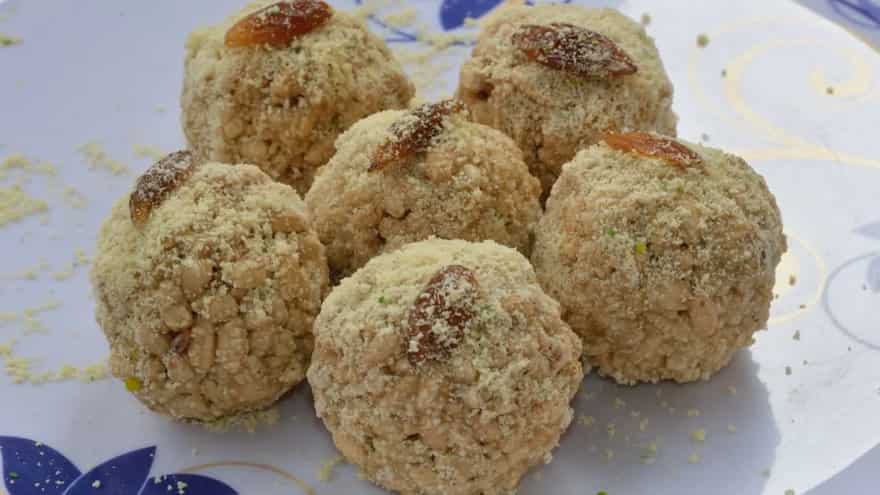
Made only during winter using aromatic Kanakchur rice, date palm jaggery, and some puffed rice, Joynagar Moa is one of Bengal's seasonal sweets. The freshly harvested jaggery or gur adds floral caramel notes that can not be imitated outside the region. Its light, airy texture contrasts perfectly with the richness of the jaggery, making every bite feel delicate and extremely enjoyable.
As the ingredients are highly seasonal, original Joynagar Moa is available only for a very limited period every year, which adds to its desirability and cultural importance.
(Image credit: Wikimedia Commons)
Dharwad Peda, Karnataka
Unlike the soft milk sweets, Dharwad Peda has a flavour that is derived from the slow caramelisation of milk solids cooked for several hours. The cooking process demands patience and creates a deep toffee-like taste and a grainy texture that differentiates it from the other peda. Hailing from Karnataka's Dharwad district, this sweet has evolved as synonymous with the city itself.
Despite using just a handful of ingredients, the detailed roasting process requires accuracy, making authentic Dharwad Peda hard to replicate successfully outside where it is traditionally made.
Tirupati Laddu, Andhra Pradesh
Possibly the most recognisable temple sweet of India, Tirupati Laddu, is made within the premises of the famous Tirumala temple using a set standardised recipe that is followed by the temple cooks. Made by mixing gram flour or besan, sugar, cardamom, raisins, cashews and lots of ghee, it is circulated as holy prasadam to the devotees visiting the temple.
Its GI credit protects not only the recipe but also the spiritual and cultural individuality that is linked with the temple, guaranteeing that the famous laddu stays indivisible from its place of birth.
Srivilliputtur Palkova, Tamil Nadu
Prepared from slowly thickened fresh milk and sugar, Srivilliputtur Palkova shows how patience alone can result in an extraordinary flavour. Hours of constant stirring change milk into a rich, creamy dessert with a naturally caramelised flavour and a melt-in-the-mouth consistency.
The quantity of fresh dairy in the region has somehow shaped this speciality, which continues to be closely linked with the temple town of Srivilliputtur. Its plainness lets the quality of the milk itself remain the prevailing flavour and the star of the dessert.
Bikaneri Rasgulla, Rajasthan
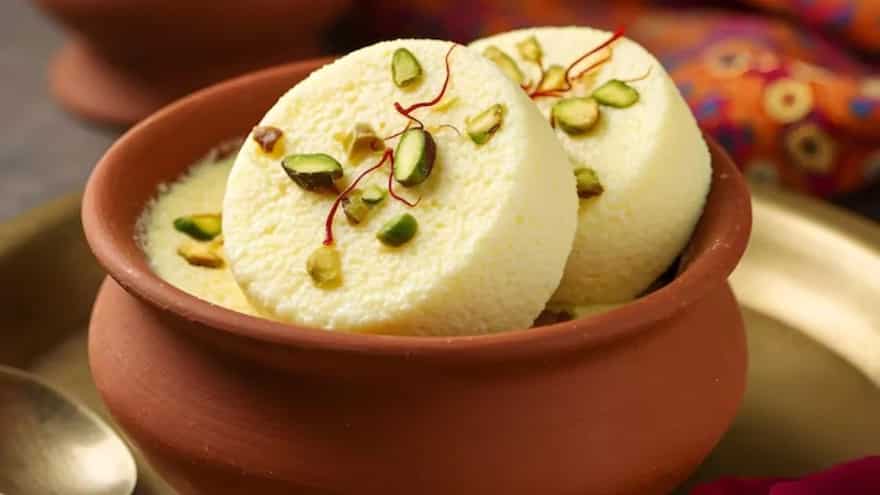
While rasgulla is widely associated with eastern India, Rajasthan's Bikaneri rasgulla has made its own distinctive individuality. Made from chhena, which is then cooked to get a firmer bite, it soaks sugar syrup differently, which results in a less spongy yet richly flavoured sweet.
The region's dairy culture and unique preparation methods give it a consistency that no other rasgullas have. The recognition highlights these regional distinctions rather than considering all rasgullas as similar products.
(Image credit: Freepik)
Khaja, Odisha
A staple bhog at the Jagannath Temple in Puri, Khaja is loved for its crisp, flaky layers that are coated in light sugar syrup. Made by continually folding and rolling the dough before frying, it gets dozens of thin layers that break with every bite. Although the ingredients list is very simple, the technique needs skill and accuracy to get its classic texture.
Deeply associated with Odisha's temple rituals and festive culture, Khaja remains one of the state's most recognisable sweets that is dearly loved by locals and tourists alike.




