


 Share
Share

Once the calendar flips to the autumn months, pumpkins seem to acquire a vibrant personality of their own. In North America, they turn up outside homes, in pies and soups, at Halloween and on Thanksgiving tables. Their iconic orange flesh has become almost synonymous with the season. But there is an agricultural reason behind this imagery. In the United States, pumpkins are predominantly harvested from late summer through autumn, ensuring their arrival at markets coincides neatly with the season's festivities.
But India's relationship with the pumpkin is rather different in nature, despite having similar origins. It is less of a holiday emblem, more of a botanical relative who visits according to his or her seasonal work schedule. Across multiple parts of the country, the pumpkin is not simply an autumn harvest. It is a remarkably adaptable crop whose cultivation spans different seasons depending on geography, and whose culinary versatility makes it feel very much at home on the festive table. That distinction is worth remembering because pumpkin is not, strictly speaking, a universal rabi crop in India.
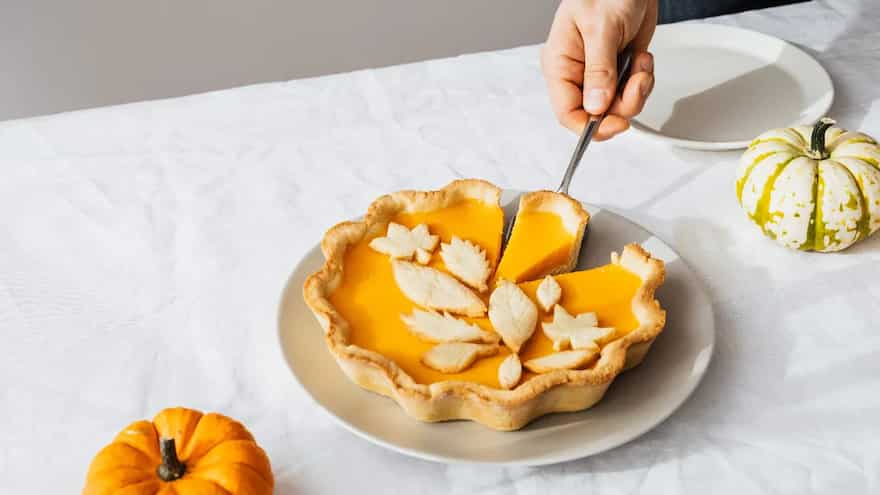
Image credit: Pexels
Pumpkin Does Not Follow One Indian Agricultural Calendar
The word ‘rabi’ can be misleading when applied loosely to vegetables. In the broad Indian agricultural classification, rabi crops are associated with the cooler growing season, generally sown from around October-November and harvested in spring. But vegetable cultivation does not always fit as neatly into the calendar in India, and pumpkin is a good example of this fact.
Tamil Nadu Agricultural University recommends pumpkin sowing from June to July and December to January, while the Indian Council of Agricultural Research (ICAR) agro-advisory gives January-April for a summer harvest and September-October for a spring harvest in the regions covered by that advisory. In other words, pumpkin can be grown in more than one seasonal window depending on geography, variety, and regional production practices.
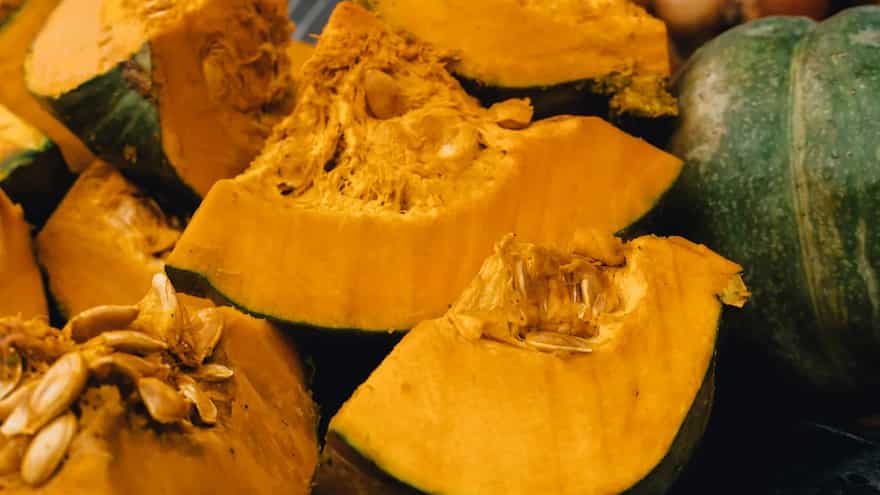
Image credit: Unsplash
West Bengal also makes the point particularly well. A study on pumpkin cultivation in the state describes pumpkin as an important cucurbit crop grown predominantly as a summer or rainy season crop, with districts like Hooghly and Burdwan also including the vegetable in their cropping sequences alongside potato and rice.
Then Why Does It Feel So Autumnal?
Because Indian autumn has an unusually strong food calendar. In Bengal, the arrival of Sharad means Durga Puja: five to ten days of worship, celebratory gatherings, bhog, and elaborate meals. Elsewhere, the same broad period brings Navratri, Dussehra, and a host of regional festivals, many of which have their own rules around vegetarian food, fasting, and ritual offerings. The best part? Pumpkin happens to fit almost all of these culinary situations.
Its mild sweetness makes it useful in vegetable preparations without requiring much seasoning, and its soft flesh works beautifully in various mixed produce dishes, while its relatively neutral character allows regional flavour profiles to shine through. That is why the same vegetable can taste completely different in a Bengali kitchen, a Maharashtrian fasting meal, or a South Indian festive meal.
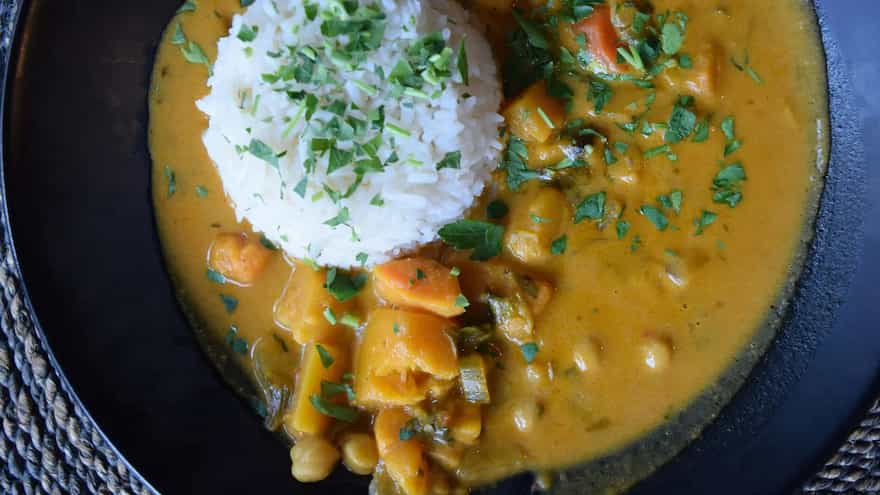
Image credit: Unsplash
The agricultural story matters as well. Pumpkin is a warm-season crop, and its cultivation windows in India are often arranged around periods when temperatures support vigorous vine growth. ICAR describes pumpkin as requiring a long, warm growing period, with an optimum temperature range of 18°C to 30°C for the environmental conditions there.
Pumpkin’s Adaptability In Indian Cuisine
In western and central India, pumpkin often becomes part of fasting-friendly preparations during Navratri, when grains and multiple everyday kitchen ingredients have to be avoided. In southern India, pumpkin appears in preparations ranging from sambar and kootu to various curries and other vegetable-based dishes. In eastern India, it moves comfortably between everyday sabzi, tarkari, bhaji, mixed vegetable preparations, and festive cooking.
During Durga Puja, pumpkin usually makes its way into bhoger khichuri and labra, the zesty vegetable medley traditionally served alongside it. Pumpkin’s mellow sweetness is useful here as it gives balance to a preparation containing several vegetables, whole spices, and the warm, earthy notes and aroma of panch phoron. This regional flexibility is one reason why it would be inaccurate to describe pumpkin as belonging exclusively to one festival, one state, or even one season. Its culinary behaviour is incredibly flexible and diverse, just like India.
Pumpkin Belongs To The Autumnal Kitchen, Even In India
This is what makes pumpkin's seasonal association with India so fascinating. In the United States, autumn and pumpkin are closely tied to the harvest calendar itself. In India, the connection is more nuanced. With autumn arrives Durga Puja, Navratri, and other religious observances with their own patterns of cooking, and pumpkin happens to be exceptionally well suited to almost all of them. Perhaps that is why pumpkin has survived as such a familiar part of Indian festive cooking.
It does not always need to arrive with the autumn harvest to feel like an autumn food. It only needs to work and belong to your own autumn plate. And few vegetables do that with quite the same versatile range and sincerity. Pumpkin can be sliced and fried, folded into a bhog, simmered with spices, cooked with lentils, used during fasting, turned into a fritter, or transformed into something sweet and indulgent. Its seeds, flowers, and other tender parts have their respective culinary merits and uses, while the mature fruit can be kept for months.




