


 Share
Share

THERE is perhaps no vegetable more unfairly judged than okra.
Children reject it because it is slimy. Adults apologise for liking it. Recipes promise ways to "remove the slime," as though the vegetable arrives with a defect requiring correction. Around the world, cooks speak of okra almost apologetically, praising everything except the very thing that makes it unique.
Yet for thousands of years, that slippery quality has been precisely why people have cherished it.
Long before it became bhindi in India, bamia in the Middle East, gumbo in Louisiana or quingombó in the Caribbean, okra grew wild in the warm landscapes of northeast Africa, most likely around present-day Ethiopia and Sudan. Botanists still debate its precise birthplace, but few dispute the continent it first called home. It was here that early farmers recognised something remarkable about the plant. It tolerated punishing heat. It asked for relatively little water. Every part of it was useful: the pods, the leaves, the seeds and even the fibrous stems.
Unlike vegetables that demanded careful tending, okra behaved almost like a survivor.
That resilience would eventually carry it around the world.
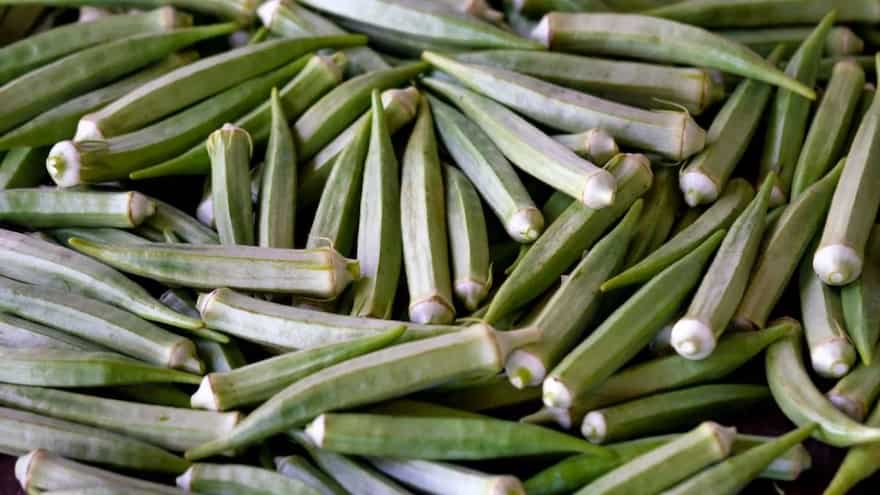
As trade routes expanded across the Red Sea and into the Arabian Peninsula, okra travelled with merchants and farmers. By the early medieval period, it had become familiar across Egypt, Persia and the Levant. Arab traders helped introduce it farther east, carrying seeds alongside spices, citrus fruits and rice across the Indian Ocean.
Somewhere along those journeys, okra found India.
Exactly when remains uncertain, though historians generally place its arrival between the 12th and 16th centuries, aided by Arab and Persian trade networks. India, however, did not merely adopt the vegetable. It naturalised it so completely that many Indians assume bhindi has always belonged here.
The names themselves tell the story.
Bhindi, vendakkai, bendekai, bhenda, dherosh, ram tori, ladies' fingers. Every language seemed eager to claim the pod as its own. Today, India is the world's largest producer of okra, growing millions of tonnes every year across states as varied as Uttar Pradesh, Gujarat, Odisha, West Bengal and Tamil Nadu. What arrived as an immigrant became one of the country's defining vegetables.
Perhaps nowhere else has okra become so democratic.
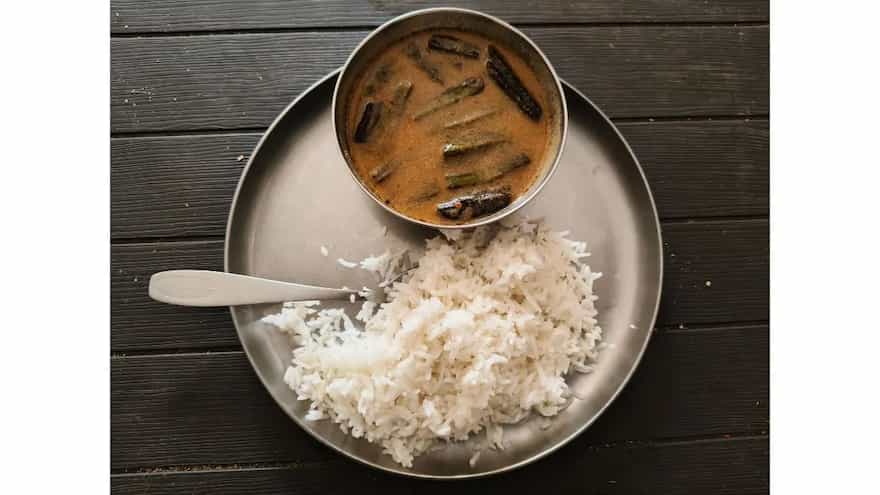
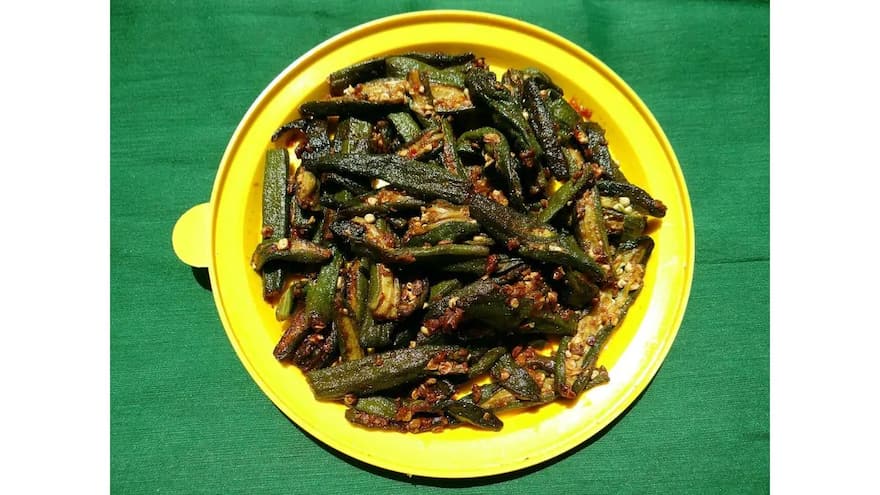
It appears in Gujarati sambhariya bhindi stuffed with peanuts and spices, North Indian bhindi do pyaza, Bengali dherosh bhaja fried until crisp, Andhra fry dusted with chilli, Kerala's vendakka mappas simmered gently in coconut milk, and countless home kitchens where it is simply sliced, sautéed and eaten with dal and roti.
In India, bhindi is not festive food. It is weekday food. Which is perhaps the highest compliment a cuisine can pay an ingredient.
Yet while okra was embedding itself in Indian homes, another journey was unfolding across the Atlantic—one far darker than trade.
Between the 16th and 19th centuries, enslaved Africans carried not only memories but agricultural knowledge. Okra seeds crossed the ocean hidden among belongings, sewn into clothing or transported by slave traders who recognised the crop's value. In the Americas, okra became one of the edible threads connecting displaced communities to lost homelands.
Even its American nickname preserves that history.
The word gumbo originally referred not to the stew but to the vegetable itself, derived from a West African term for okra. Only later did the name become attached to Louisiana's iconic dish, where African ingredients, French techniques, Spanish influences and Native American knowledge converged in a single pot.
Few recipes better illustrate how migration creates cuisine.
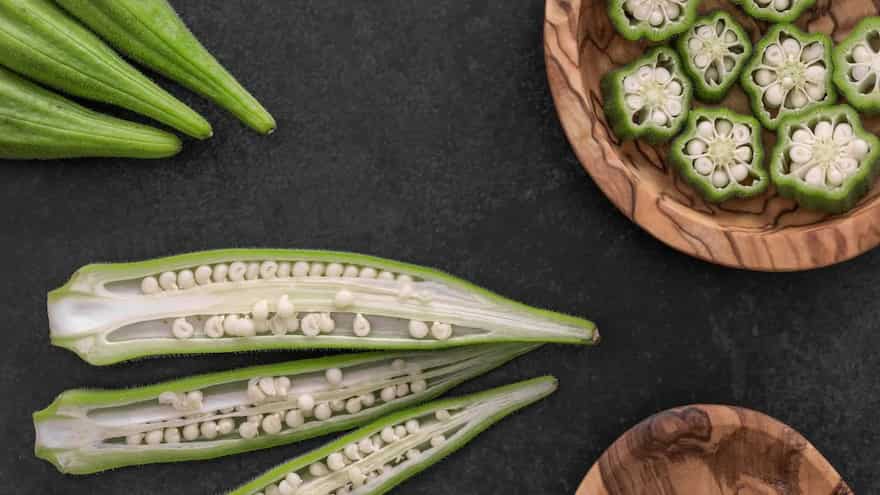
The vegetable's notorious mucilage—the same sticky substance many cooks spend their lives trying to eliminate—made it a natural thickener. Long before cornstarch became commonplace, okra quietly solved the problem of watery stews.
Its slime was technology.
The same quality appears across continents. In Turkey and Greece, tiny okra pods are braised with tomatoes and olive oil. Across the Arab world, bamia is simmered with lamb. In Nigeria, okra soup becomes almost elastic, designed to be scooped up with pounded yam. In Japan, chopped okra is deliberately celebrated for its silky texture and mixed into noodles, rice and natto. Brazilian kitchens pair it with chicken in the beloved frango com quiabo, while Caribbean cooks stew it alongside seafood, peppers and coconut.
Remarkably, few of these cultures agree on how okra should taste. Some prize tenderness. Others seek char. Some pickle it. Others fry it until crisp enough to resemble chips. Everyone, however, has learned to negotiate with its slime.
Which raises an interesting question: Why are modern cooks so eager to remove the characteristic that earlier generations considered useful?
Perhaps because contemporary food culture increasingly prizes crispness. Crunch photographs well. Char suggests sophistication. Slime, meanwhile, has acquired an unfortunate reputation.
Search for okra recipes online and many begin with reassurance: "No slime!"
As though success depends upon making okra behave like another vegetable entirely.
Yet experienced cooks know the mucilage is neither enemy nor accident.
Cook over very high heat and much of it disappears, leaving crisp-edged bhindi. Slice the pods less and they remain firmer. Add something acidic — tomatoes, tamarind, lemon or amchur — and the texture changes again. Slow-cook it in a stew, however, and the vegetable willingly thickens the entire dish.
Okra is not inconsistent; it is responsive.
Perhaps that adaptability explains why it has survived wherever it has travelled.

Climate scientists have even begun paying closer attention to okra as temperatures rise. Heat-tolerant, relatively drought-resistant and nutritionally dense, it is increasingly discussed as one of the crops likely to remain resilient in a warming world. Long before the phrase "climate-smart agriculture" entered policy papers, okra had quietly been practising it.
That future feels oddly fitting for a vegetable whose past has always been about adaptation.
Its history is not one of conquest but of accommodation. It crossed deserts with traders, oceans with enslaved people, borders with migrants and kitchens with families. At every stop it learned a new language, acquired a new name and absorbed another culinary tradition without ever losing its essential character.
Perhaps that is why bhindi feels so familiar in India despite having African roots.
Some foods eventually cease to be foreign; they become home.
The next time a plate of bhindi arrives at the table, it is worth remembering that the modest green pod has lived many lives. It has thickened West African soups, anchored Creole gumbos, softened into Turkish stews, crisped beneath Indian spices and travelled farther than most of us ever will.
Not bad for a vegetable so often dismissed as slimy.




