


 Share
Share

IT’S 24 DECEMBER, which means Europe’s Christmas markets are in their final, sparkliest stretch — the fairy lights are working overtime, the air smells faintly of smoke and cinnamon, and everyone’s holding a hot mug like it’s emotional support. But here’s the secret: once you stop thinking in countries and start thinking in food families, the markets become a delicious little taxonomy lesson. The same “parent snack” keeps popping up — sausage, fried dough, dumplings, mulled wine — only each region has given it a new accent, a different topping, and a very strong opinion about what counts as the correct way to eat it. Consider this your grand classification system for the Advent appetite.
CHAPTER I: THE BUTCHER’S BLOCK
Sausages, roasts, and cured-meat main characters
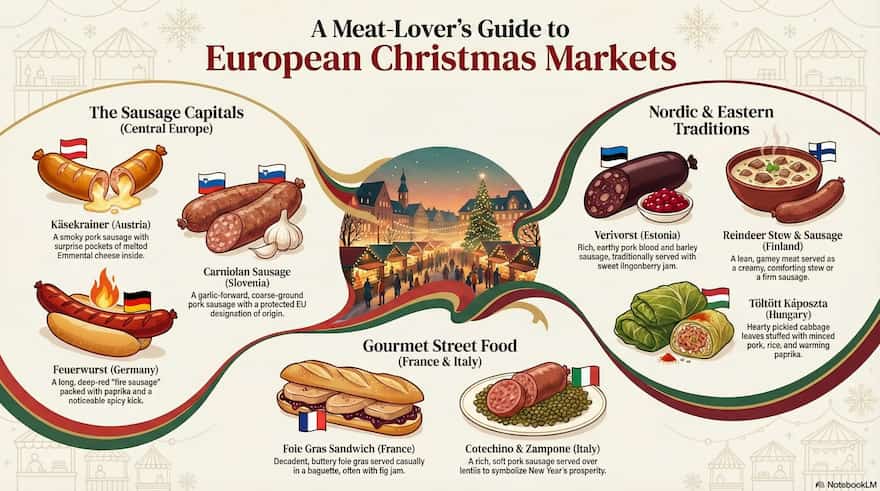
Carniolan Sausage (Kranjska klobasa)
- Origin: Slovenia (Ljubljana Christmas markets)
- Key ingredients: Pork, bacon, garlic, salt, pepper; pig-intestine casing
- What it is: A smoky, reddish-brown, coarse-ground sausage — often served sliced, with mustard and a good bun (or ciabatta if the stall is feeling fancy).
- Flavour notes: Garlic-forward and deeply savoury, with that “properly smoked” heft.
- Texture: Juicy, coarse, with a clean casing snap.
- Culture bit: Protected in the EU and treated like national pride in edible form: you don’t try it in Ljubljana, you pay your respects.
Käsekrainer
- Origin: Austria (Vienna/Salzburg), also found in Germany
- Key ingredients: Pork sausage studded with Emmental
- Served with: Sharp mustard (scharfer Senf) + Semmel (bread roll) or dark bread
- What it is: Looks like a normal grilled sausage… until you cut in and find molten cheese pockets doing the most.
- Flavour notes: Smoky meat + salty, creamy cheese = winter’s easiest dopamine.
- Texture: Snappy outside; oozy cheese surprise within.
- Culture bit (toned down, but still fun): Locals have very Viennese slang for it (“Eitrige”), which is best left untranslated in polite company. Practical advice: bite carefully — it can squirt.
Feuerwurst (Fire sausage)
- Origin: Germany (Stuttgart; widely available)
- Key ingredients: Pork or beef, paprika, chilli spices
- What it is: A long, deep-red sausage built for people who find the classic bratwurst “too mild, babes.”
- Flavour notes: Smoky heat, paprika warmth, proper kick.
- Texture: Firm and snappy.
- Culture bit: Often cooked over open flame — it tastes like winter fairground energy.
Currywurst
- Origin: Germany (Berlin; nationwide)
- Key ingredients: Pork sausage, curry ketchup, curry powder
- What it is: Chopped sausage coins swimming in sauce, dusted bright with curry powder — the Christmas market equivalent of comfort-food confetti.
- Flavour notes: Sweet-tangy, gently spicy; sauce does the heavy lifting.
- Texture: Soft sausage, thick glossy sauce.
- Culture bit: Year-round icon, market omnipresence. Comes with a tiny fork and the promise you’ll drip on your coat.
Verivorst (blood sausage)
- Origin: Estonia (Tallinn Christmas Market)
- Key ingredients: Pork blood, barley, pork fat, marjoram, onion
- Served with: Lingonberry jam, sauerkraut (often pickled pumpkin too)
- What it is: Dark sausages with a serious, wintry soul — always brightened by tart-sweet berries and fermented crunch on the side.
- Flavour notes: Rich, earthy, faintly metallic (in a “this is traditional” way), balanced by lingonberry’s zing.
- Texture: Soft and grainier from barley; less snap, more hearty bite.
- Culture bit: Christmas-table royalty in Estonia — a nose-to-tail tradition that reads as both practical and ceremonial.
Cotechino & Zampone
- Origin: Northern Italy (Modena, Emilia-Romagna)
- Key ingredients: Pork rind, meat, fat, warm spices; Zampone is stuffed into a pig’s trotter skin
- Served over: Lentils
- What it is: Thick, rich pork sausage (or its famously dramatic trotter cousin), sliced and paired with lentils like it’s a superstition you can eat.
- Flavour notes: Very rich, spiced, deeply porky.
- Texture: Soft and gelatinous (thank the rind).
- Culture bit: Traditionally, a New Year’s thing — lentils symbolise coins and prosperity.
Reindeer stew & reindeer sausage
- Origin: Finland (Helsinki Senate Square; Rovaniemi)
- Key ingredients: Reindeer (poro), potatoes; lingonberries often appear nearby
- What it is: Served as creamy stew/soup, or as sausage — plus the modern “reindeer corn dog” riff that’s been causing Opinions™.
- Flavour notes: Lean, gamey, smoky; stew rounds it out into creamy comfort.
- Texture: Stew is velvety; sausage is leaner/firm.
- Culture bit: Tourist squeamishness aside, reindeer is a staple protein in Lapland — the market version simply makes it portable (and sometimes controversial).
Foie gras sandwich
- Origin: France (Strasbourg)
- Key ingredients: Foie gras; baguette/brioche; sometimes fig jam or onion confit
- What it is: A luxury ingredient turned street snack — creamy liver richness tucked into bread like it’s casual, actually.
- Flavour notes: Buttery, decadent, umami-heavy.
- Texture: Melts against crisp bread.
- Culture bit: Strasbourg wears “Capital of Christmas” energy; this is its indulgent flex, handheld.
Töltött káposzta (stuffed cabbage)
- Origin: Hungary (Budapest)
- Key ingredients: Pickled cabbage leaves, minced pork, rice, paprika, and sour cream
- What it is: Cabbage rolls simmered in paprika warmth — tangy, hearty, and built for cold nights.
- Flavour notes: Sour-fermented cabbage + savoury pork + paprika glow.
- Texture: Soft, yielding, proper comfort food.
- Culture bit: Festive-season staple: filling by design, because winter.
Julskinka sandwich (Christmas ham)
- Origin: Sweden (Stockholm/Skansen)
- Key ingredients: Salt-cured ham baked with mustard/breadcrumb crust; vörtbröd (wort bread); mustard
- What it is: Pink ham with a crumbly crust, served on sweet-malty spiced bread — a market-friendly bite of the julbord.
- Flavour notes: Salty ham + sweet, raisiny bread = surprisingly perfect.
- Texture: Tender meat on dense, soft bread.
- Culture bit: The pig-as-winter-staple tradition, repackaged as a walk-and-eat snack.
Kakashere pörkölt (rooster testicle stew)
- Origin: Hungary (Budapest)
- Key ingredients: Rooster testicles, onions, tomatoes, peppers, paprika
- What it is: A paprika stew for adventurous eaters — very much in the “nose-to-tail, no fear” tradition.
- Flavour notes: Classic pörkölt paprika depth; the sauce is the star.
- Texture: Creamy-soft morsels in rich stew.
- Culture bit: The market’s “try something you’ll text your friends about” option.
*
CHAPTER II: THE GRIDDLE & THE FRYER
Potato fritters, savoury doughs, and fried, glorious chaos
Lángos
- Origin: Hungary (Budapest: Vörösmarty Square; St Stephen’s Basilica market); also found in Germany/Prague
- Key ingredients: Yeasted dough; fried; topped with garlic, sour cream (tejföl), grated cheese
- What it is: A golden, bubbled fried disc, usually dressed like it’s winter royalty: garlic, sour cream, cheese — the holy trinity.
- Flavour notes: Frying-dough bliss + punchy garlic + tangy cream + salty cheese.
- Texture: Crisp outside, pillowy inside — best eaten hot, no delays, no dignity.
- Culture bit: Tourists call it “Hungarian pizza”; locals do not. Purists stick to the classic toppings.
Kiachl (Bauernkrapfen)
- Origin: Austria (Vienna; Innsbruck)
- Key ingredients: Yeast dough with eggs/butter; fried in lard/oil
- Toppings: Sauerkraut (savoury) or cranberry jam + icing sugar (sweet)
- What it is: A thick-rimmed “farmer’s doughnut” with a thin centre designed to cradle a pool of topping.
- Flavour notes: Mildly sweet dough that happily swings savoury or sweet.
- Texture: Airy edges, softer centre once it drinks up the topping.
- Culture bit: Alpine, calorific, winter-proof food — engineered for cold.
Reibekuchen / Kartoffelpuffer
- Origin: Germany (Cologne/Frankfurt; nationwide); Switzerland
- Key ingredients: Grated potato, onion, egg, flour
- Served with: Apple sauce (Apfelmus) or garlic sauce
- What it is: Jagged potato fritters in greasy little stacks — the smell alone is a siren song.
- Flavour notes: Oniony, savoury, earthy; apple sauce adds that sweet cut-through.
- Texture: Crunchy strands outside; soft starchy centre.
- Culture bit: Rhineland classic — “simple” but wildly popular because it works.
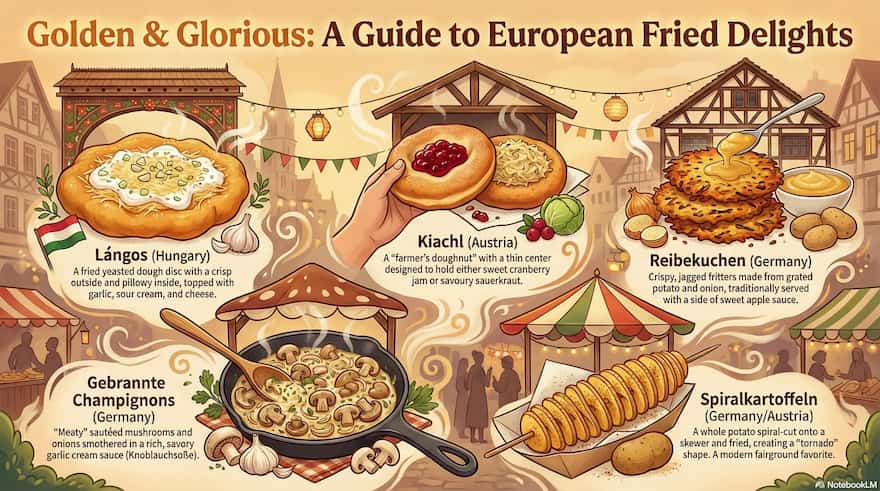
Spiralkartoffeln (tornado potatoes)
- Origin: Germany/Austria/Prague
- Key ingredients: One whole potato, spiral-cut, fried on a skewer
- Seasoning: Paprika, salt, curry powder
- What it is: A potato turned into a golden spring — basically engineered for portability and photos.
- Flavour notes: Somewhere between thick crisps and hot chips.
- Texture: Crisp edges, soft core.
- Culture bit: Modern market darling: fairground-meets-Instagram.
Gebrannte Champignons (fried mushrooms)
- Origin: Germany (Frankfurt/Berlin)
- Key ingredients: Mushrooms, onions, lots of oil/butter
- Topping: Garlic cream sauce (Knoblauchsoße)
- What it is: Mushrooms sautéed in giant pans until glossy and deeply savoury — then drowned (lovingly) in garlic cream.
- Flavour notes: Umami + garlic + cream = unfairly good.
- Texture: Juicy, slightly chewy — “meaty” enough to convert a few sceptics.
*
CHAPTER III: THE MELTING POT
Cheese-heavy alpine comfort foods
Raclette
- Origin: Switzerland/France/Germany
- Key ingredients: Raclette wheel, heated and scraped over potatoes/pickles/onions — or into a baguette with ham
- What it is: A literal cheese waterfall, served with starch and pickles like a balancing act.
- Flavour notes: Pungent, salty, nutty; love-it-or-fear-it aroma.
- Texture: Thick, viscous, mouth-coating — eat fast before it sets in the cold.
- Culture bit: In Switzerland, it’s a proper meal. Market versions turn it into a bun-based power snack.
Tartiflette
- Origin: France (Savoy/Alpine regions)
- Key ingredients: Potatoes, Reblochon, lardons, onions, crème fraîche, white wine
- What it is: A bubbling vat of cheesy potatoes with bacon and a browned top — the dish equivalent of a warm coat.
- Flavour notes: Smoky, creamy, deeply savoury.
- Texture: Soft potatoes in thick sauce.
- Culture bit: Famously popularised via 1980s cheese marketing… and then became real tradition anyway (as these things do).
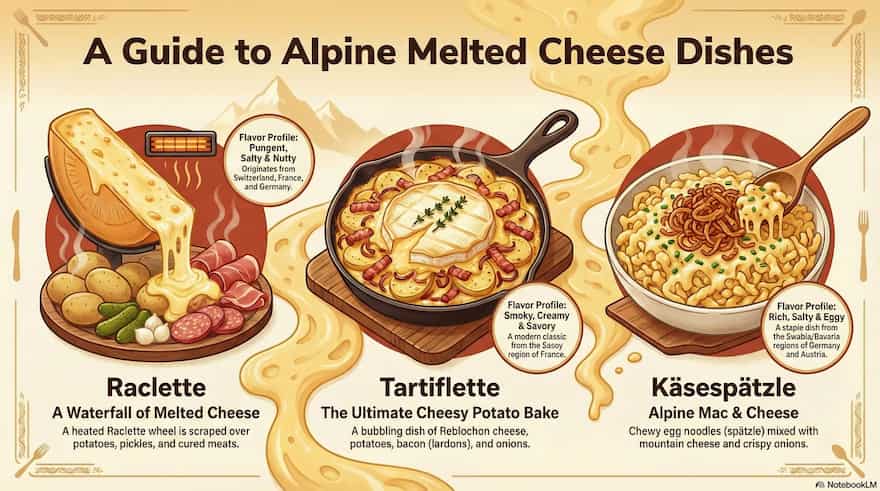
Käsespätzle
- Origin: Germany (Swabia/Bavaria), Austria
- Key ingredients: Spätzle + lots of mountain cheese; topped with caramelised onions
- What it is: Alpine mac-and-cheese energy, but with dumpling noodles and onion crunch.
- Flavour notes: Eggy, salty, rich; onions keep it from tipping into too much.
- Texture: Chewy spätzle, gooey cheese, crisp onion.
*
CHAPTER IV: THE BAKER’S OVEN
Handheld breads, pies, flatbreads
Handbrot
- Origin: Germany (Dresden/Leipzig/Cologne)
- Key ingredients: Bread dough pocket filled with cheese + ham (or mushrooms), topped with sour cream + chives
- What it is: A wood-fired bread pocket with molten insides and a cool, creamy crown.
- Flavour notes: Smoky bread + salty cheese + tangy cream.
- Texture: Crusty outside, gooey inside.
- Culture bit: Festival favourite that eats like a main course.
Karjalanpiirakka (Karelian pie)
- Origin: Finland (Helsinki)
- Key ingredients: Rye crust; rice porridge (or potato/carrot) filling
- Topping: Egg butter (munavoi) or festive add-ons like reindeer
- What it is: An open-faced rye pastry with crimped edges — humble, iconic, deeply Finnish.
- Flavour notes: Earthy rye + creamy mild filling; toppings do the flair.
- Texture: Crisp/brittle crust; soft porridge centre.
- Culture bit: Protected traditional speciality; market versions sometimes lean into Lapland vibes.
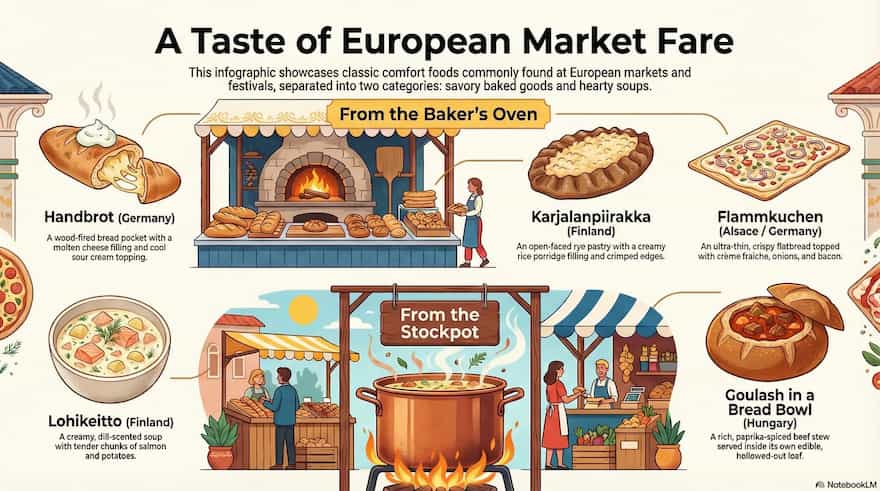
Flammkuchen / tarte flambée
- Origin: Alsace (Strasbourg), also Germany
- Key ingredients: Thin dough, crème fraîche, onions, bacon lardons
- What it is: A blistered, ultra-thin flatbread — lighter than pizza, just as satisfying.
- Flavour notes: Smoky, creamy, salty.
- Texture: Crisp edges; creamy centre.
- Culture bit: Originally an oven-heat tester for bread baking — now a market MVP.
*
CHAPTER V: THE STOCKPOT
Soups and stews to survive the freeze
Lohikeitto (Finnish salmon soup)
- Origin: Finland (Helsinki)
- Key ingredients: Salmon, potatoes, leeks/onions, dill, cream, fish stock
- What it is: A milky, creamy bowl with pink salmon chunks and a dill-scented hug.
- Flavour notes: Comforting, rich, gently briny.
- Texture: Silky broth with tender fish and soft veg.
- Culture bit: The Nordic winter’s edible heater.
Goulash in a bread bowl
- Origin: Hungary (Budapest), also Austria
- Key ingredients: Beef, paprika, onions, potatoes/root veg
- Served in: Hollowed crusty loaf (cipó)
- What it is: Stew served in its own edible bowl — the best kind of multitasking.
- Flavour notes: Deeply savoury, paprika-rich, warming.
- Texture: Tender meat; bread turns into a flavour sponge.
- Culture bit: Finishing the bread “bowl” is not optional; it’s the point.
*
CHAPTER VI: THE SWEET FRYER
Doughnuts, fritters, syrupy bites
Fritule / fritole
- Origin: Slovenia (Piran/Istria), Croatia
- Key ingredients: Fried dough, raisins, brandy/schnapps, icing sugar
- What it is: Mini doughnuts, sugar-dusted like snowfall.
- Flavour notes: Citrusy, lightly boozy, festive.
- Texture: Crunchy shell, airy sponge inside.
- Culture bit: Adriatic holiday staple — made for seaside stroll-snacking.
Loukoumades
- Origin: Greece (Athens)
- Key ingredients: Fried dough balls, honey/syrup, cinnamon, walnuts (sometimes chocolate)
- What it is: Bite-sized honey bombs with a crisp shell and a sticky heart.
- Flavour notes: Intense honey sweetness, cinnamon warmth, nutty depth.
- Texture: Crisp outside, airy inside, syrupy bite.
- Culture bit: Ancient pastry lineage; modern market essential alongside roasted chestnuts.
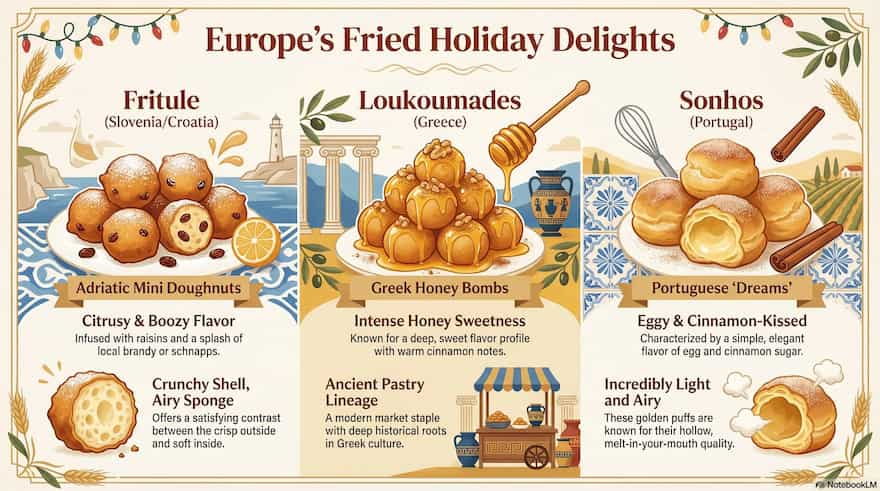
Sonhos (“dreams”)
- Origin: Portugal (Lisbon)
- Key ingredients: Eggy choux-like dough, fried; cinnamon sugar
- What it is: Light, hollow, golden puffs that vanish like a good plan on 24 December.
- Flavour notes: Eggy, sweet, cinnamon-kissed.
- Texture: Very light and airy.
- Culture bit: Christmas sweet with a name that does exactly what it promises.
*
CHAPTER VII: THE CONFECTIONERY
Nougat, gingerbread-adjacent energy, sugar architecture
Turrón
- Origin: Spain (Madrid/Seville; nationwide)
- Key ingredients: Almonds, honey, sugar, egg white
- What it is: The Spanish Christmas sweet in tablet form: either hard and white with whole almonds (Alicante) or soft and brown with ground almonds (Jijona).
- Flavour notes: Almond-and-honey intensity.
- Texture: Teeth-shattering vs smooth — pick your fighter.
- Culture bit: Plaza Mayor stalls pile it high like edible treasure.
Schaumkuss
- Origin: Germany
- Key ingredients: Marshmallow/egg-white foam, wafer base, chocolate coating
- What it is: A chocolate dome with a cloud inside — sweet, simple, wildly popular.
- Flavour notes: Vanilla-forward sugar joy; variations exist (mint/amaretto).
- Texture: Chocolate snap → sticky foam.
- Culture bit: Formerly sold under a racist name; now correctly called Schaumkuss/Schokokuss.
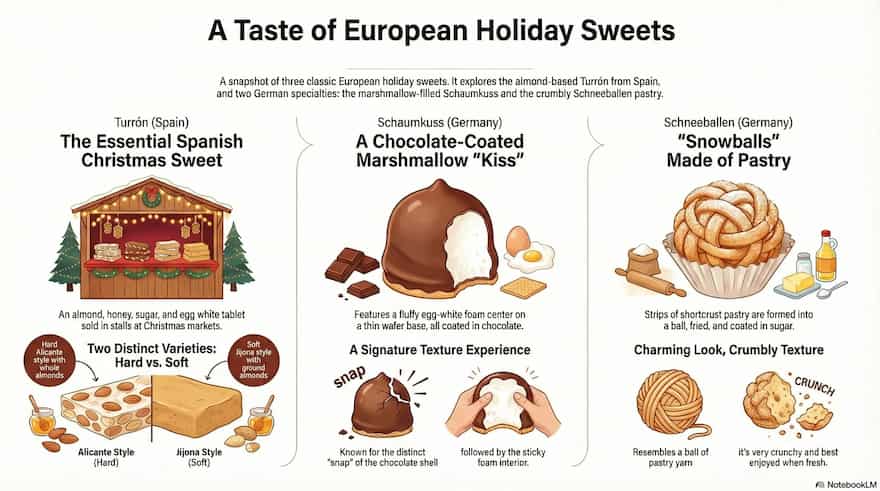
Schneeballen (snowballs)
- Origin: Germany (Rothenburg ob der Tauber)
- Key ingredients: Shortcrust strips formed into a ball, fried; coated in icing sugar/chocolate
- What it is: Looks like a snowball made of pastry yarn — charming, crumbly, messy.
- Flavour notes: Mild pastry; the coating brings the sweetness.
- Texture: Very crunchy and crumbly; best when fresh.
- Culture bit: Tourist magnet for the look; locals know freshness matters.
*
CHAPTER VIII: THE WARMING CUP
Mulled-wine cousins, hot spirits, drinks with theatre
Glühwein / vin chaud
- Origin: Germany; France (Alsace/Strasbourg); Austria
- Key ingredients: Red wine (sometimes white), cinnamon, cloves, star anise, citrus peel, sugar
- What it is: The classic steaming red mug that makes you believe in winter again.
- Flavour notes: Spiced, citrusy, sweet-tannic balance.
- Culture bit: The Pfand mug-deposit system is part of the ritual — return it or collect it like a badge.
Glögi / gløgg
- Origin: Finland/Norway/Sweden
- Key ingredients: Red wine or berry juice (blackcurrant), cardamom, cinnamon, cloves, ginger
- Served with: Almonds and raisins (spoon provided)
- What it is: Mulled drink with a Nordic signature: fruitier, sweeter, cardamom-led — plus the chewy “bonus bits” at the bottom.
- Flavour notes: Fruity-spiced, more cardamom than Central Europe.
- Texture: Drink + a small snack, thanks to raisins/almonds.
- Culture bit: Non-alcoholic berry versions are just as traditional as boozy ones.
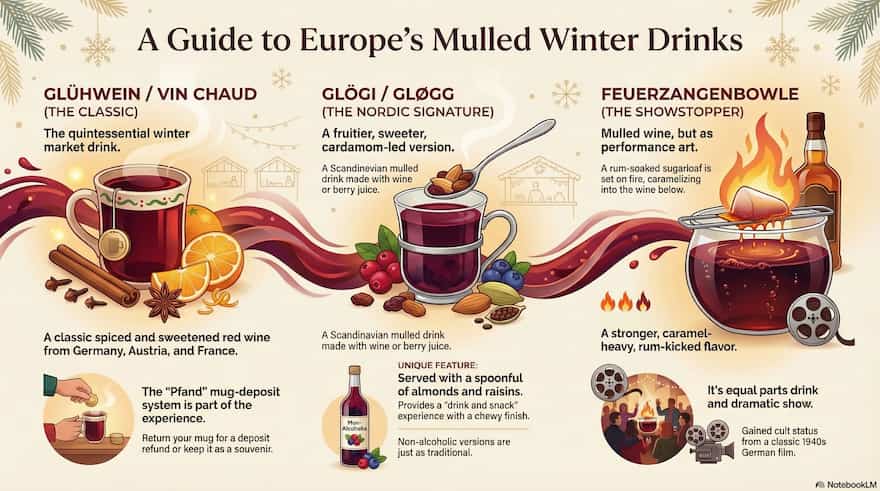
Feuerzangenbowle
- Origin: Germany, Austria
- Key ingredients: Spiced red wine, sugar loaf (Zuckerhut), high-proof rum
- What it is: Mulled wine, but make it performance art: rum-soaked sugar set on fire, caramel dripping into the pot.
- Flavour notes: Caramel-heavy, stronger, rum-kicked.
- Culture bit: Equal parts drink and show; cult status boosted by a classic 1940s film.
*
CHAPTER IX: LOCAL SPIRITS
Beyond the standard mulled wine
Ginjinha (ginja)
- Origin: Portugal (Lisbon)
- Key ingredients: Sour cherries, aguardente, sugar
- What it is: Ruby-red cherry liqueur, often served in a tiny edible chocolate cup.
- Flavour notes: Sweet-tart cherry, often cinnamon-adjacent, strong.
- Texture: Syrupy.
- Culture bit: Market “cure-all” lore included, whether you asked or not.
Rakomelo
- Origin: Greece (Athens)
- Key ingredients: Raki/tsipouro, honey, cinnamon, cloves
- What it is: The Greek answer to mulled wine: warm, honeyed, and unapologetically boozy.
- Flavour notes: Honey-softened spirit heat + winter spice.
- Texture: Smooth, warming.
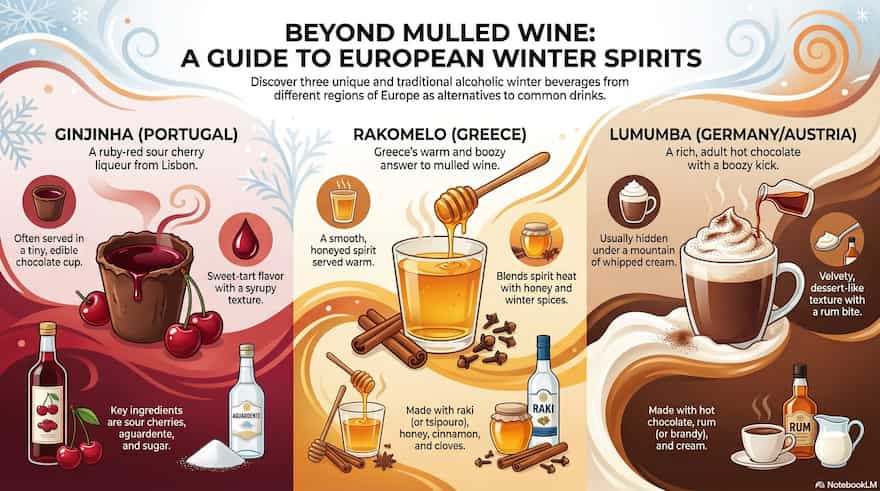
Lumumba
- Origin: Germany/Austria
- Key ingredients: Hot chocolate + rum (or brandy/amaretto) + whipped cream
- What it is: Hot chocolate that’s secretly an adult — usually hidden under a mountain of cream.
- Flavour notes: Chocolate richness with boozy bite.
- Texture: Velvety, dessert-like.
- Culture bit: A popular alternative for mulled-wine sceptics.




