


 Share
Share

Disruptions around the Strait of Hormuz, a key global shipping route, has resulted in many Indian cities, households and businesses grasping to get some supply of LPG. The sudden supply shortage has pushed many to resort to recipes that barely use any gas, cooking or oil. The gap between LPG consumption and domestic production lies in the way it is imported. Most of these imports come from the Gulf countries and India relies on almost 60% of it from here. Another factor that affects this shortage is the storage capacity outweighs the usage.

Image Credit: Unsplash
India has a storage capacity of 1.3 million tonnes but the country uses LPG of 90,000 tonnes everyday. This means the supply can be cut off at any point. But as always, as a country, India has embraced this challenge in many creative and smart ways. One such idea that actually works really well is by reusing cooking oil smartly. If you’re one of those people who are looking for different ways to make these tough times useful, use these key tips when reusing cooking oil
The Correct Storage
Maintaining the quality of repurposed frying oil requires proper storage. Once the oil has been strained, place it in an airtight, dry, and clean container. Along with preserving the oil's flavour, proper storage keeps it from absorbing undesirable scents from other meals. Make sure that your cooking oil is safe to use for several frying sessions.
Pouring Out The Oil
One of the first things to do when reusing oil after deep-frying is to strain it. Pour the oil into a clean container using cheesecloth or a fine-mesh strainer after it has somewhat cooled. Food particles and other debris that can contaminate the oil are reduced by this method. The oil stays cleaner and has a longer shelf life when these residues are removed through filtering.
Using Cheesecloth To Strain Before Storage
Use cheesecloth to filter out the undesirable remnants. Every time you use cooking oil, something will inevitably remain that you don't want to leave lingering in the oil. This might be additional fat, loose batter, or breading crumbs. You can remove them by filtering the oil through cheesecloth to remove the surplus. Put the cheesecloth on top of a spotless open container. Make sure the cheesecloth is positioned on top of a spotless container that can accommodate the filtered oil. Pour the oil onto the cheesecloth, letting it cleanly pour into the fresh container. This will assist you in preventing a major mess. Always keep in mind not to throw cooking oil down the drain. Over time, this could lead to clogs and other issues with your pipes.
Quality Matters
It's important to inspect frying oil quality to make sure it's still safe and suitable for cooking before reusing it. If it seems thick or dark, it may be best to throw it out. Also, smell the oil; any strange or rancid smells point to spoiling. You can extend the life of the oil and make sure that your fried meals stay tasty and safe to consume by checking it frequently.
Plan Out A Reusing Cycle
Reuse your oil no more than two or three times in order to preserve its quality. Oil deteriorates gradually with each reuse, changing its flavour and cooking qualities. You can make sure the oil keeps its quality and doesn't give your meal an unwanted taste by limiting the number of times it is reused.
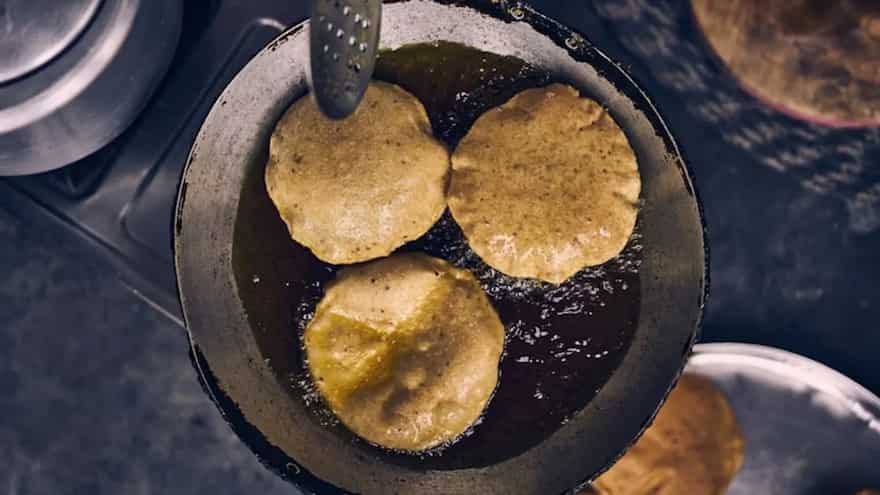
Image Credit: Unsplash
Mix In Some Fresh Oil
To preserve the quality of your repurposed oil, mix a tiny quantity of new oil into it each time you cook. Known as "topping off," this procedure restores the used oil's cooking qualities by dispersing any deteriorated components. You can extend the life of your frying oil and guarantee reliable results when frying meals by adding this easy step.
Oil Should Have A High Smoking Point
A high smoking point cooking oil is very crucial to use when you first cook anything or deep-fry some ingredients. Pick an oil for frying that has a high smoke point, preferably 400° F (204° C) or higher. With a greater smoking point, cooking oil will perform better at higher temperatures and is more likely to be reused and is safer as well. You can use oils made from canola, avocado, sesame, sunflower, or grapeseed. You should determine which one you prefer because each of these has a different flavour. Olive oil shouldn't be used because it doesn't lend itself well to reuse and has a low smoking point.




