


 Share
Share

Right now, the season is changing from summer to monsoons, when the rain-soaked weather makes you want to cook up meals that are a warm bowl or plate of comfort. The slight chill in the air keeps the seasonal vegetables and other ingredients in the market in demand while Indian kitchens serve up relishing dishes. Nothing answers that craving quite like khichdi, a dish that is humble on the surface, endlessly complex in reality. Khichdi is one of those rare Indian dishes that belongs to everyone and yet tastes different everywhere. In some parts of the country, it's a clean, minimalist comfort with just rice, lentils, and a whisper of ghee while in other states, it has spices, fruits and other vegetables. Monsoon is also when digestion tends to slow down; the humidity, the lack of movement, the body's natural response to the damp cold all make it harder to process heavy meals.
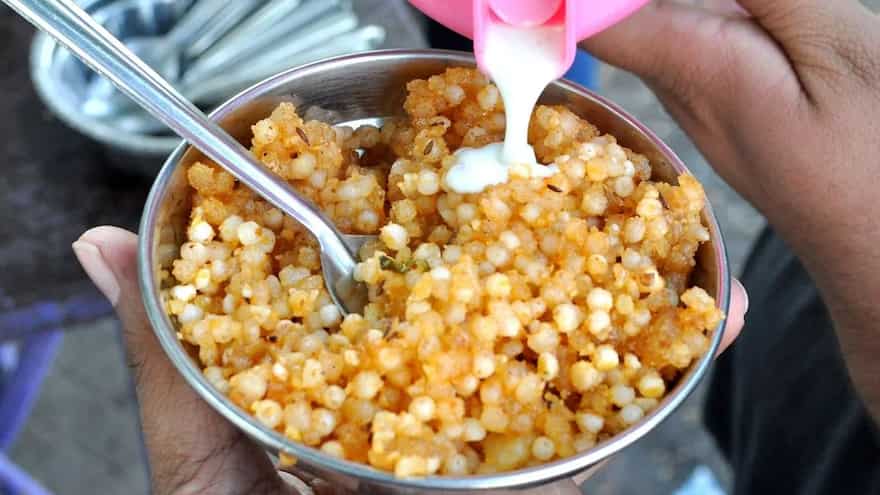
Image Credit: Wikimedia Commons
As per the journal Plant Archives, Ayurveda has long prescribed it as the ultimate reset meal. It mentions that khichdi is light enough not to burden a sluggish digestive system, yet complete enough to nourish. The lentils bring protein, the rice brings energy, and together they form a complete amino acid profile without making the body work overtime. So, pull out a pot and cook up these various khichdi recipes from across India to welcome the monsoons with a bit more comfort:
Sabudana Khichdi
Sabudana khichdi makes for an ideal fasting meal during special pujas. Sabudana, or tapioca pearls, are high in carbohydrates, and so they give much-needed energy. The special sabudana khichdi is made with washed and soaked sabudana that is flavoured with spices and cooked with roasted peanuts, which is ground to a powder, and grated coconut, which gives that extra crunch to the dish. The peanut powder and coconut complement the sabudana quite well. The most important step in cooking the khichdi is washing the sabudana well to remove excess starch. Also, the sabudana should be soaked for not more than four hours, in not too much water, but just enough to cover the sabudana.
Bardoli Ki Khichdi
This particular version emanates from Bardoli in Gujarat and is referred to as Bardoli ki Khichdi, which is a mixture of potatoes and peas in rice tempered with spices and raw mango. Gujarat is also well-known for its numerous mango-based cuisines, particularly how mangoes are used in savoury treats. You've all heard of the delectable mango kadhi, right? The inclusion of raw mango to the khichdi adds a tiny tanginess to it while also balancing out the spices. This dish's wholesomeness stems from the incorporation of vegetables such carrots, peas, potatoes, and brinjal.
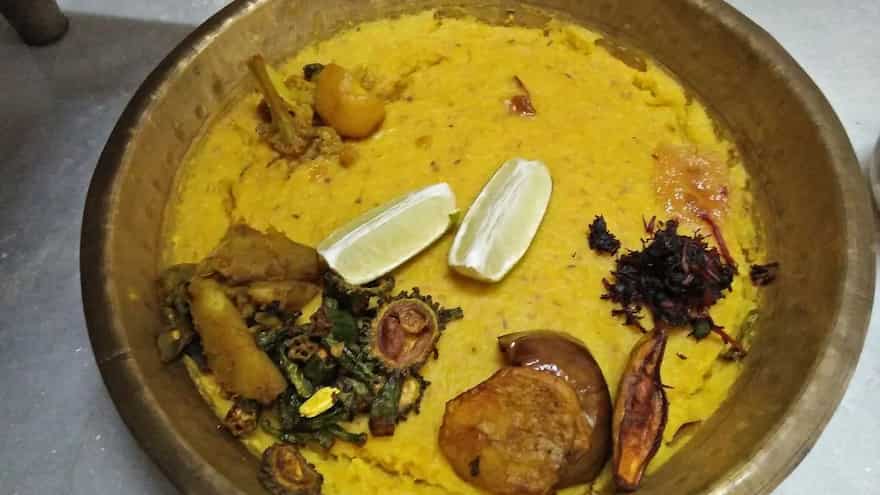
Image Credit: Wikimedia Commons
Khichuri
This is a rich and flavourful blend of dal, rice, and some quintessential spices used in Bengali cuisine. However, the range of supportive condiments depends on the social strata of a person. While the rich like to add ingredients like fish and chicken, people from slightly humble backgrounds only resort to adding potatoes and other easily available and affordable fish. The cultural and religious differences in the Bengali community have also given rise to different interpretations of this very recipe. Also, the khichuri recipe depends upon the type of dal that is used to make it. This can also have an impact on the consistency of the dish. Some people like to make it more varied by adding vegetables like cauliflower, peas, onions, and potatoes. On the other hand, a lot of people believe that keeping it simple and traditional is the key to enjoying it in the best way possible.
Dalma Khichdi
Odisha’s dalma khichdi is a must-have for everyone who thinks that this dal-rice dish is for sick people. It is a unique blend of raw banana, pumpkin, rice, eggplant, toor dal, and a few other vegetables. It is seasoned with both cumin and mustard seeds and topped with grated coconut. In this region, adahengu khechudi is also prepared and has a connection with the revered Jagannath Temple. Both recipes are accompanied by raita, papad, aloo bharta, and more.
Bisi Bele Bath
Bisi bele bath translates to a ‘hot lentil rice dish’, is a one-pot meal widely found in almost every restaurant and tiffin center of Karnataka. Made with rice, lentils, veggies, some typical South Indian spices with a tempering of desi ghee, mustard seeds, curry leaves, dry red chilies and cashews, bisi bele bath has a gooey texture and a tangy flavour profile. If you want to have something tangy and spicy but don’t have enough time to make something fancy, this recipe is a must-try. It can now be found on the menus of Indian restaurants around the world, introducing people to the rich flavours and heritage of Karnataka's cuisine. Its unique blend of spices, the perfect balance of flavours, and the comforting warmth it provides make it a dish that is hard to resist.
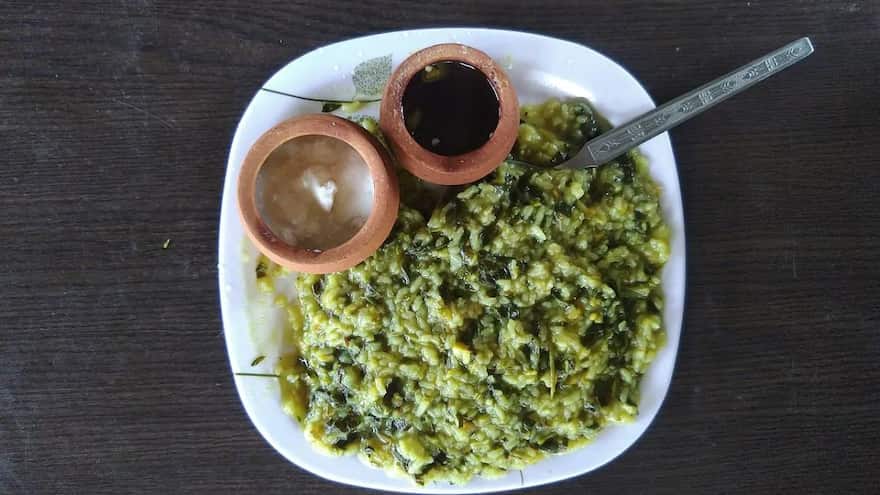
Image Credit: Wikimedia Commons
Palak Dal Khichdi
The spices in the dish add flavour and also have health benefits, such as boosting your metabolism and helping to fight inflammation. Palak dal khichdi is a vegan and gluten-free dish, making it a healthy option for people with dietary restrictions. It is also a relatively inexpensive dish to make, making it a budget-friendly option. If you are looking for a healthy and delicious meal, palak dal khichdi is a great option. It is easy to make and can be customised to your liking. You can add other vegetables, such as carrots, peas, or tomatoes, to make it even more nutritious.
Chana Dal Khichdi
If you are bored of moong, you can rustle up a khichdi with chana dal, and we assure you that the results are going to be nothing short of epic. This chana dal khichdi, is light, flavourful and wholesome. All you need to make this khichdi is good quality rice, you can choose basmati or broken basmati, then you would require half a cup of chana dal, some hing or asafoetida, red chilli powder, water and some oil. Remember to soak the dal before you start, but before that, make sure you rinse it a couple of times in fresh, running water. Soak it overnight at room temperature or for 4-5 hours. You can also soak it for just 30 minutes in hot water before you begin to prepare it.




