


 Share
Share

There is a saying, ‘Bengalis live to eat,’ and it’s very true. Fittingly, every Bengali wakes up thinking of food, goes to sleep thinking about it and plans everything around it. At the same time, hard work also makes its appearance sometimes, in different forms, which earns a lot of people their livelihood. Kolkata, as a city, is one such region where even today, no matter who you are, where you work or what you work as, food will never not be on your plate. A mere INR 10 can feed a stomach full. There is a lot to eat here, and every bite will transport you to the city's complex past through its cuisine. Now, looking back on the history of restaurants and food joints that have popped up around the state of Bengal, especially in Kolkata, the concept and the nostalgia permeating each corner are as iconic and legendary as the food.
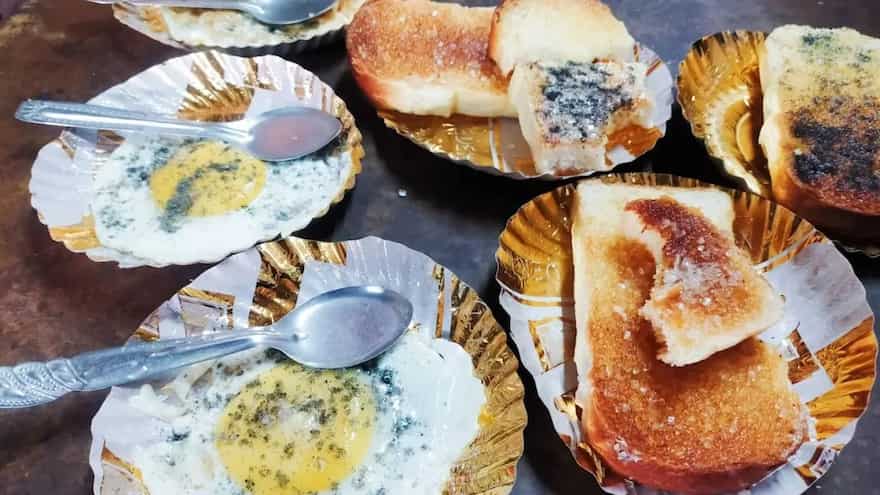
Image Credit: Wikimedia Commons
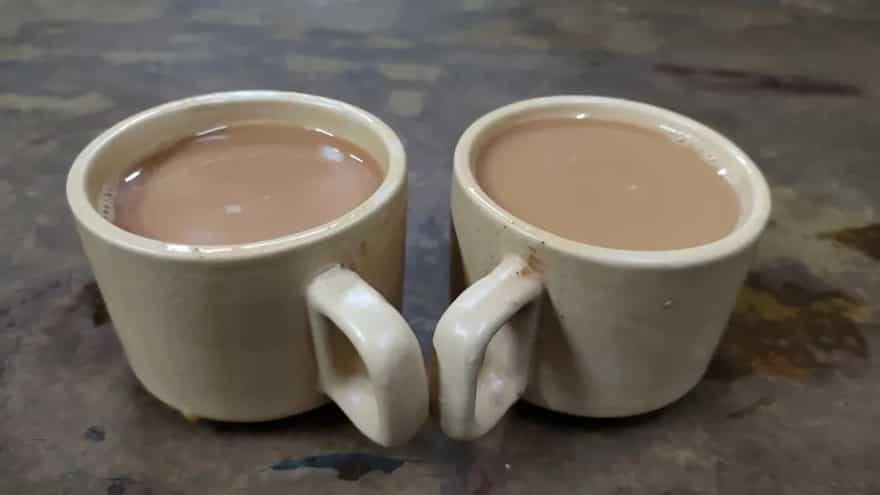
Image Credit: Wikimedia Commons
These eating joints are called ‘pice’ hotels or ‘bhaat-er hotel’. The former comes from the word ‘paisa’ where whereas the latter translates to ‘hotel for rice’. It is a group of restaurants that serve genuine home-style Bengali food at affordable prices. There are several options available to you, ranging from street-side phuchka, ghugni, and jhalmuri to rolls, biryani, chop, kosha mangsho, and more. What’s interesting is that The National Economic Restaurant, which has been serving a staple cuisine for 105 years. You can enter at any time of day and enjoy the simplest cuisine at a reasonable cost.
Fuelling Kolkata’s Daily Hustle
The National Economic Restaurant, located next to Shyambazar Five Point Crossing, has been serving breakfast classics for more than a century. In this 105-year-old vintage English breakfast joint in North Kolkata, you can still observe people enjoying tea or coffee while reading newspapers and chit-chatting with one another. It feels like you really have time-travelled back to the 1920s. Here, everything is under INR 30! Lalbihari Basak founded it in 1920, and his great-grandsons Rajiv and Subhasish Basak are currently in charge of it. The combination of milk tea and mustard oil in the air is familiar and comforting, and the wooden tables appear to have been taken from a school classroom. They still have a devoted following of patrons who come in frequently to try their simple menu.
It can be considered an heirloom of the Basak family. It's crucial to remember that, in an era of rapid change, heritage is also returning. A society's history is, after all, its cornerstone. Stories about Lalbihari, a Bengali businessman who entered the food industry with little prior knowledge, had been told to them since they were young. Following in his father's footsteps, their grandpa, Jahar Basak, even changed the menu to include items like fritters and Mughlai paratha. Originally a breakfast place, the establishment evolved into a hotel during the reigns of Jahar and his son Madhusudan, but they eventually returned to what they do best. So, if anyone ever says, ‘Bengalis don’t know how to do business,’ you know where to take them, don’t you?
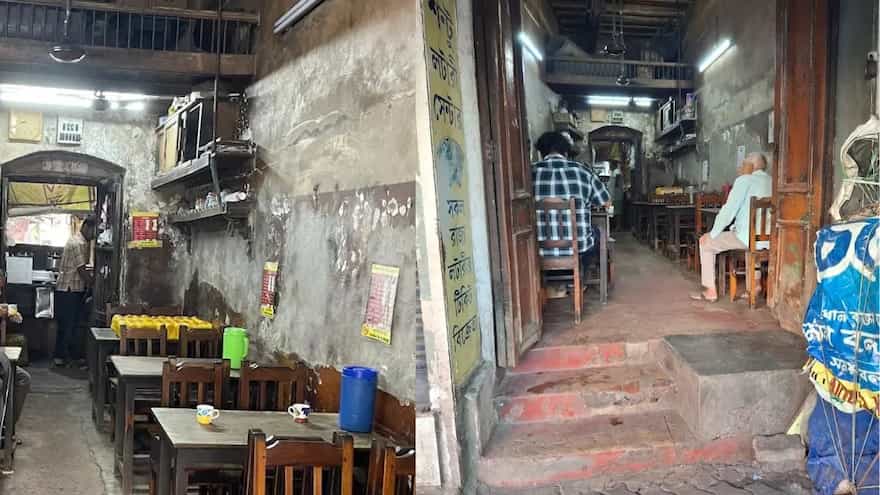
Image Credit: Wikimedia Commons
A Love Letter To Calcutta
You’ve seen it in films, read it in books, even saved Pinterest pins of Calcutta to visit later, to see the real from the reel. And that’s what people in this city do best. They fill each nook and cranny with heart and warmth that turn into legacies which no one can turn back from. Many famous personalities from the theatre and film industries used to frequently stop by the National Economic Restaurant for tea. Actors and actresses often gathered here for a quick snack when the theatres in nearby Hatibagan were packed. In the 1970s, Anup Kumar, Manoj Mitra, and theatre artist Satyabrata Kabiraj were all regular guests. Rituparno Ghosh used this historic restaurant to film a few sequences of Abohoman, and it also featured in a Bollywood film, Kahaani 2: Durga Rani Singh.
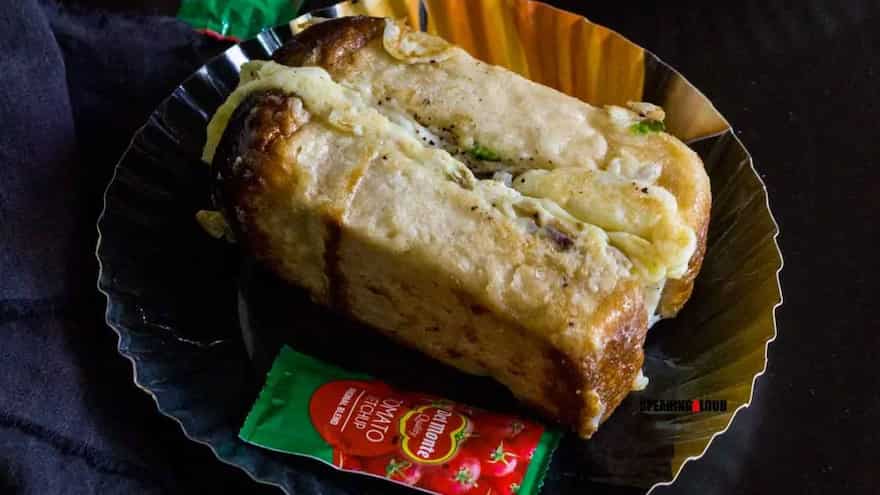
Image Credit: Priyanka, Speaking Aloud
Home On A Plate
The store is well-known for its Amul butter toast and double half cha(tea). The traditional pound ruti, or quarter-pound bread from Kolkata, is crisped in an antique toaster, which consists of tea, poached or omelette eggs. Even now, people from all over Kolkata visit the restaurant in search of basic eats. This has recently expanded to encompass social media-savvy youths. When air conditioning isn't necessary, the restaurant's ‘Insta-worthy’ retro vibe and reasonably priced menu make it a fantastic spot to hang out. Soft-boiled eggs and a traditional poach go well with their jelly toast, which is a refreshing blast of sweetness. The milk tea is just soul-calming.
Address: 220, Acharya Prafulla Chandra Rd, Shyambazar, Fariapukur, Kolkata, West Bengal 700004
Timings: 7:30 AM - 9:30 PM
Price: INR 30 onwards




