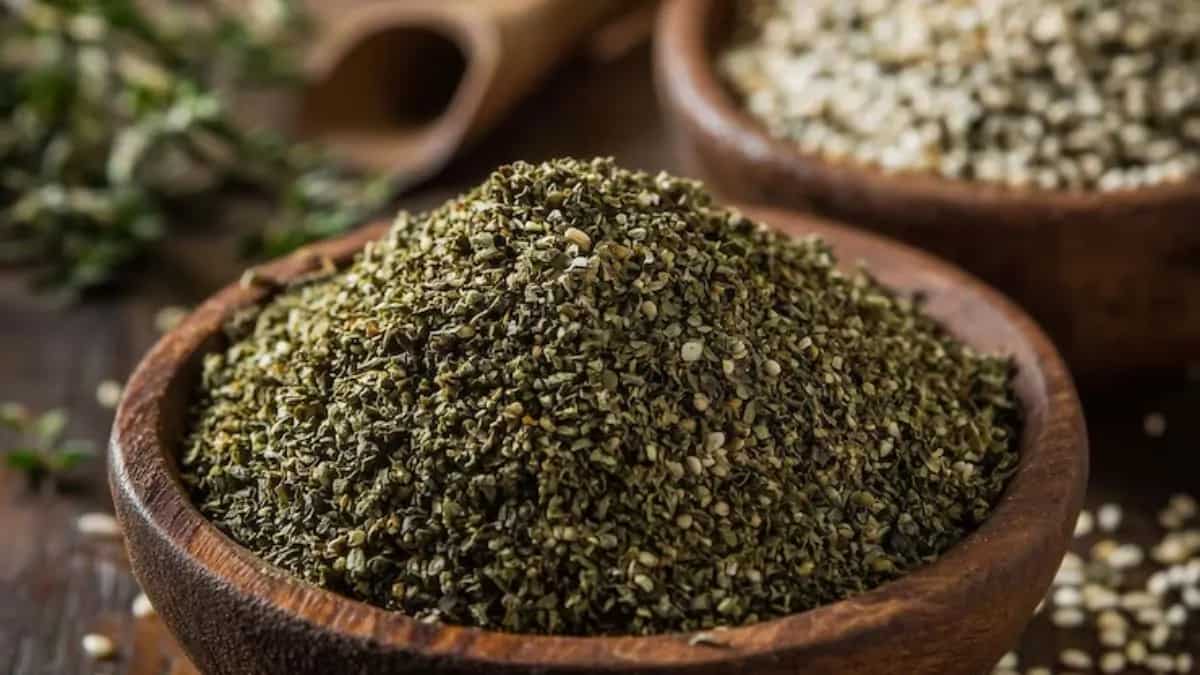
Some kitchen ingredients don’t call for attention, yet have the ability to transform a dish completely. Za’atar is one of them. At first glance, it looks like a modest mix of dried herbs and seeds, but once it touches warm food, it releases a deeply aromatic, toasty fragrance that instantly makes everything more inviting. Traditionally prepared by mixing thyme or oregano, sesame seeds, sumac, and salt, it delivers a layered flavour. It has earthiness from the herbs, a nutty taste from the sesame, and a gentle tang from sumac, almost like that of a squeeze of lemon but without the edgy sharpness.
What makes this Middle Eastern spice mix so special is how it can enhance the taste of the meal it is added to. Sprinkled over dips or salads, it creates a light crunch. Use it over roasted veggies or grilled chicken or meat, and it will give a lightly crisp coating, and soak into bread by mixing it with olive oil, it makes a savoury, aromatic bite. Instead of overwhelming the dish, it boosts the taste, making even the simplest of dishes feel thoughtfully flavoured.
What Is Za’atar?
Za’atar is an aromatic Middle Eastern spice mix made by blending dried thyme (or wild oregano), sesame seeds, sumac, and salt. It comes from home kitchens across the Levant, particularly in Lebanon and Jordan. Its taste is earthy, spicy, tangy, and lightly citrusy. Za’atar is less about heat and more about fragrance and providing balance to the meals. It is sprinkled generously over simple bread, vegetables, or dips to make them deeply satisfying and unmistakably linked to everyday regional cooking.
Ways To Use Za'atar
Here are 5 ways in which Za'atar can be used:
Sprinkle It Over Warm Flatbread With Olive Oil
The most loved way to enjoy za’atar is the easiest. Mix it with some good olive oil to make a loose paste, then spread it over the warm flatbread just before toasting. The heat instantly wakes up the herbs, the sesame turns fragrant, and the sumac gives a mild tang. The flavour feels toasty, lemony, and savoury all at once. It feels like having a cross between herb butter and spice rub, but in a lighter way.
(Image credit: Freepik)
Use It As A Rub For Roasted Vegetables
Za’atar can change everyday vegetables into far more interesting ones. Toss some potatoes, carrots, or cauliflower with a little olive oil and a generous amount of the blend before you roast them. As it is cooked, the herbs get slightly charred and stick to the edges, whereas the sesame seeds give a nutty crunch. The taste feels savoury with little addition of brightness that comes from the sumac, making the vegetables feel vibrant instead of heavy. It is also an easy way to add layers of flavour without indulging in complex marinades.
Stir It Into Yoghurt For A Quick Dip
Add a spoonful of za’atar to thick yoghurt, drizzle some olive oil, and you will have a dip that tastes far more complicated than it appears to be. The creamy base softens the herbs, allowing their fragrance to spread slowly across the palate. It becomes tangy, cool, and lightly nutty, almost like a herbed labneh but without any additional effort. It feels refreshing in warm weather, but also equally soothing with grilled foods.
(Image credit: Freepik)
Use It For Seasoning
Za’atar also works beautifully as a dry marinade. Rub it over chicken, fish, or paneer with some olive oil and a little salt, then let it sit for some time before grilling or pan-searing. Unlike the chilli-heavy spices, this does not overpower; rather, it forms a herbaceous crust with touches of citrusy notes. As it gets cooked, the sesame seeds toast and release a warm fragrance that smells amazing. The result is flavourful but gentle and perfect for those who like spices that improve rather than overwhelm the main ingredient.
(Image credit: Freepik)