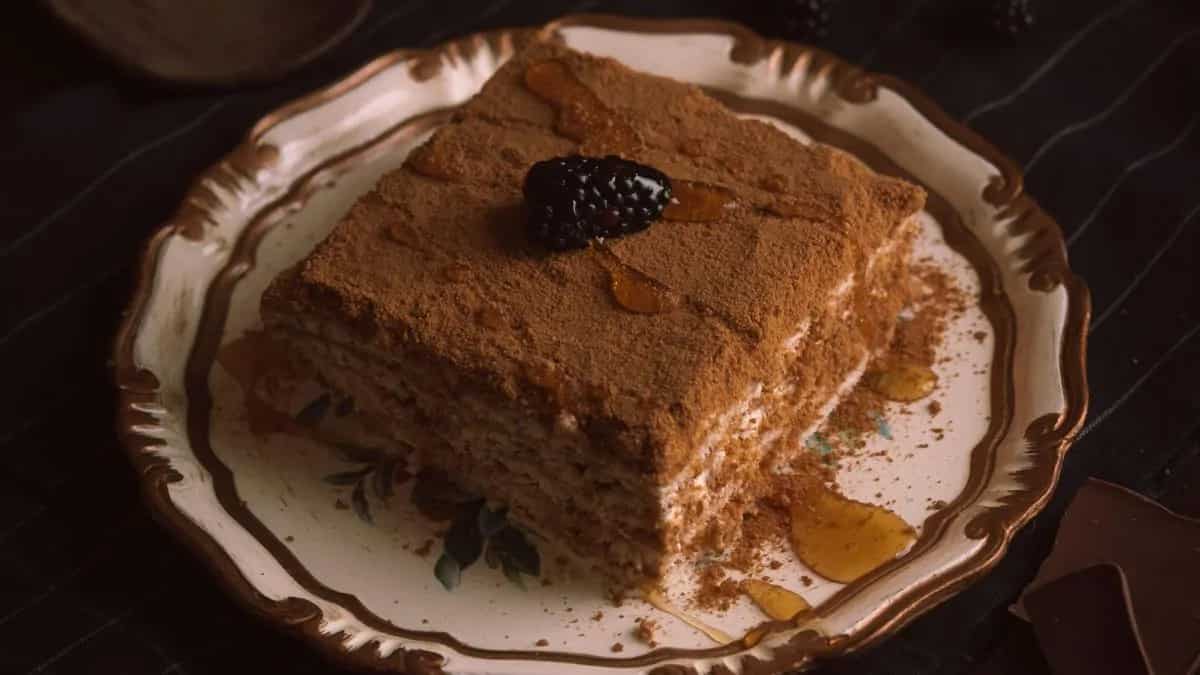
Every 21st of March, the world pauses to celebrate a dessert that has, quite literally, conquered every corner of the globe. From the high-end trattorias of Rome to the bustling cafes of Mumbai, tiramisu is the undisputed champion of the dolce menu. However, as we celebrate World Tiramisu Day 2026, we find ourselves at a strange crossroads. In an era where tiramisu overnight oats and tiramisu protein shakes dominate our social media feeds, the actual identity of this legendary Italian masterpiece is under threat. To understand why this matters, we have to look past the hashtags. Tiramisu is more than just a flavour profile of coffee and cream. It is a specific architectural feat of pastry, a delicate balance of chemical reactions, and a cultural symbol of Italian hospitality.
What Exactly Is A Tiramisu?
The name itself provides the best clue. "Tiramisù" translates literally to "pick me up" or "pull me up," a nod to the caffeine hit from the espresso and the energy boost from the sugar and egg yolks. In its purest form, it is a no-bake dessert consisting of layers of coffee-soaked ladyfingers and a rich cream made from mascarpone, eggs, and sugar, topped with a dusting of bitter cocoa powder.
Suraj S, Executive Sous Chef at Gladia Brewery & Kitchen, Bengaluru, believes the beauty of the dish lies in its restraint. When asked to describe the soul of the dish to those who only know it through Instagram, he notes: "A true tiramisu is a delicate balance of flavour and texture light yet indulgent. It’s not overly sweet or heavy, but layered with subtle bitterness from coffee, richness from mascarpone, and a gentle lift from cocoa. It’s elegance, not excess."
Image credit: Pexels
The History: A Recent Legend
Unlike many Italian classics that claim ancient Roman ancestry, tiramisu is surprisingly young. Most culinary historians agree that it was born in the 1960s or early 1970s. The most widely accepted origin story points to the restaurant Le Beccherie in Treviso, Italy. It was reportedly created by Alba di Pillo and chef Roberto Linguanotto. Legend has it that the dish was inspired by "sbatudin," a simple mixture of egg yolks beaten with sugar, traditionally given to children and newlyweds for strength. By adding mascarpone and coffee-soaked biscuits, they transformed a humble tonic into a global phenomenon. By the 1980s, it had reached New York, and by the 2000s, it was a staple in India, where the creamy texture resonated perfectly with the local palate for milk-based sweets.
Image credit: Pexels
The Social Media Dilution
In 2026, the essence of tiramisu is facing a bit of an identity crisis. The algorithm loves a trend, and unfortunately, tiramisu has become a buzzword for anything involving a coffee-soaked sponge. We have seen deconstructed versions that are little more than a bowl of whipped cream, and healthy versions that swap mascarpone for Greek yoghurt, effectively removing the very thing that makes the dessert what it is. While innovation is the lifeblood of the culinary world, there is a fine line between a creative twist and losing the plot entirely.
Sharath T Gowda, founder of Arena Brewhouse, Bengaluru observes this shift with a balanced but firm perspective: "As an expert, I appreciate creativity in cuisine, but when anything with coffee and cream gets labeled “tiramisu,” it dilutes the dessert’s identity. True tiramisu relies on a precise balance and simplicity; modern spins like fruit, chocolate, or whipped-cream versions are fun fusions but aren’t authentic—they often turn it into a sweeter, heavier cake rather than the elegant, coffee-forward Italian classic." The issue with these social media adaptations is that they often ignore the structure of the dish. A real tiramisu should be able to hold its shape when sliced, yet melt the moment it hits the tongue. When you replace the eggs with heavy stabilisers or swap the savoiardi for sliced bread (yes, it has happened), you aren't making tiramisu, you are making a coffee pudding.
Image credit: Pexels
The Essential Components
To appreciate tiramisu, one must respect the ingredients. There are six pillars that hold up a traditional recipe, and each is non-negotiable if you want to achieve that authentic Italian profile.
1. Savoiardi (Ladyfingers): These are dry, airy sponge biscuits. Their porous nature allows them to drink up the espresso without turning into mush immediately.
2. Espresso: This must be strong and high-quality. Using instant coffee or a weak brew will result in a flat, one-dimensional flavour.
3. Mascarpone: A thick, double or triple cream cheese from the Lombardy region. It provides the luscious mouthfeel that no other dairy product can replicate.
4. Eggs: Fresh yolks provide the golden colour and richness, while whipped whites (or sometimes whipped cream in modern variations) provide the lift.
5. Sugar: Just enough to balance the bitterness of the coffee and cocoa.
6. Cocoa Powder: The final layer of protection that adds a necessary earthy bitterness.
Image credit: Pexels
Gowda also emphasises the importance of this synergy, "The essential components are savoiardi biscuits (for structure and soak), strong espresso or coffee (for the signature bitter depth), mascarpone cheese (for rich, velvety texture), egg yolks and sugar (whipped into a zabaglione-like base for lightness and sweetness), and cocoa powder (for bittersweet finish). Optional Marsala or coffee liqueur adds aromatic complexity. These create the dessert’s signature contrast of textures and flavors—crisp yet soft layers with coffee intensity balanced by creamy indulgence."
Why Tiramisu Fails: Common Pitfalls
If the ingredients are so simple, why is it so easy to find bad tiramisu? The answer usually lies in the technique. For many home cooks in India, the challenge often starts with the sourcing of mascarpone or the humidity of the kitchen, but more often, it is a lack of patience. The most common crime is the soggy biscuit. If you submerge the ladyfinger for more than a second, it will disintegrate, turning your dessert into a watery mess by the time it reaches the table. Conversely, over-whipping the mascarpone can cause it to split, turning your elegant cream into something resembling butter.
Chef Shanker of Chef de Partie, Bengaluru points out the technical errors that often plague the preparation, "Over-soaking ladyfingers, using low-quality ingredients, and not chilling long enough."
Image credit: Pexels
Advice For The First-Timer
If you are inspired to celebrate World Tiramisu Day 2026 by whipping up a batch in your own kitchen, do not let the fear of authenticity intimidate you. While the standards are high, the process is deeply rewarding. The key is to source the best possible components. In India, many artisanal cheesemakers are now producing world-class mascarpone, and our local coffee estates provide espresso that would make any Italian proud.
Image credit: Pexels
Chef Shanker offers this final piece of wisdom for the novice baker: "Use high-quality ingredients, don't over-soak the ladyfingers, and chill for at least 3 hours."
As we move further into 2026, let us make a pact to keep the "pick me up" true to its roots. Whether you enjoy it in a brewery, a kitchen, or on your sofa, remember that a real tiramisu is an exercise in harmony. It doesn't need gold leaf, it doesn't need to be served in a flower pot, and it certainly doesn't need to be a protein bar. It just needs to be itself.