On the 16th of October each year, the United Nations’ founding of the Food and Agriculture Organisation (FAO) is commemorated across the world - as a way to reflect upon food security sustainable agriculture and emphasising upon the need for equal access to nutrition. With the tentative theme this year being declared as ‘Hand in Hand for Better Food and a Better Future’, the need to highlight building sustainable and inclusive food systems is of utmost importance. Within the spectrum of India’s culinary heritage, indigenous food practices and eating seasonally are ingrained within the development of communities and taking traditions forward. Hence, eating what’s locally available and been passed down generations form the crux of building the framework around preserving what’s most familiar to us. In light of this, ingredients that might appear somewhat common and easily available are in fact, what enable the evolution of health and food-based ecosystems.
Millets
Image Credits: Wikimedia Commons
Pseudo grains like ragi, bajra and jowar aren’t just climate-resilient crops but also require lesser water during cultivation, in comparison to rice or wheat as well as other foodgrains. This resilience also aids them to flourish in poor farming or weather conditions - requiring only a small amount of synthetic fertilisers or pesticides. These nutrient dense ingredients also help improve soil fertility and are best-suited for mixed cropping which lead to healthier ecosystems that support other species.
Gourds
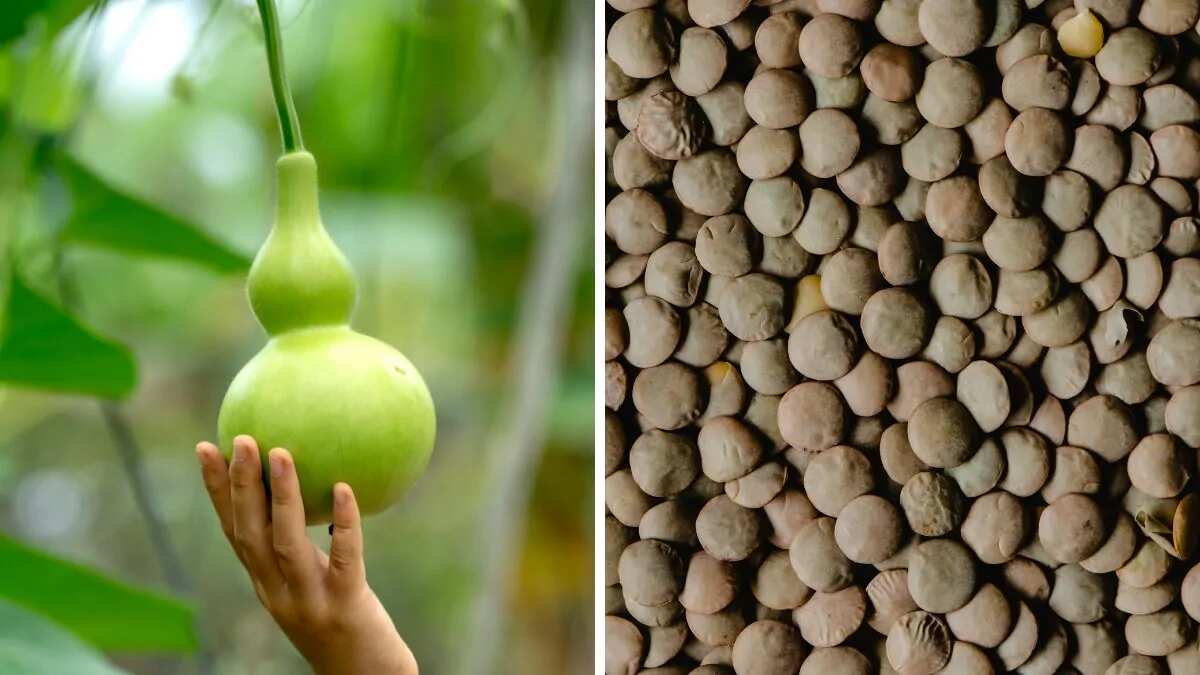
The water-dense gourd varieties of lauki, turai, parwal and karela are some of the few types which aren’t only nutrient-dense but also reduce the environmental footprint involved in food production. Most gourds also have diverse culinary uses for all parts - skin, flesh and seeds - thus reducing the chances of food wastage considerably. If not consumed in edible form, the waste generated as a result of cooking with them could also be utilised in a closed loop chain where they contribute to composting or biogas generation.
Kokum
Aside from being a key economic resource for local communities that cultivate the flavouring agent, kokum trees thrive in tropical and subtropical climates, growing organically without the need for chemical enhancements. Like gourds, all parts of the kokum are known to have diverse uses - the rind used in curries and beverages, pulp for syrups or juices, seeds to process cosmetics and confections and pressed seeds as crop fertilisers. Although low in maintenance, understanding the importance of its presence in ecosystems could save it from potential extinction in the year 2050.
Turmeric & Ginger
The fresh roots of turmeric and ginger are known to be available in a few different varieties that vary according to region and season. Both crops are touted to respond well to organic farming practices, eliminating the need to use chemicals and swapping it with vermicompost or neem cake. The tillage practices being limited to a bare minimum during the cultivation process make it possible to reduce consequences such as soil erosion and preserve soil structure, as a result.
Also Read:
Amla
Image Credits: Wikimedia Commons
The Indian gooseberry or amla is believed to be a crucial native species to restore degraded lands and assuring long-lasting yields from trees which have a fruiting lifespan of approximately 70 years. Aside from human consumption, amla also acts as a bidiverse food source which supports insects, birds and other wildlife. The superfood is also ideal to cultivate as part of agroforestry arrangements, which combines trees with crops or livestock.
Lentils
Famously known to fix atmospheric nitrogen levels in the soil in which they are cultivated, lentil varieties help bridge the need for synthetic or fertilisers which are energy-intensive. Within a diet that is partially or fully plant-based, consuming lentils in place of meat or meat-based products reduce the emission of greenhouse gases, which have adverse effects on the environment. Given their sheer variety, different lentils also grow in different environmental conditions, becoming an accessible ingredient throughout the year.
Traditional Cooking Oils
Image Credits: Pexels
Widely used cooking oils like mustard and coconut are by-products of high value and low efficiency cultivation - where multiple components are utilised across a number of applications. Pressing oil from coconuts or mustard seeds leaves behind oil cakes which transform into cattle food, fertiliser and even fuel, in some cases. While flowers of the mustard plant attract pollinators, the non-toxicity of coconut plantations are believed to absorb considerable amounts of carbon dioxide from its surroundings.