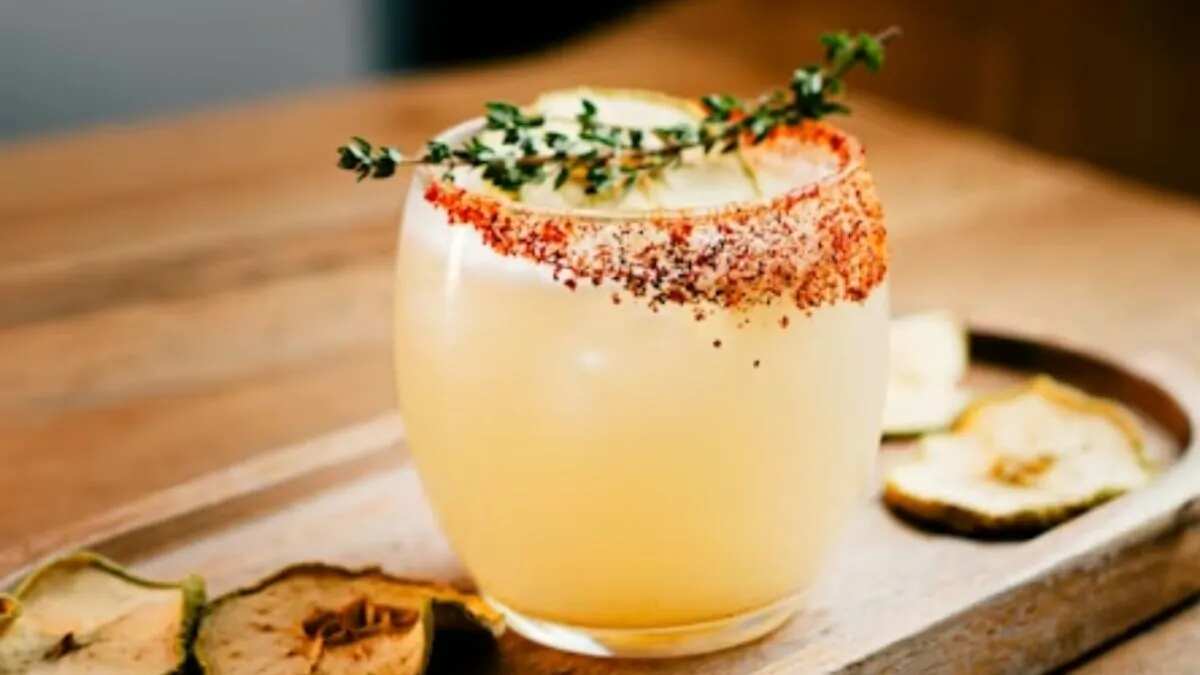
Each year, World Cocktail Day is marked on 13 May to acknowledge the dynamic craft of mixology and global cocktail cultures, which have enabled mixologists and bartenders to turn mixing drinks into an art form with its own aesthetic sensibilities. One such creative way of presenting cocktails around the world in restaurants, bars and by home mixologists is using cocktail salts for the cocktails as an ingredient or as a garnish. If you’re wondering what cocktail salt is, learn about it ahead of World Cocktail Day 2026.
Image Credit: Unsplash
How World Cocktail Day Began: A Brief Overview
It was in 1806 that the first known definition of the word ‘cocktail’ appeared in the American newspaper, The Balance And Columbian Repository, in which editor Harry Croswell published it as a response to a question from a reader. In his editorial, Crosswell wrote, “A cocktail is a stimulating liquor, composed of spirits of any kind, sugar, water, and bitters.”
This was essentially the blueprint of what is today known prominently as the old-fashioned cocktail, which can be brought together using 30 ml whisky, a dash of bitters and about 10 ml simple syrup. The definition of what is recognised as the modern cocktail appeared on 13 May in the newspaper, a date which later began to be commemorated as World Cocktail Day.
This is because it was for the first time in history that a ‘cocktail’ was acknowledged as a separate category of a drink. With this began a novel era of cocktail culture and mixology that would later proliferate across the globe, so much so that this day is marked every year as a toast to classic, contemporary and avant-garde recipes that continue to build into the repository of cocktail blends where even the rim of your cocktail glasses is meticulously garnished as well.
Image Credit: Unsplash
Say, for example, you have a distinctive margarita or Bloody Mary ordered for the table, you will notice that the rim is usually jazzed up, right? These high-quality seasoned salts are designed to adorn the lip of your cocktail glass and give spice, brightness, and salt to each drink. Plus, after happy hour, these salts turn up the fire in the kitchen, use them to season roasted vegetables or seafood, or to give quick flavour to a basic salad.
So, if you’re a beginner in mixing cocktails or just starting as a home mixologist, here’s a beginner’s guide on cocktails, salts and how to use them when you’re making cocktails at home, for your friends and family, this World Cocktail Day 2026.
What Are Cocktail Salts?
Salt isn't only for pretzels, bagels, and delicious chocolate chip cookies; the modest sodium chloride has several applications, but one popular one surely is rim salting. Want to improve your homemade drinks in only 30 seconds? Continue reading to learn what cocktail salts are and how to create Instagram-worthy salt rims for your drinks, this World Cocktail Day 2026.
Image Credit: Unsplash
For decades, salt has had only one purpose behind the bar: to rim the glass of a drink. It was most typically used to rim a margarita or a Salty Dog, and was kept in a tiny salt shaker with a piece of rice, a cardboard box with a metal pour spout, or a rimming tray drenched in lime juice. Bartenders and beverage managers are now exploring salt's numerous variants, ranging from handmade salts with terroir to flavoured salts prepared through conventional procedures.
How Cocktail Salts Are Used
This World Cocktail Day 2026, learn about how cocktail salts are created and utilised by chefs and bartenders themselves. Some examples of these salts that are being used are kala namak, a sulphurous Indian black salt roasted with charcoal and spices, and sal de gusano, a Mexican salt blended with chiles and worm larvae. Salt may be flavoured in a variety of methods, including smoking, baking, and ageing, as well as with herbs, activated charcoal, fruit, and pepper.
There is Tajín as well, a Mexican dish made with salt, chillies, and lime juice, usually placed on the lip of a hibiscus-infused tequila and watermelon margarita. Many mixologists and bartenders use smoked salts, too, if they prepare a cocktail with grapefruit and black cardamom, which can be added to a drink with a smoked-salt rim, tripling the overall saltiness.
Salts As An Ingredient In Cocktails
In addition to classic salt rims, bartenders and beverage managers are incorporating salt straight into beverages, generating a salt tincture, or creating salt foam. Each strategy produces diverse outcomes. By adding salt, you'll boost sweetness, inhibiting the suppressor of bitterness in your cocktails. You can employ a variety of techniques to add salt to beverages, but it is most famous for employing "salt air." It is an emulsion made with water, lime juice, kosher salt, and sucro, an emulsifier used in modernist cuisine. The cloudlike foam is scraped onto the surface of a straight-up margarita, adding salty flavour and texture to the beverage.
Image Credit: Unsplash
5 Cocktails To Make With Cocktail Salts On World Cocktail Day 2026
This World Cocktail Day 2026, if you’re planning to concoct margaritas, Bloody Marys, and more that use cocktail salts, with such a wide range of options and the numerous tasks that salt may serve, cocktail salts are open for exploration beyond the table and behind the bar. Here are 4 cocktails that you can make at home using cocktail salts:
Chilli Lime Cocktail
You begin with a chile-infused tequila created with Fresno and serrano peppers, and then you add a chilli salt rim for a hint of spice and smokiness. The lime juice adds an acidic bite to the drink, and at the end of each sip, your taste receptors are already yearning more. Because this drink is so easy, you just need basic bar utensils to put it together. If you need to measure the ingredients, you'll need a jigger or liquid measuring cup. You'll also need a cocktail shaker to mix it all!
Salty Dog
A salty dog is a greyhound, approximately one part vodka or gin and four parts grapefruit juice poured in a rocks glass over ice, with a salted rim. The Greyhound was first featured in the Savoy Cocktail Book in the 1930s, along with many of your other favourite classics. Created with gin, vodka has now become a popular replacement. With World Cocktail Day 2026 ahead, you can try making this cocktail because there are only two ingredients; apart from the art of using a cocktail salt to rim the glass, the type of gin will make a significant impact.
Grey Gusano Cocktail
In this mezcal-based cocktail, you combine the smoky alcohol with sal de gusano, a Mexican salt blend of warm larvae and chillies, lime, hot poblano liqueur, flowery Alpine liqueur, green rhum agricole, and a splash of spicy tincture. Sal de gusano, or ‘worm salt’ in Spanish, is a sort of seasoned salt that includes insects. When these insects are pulverised and mixed with chillies and salt, they provide a mineral-rich, salty, earthy, spicy, and smokey flavour. The worms provide a nuanced umami sensation with a savoury flavour similar to fried fish skin. The most traditional method to have sal de gusano is with a shot of mezcal. Unlike other spirits, mezcal is a dynamic brew that should be enjoyed one sip at a time. A pour of mezcal is often accompanied by a tiny slice of orange and a little pile of sal de gusano. Dip the orange in salt, nibble it, and then take a little drink of mezcal. The acid, salt, and spice enhance the complex flavours of the mezcal and serve as a palate cleanser in between drinks.
Image Credit: Unsplash
Nimbu Pani Kala Namak Cocktail
This particular recipe uses kala namak as a base ingredient, and the result is just as spicy and refreshing. This spicy nimbu pani drink is a delightful Indian cocktail made with serranos for heat, lime zest for tang, and black salt or kala namak for sourness. Black salt is funky and acidic, which gives this drink a puckering taste. Chaat masala, which frequently includes kala namak, is an excellent alternative.
Tajín Margarita
The tajín's spicy flavour complements the tequila and orange-tinged triple sec, creating a wonderful drinking experience. The burning of your lips simply makes you want another round. Most margaritas use unaged silver tequila as the base liquor since it blends well with the other ingredients. The inclusion of tajín enhances the earthy and agave-forward aromas, resulting in a peppery aftertaste.