Every year on 1 December, the world pauses for World AIDS Day to remember the lives lost to AIDS-related illness and to take stock of how far the response has come. In 2026, UNAIDS has built the day around a single word: access. Access to treatment, to rights, to resources and to the kind of political leadership that turns promises into services people can actually use. For India, the question of access is far from abstract. According to the India HIV Estimation 2025 report from the National AIDS Control Organisation (NACO), the country had around 25.61 lakh people living with HIV in 2024, the second largest number of any country in the world. Maharashtra carries the highest burden, with close to four lakh people, followed by Andhra Pradesh and Karnataka. The good news is real. New infections fell from 1.25 lakh in 2010 to about 64,500 in 2024, AIDS-related deaths dropped by more than 80 per cent over the same period, and the government now provides free antiretroviral therapy (ART) to more than 18 lakh people.
Yet anyone who works with people living with HIV will tell you that a pill alone does not make a person well. Antiretroviral medicines work best in a body that is adequately nourished. A patient who cannot afford three meals a day, who is battling mouth ulcers, nausea or diarrhoea, or who has lost weight and muscle to repeated infections, will struggle to stay on treatment and to recover. In the communities hit hardest by HIV, including sex workers, LGBTQ+ people, migrant workers and families living in poverty, an empty kitchen is often as serious a threat as the virus itself. This matters even more now. UNAIDS reports that international HIV funding fell by 18 per cent in 2025, the sharpest drop in almost two decades, and that community-led organisations were among the first to lose support. These are precisely the groups that quietly fill the gaps the health system cannot, including the food on a patient's plate.
To understand what good nutrition looks like for people living with HIV, and how it is being delivered on the ground in India, we spoke to Shalini Arvind, Chief Dietitian at Fortis Hospital, Bannerghatta Road, Bengaluru; Vivek Anand, Chief Executive Officer of The Humsafar Trust in Mumbai; Dr Priti Bhombe, Secretary of Snehalaya in Ahilyanagar, Maharashtra; and Archana Srivastav, Secretary of the India-AIDS NGO in Delhi. Between them, they offer a picture of food not as charity, but as care.
Why Nutrition Matters In HIV Care
HIV attacks the immune system, and the effects ripple out across the body. Shalini Arvind, Chief Dietitian at Fortis Hospital, Bannerghatta Road, Bengaluru, who holds an MSc in Food Science and Nutrition, starts with the fundamentals. "Nutrition plays an important role in supporting the health and well-being of people living with HIV," she says. "There are multiple nutritional challenges being faced by HIV patients. They suffer chronic inflammation and compromised immunity, which can affect cardiovascular health, kidneys, liver, skin, etc."
"The disease and the treatment affect the nutritional status of the patient," Arvind explains. "They face muscle wasting, micronutrient deficiencies, leading to an increased risk of infection." It becomes a cycle: infection drains the body's reserves, poor nutrition weakens immunity, and a weaker immune system invites the next infection. Global research supports what she sees in the clinic. The World Health Organization's technical guidance on nutrient requirements for people living with HIV notes that energy needs rise by about 10 per cent in adults who are HIV-positive but have no symptoms. During symptomatic illness or opportunistic infections such as tuberculosis, those needs can climb by 20 to 30 per cent. In settings where food is scarce or of poor quality, WHO acknowledges that meeting this extra demand may not be possible without supplementation. In India, where tuberculosis remains the most common co-infection among people living with HIV, that extra demand is a daily reality for many patients.
When Eating Itself Becomes Difficult
Knowing what to eat is only half the challenge. HIV and its complications can make eating physically hard. "Nutrition planned for them must consider nutritional sufficiency in an appropriate texture," says Arvind. "Nutrition intervention must address the challenges of oral ulcers, loss of appetite, altered perception of taste, difficulty in swallowing, nausea, vomiting, diarrhoea, etc." Her advice is specific. "Small, frequent, nutrient-dense foods of appropriate texture should be advised," she says. A person with painful mouth ulcers may manage a soft khichdi or a bowl of curd far better than a dry roti, and someone with little appetite is more likely to finish four small portions through the day than two large ones.
Image credit: Snehalaya
What A Healthy Plate Looks Like
"A balanced diet helps maintain body weight, supports immunity and gives the body the energy it needs to function well," says Arvind. "It also helps people manage their overall health while undergoing treatment." She is just as clear about what belongs on the plate. "A healthy meal plan should include a good mix of proteins, carbohydrates, healthy fats, vitamins and minerals. Foods such as pulses, milk, eggs, nuts, fruits, vegetables and whole grains can help meet daily nutritional needs. Adequate water intake and safe food practices are equally important." Safe food practices matter all the more because a weakened immune system is more vulnerable to foodborne infections. Her most important message, however, is about how nutrition is viewed within medicine itself. "It is important to understand that medical nutrition therapy acts as an active adjuvant therapy alongside the primary medical treatments rather than serving as supportive care," she says. In other words, food is not a pleasant extra once the real treatment is done. It is part of the treatment.
The Humsafar Trust: Nutrition As Part Of The Treatment Plan
Founded in Mumbai in 1994, The Humsafar Trust is India's first community-based organisation for LGBTQ+ people. "Health was always our mandate. So we started doing HIV," says its CEO, Vivek Anand. The Trust began its first HIV intervention in 1998, and food was part of the picture almost from the start. "Right from the beginning, nutrition was a very big component," he says. The reason was simple. "Humsafar works with extremely marginalised communities. The socio-economic standards are very low," Anand explains. "So even if people are on treatment, the nutritional balance is not there in their lives." In 2001 and 2002, the Trust began a formal nutrition programme.
The timing is significant. India launched its free ART programme only on 1 April 2004, in eight hospitals across six high-prevalence states and Delhi. Before that, and in the difficult early years of the national programme, staying healthy was often the main defence people had. "So what we did was that we started talking about the need for people to stay healthy," Anand recalls. "Why it was important, so that other infections do not get the better of you."
Planning A Balanced Diet On A Shoestring
"I remember I had a very nice nutritionist who joined our programme," Anand says. The brief he gave her was a hard one. The people he was reaching, he told her, had a daily food budget of barely ten rupees a person. What could a balanced diet look like within that? The answer was to keep things simple and familiar, and to build meals around everyday foods that supply protein and carbohydrates. "You go for things like an upma, or a poha, or an idli. Something which is more holistic in nature," Anand says. On top of regular meals, Humsafar began distributing nutritional supplements, including ragi powder, jowar, bajra and nutritional chikki. "That would go over and above your everyday ration," he explains. Anand says this work was supported for a time through a grant from USAID and FHI 360 under a programme called IMPACT.
How COVID Changed Everything
The pandemic turned a modest programme into a structured national effort. "Around COVID, we got a lot more structured, because we started very aggressively fundraising for our communities," Anand says. Soon the Trust was hearing from people living with HIV across the country who needed rations, not just supplements. The Trust's nutritionist designed a balanced monthly ration kit. "We should have some dry fruits, some chikki and some ragi powder, but you also have some wheat and some oil, because COVID was a tough time," Anand recalls. Each kit, he says, "would cost us about ₹1,400 to ₹1,500 for one month." What made the model work was its distribution system. Humsafar ran distribution directly in Mumbai and Thane. Elsewhere, a community member in, say, Uttar Pradesh or Karnataka would contact the Trust and receive the standard kit list. "You please get a quotation of this, and normally quotations would come more or less at the same rate," Anand explains. Humsafar would then buy from the chosen vendor, whether in Hyderabad or Mathura. "We would just transfer money to the bank. We never gave money to people. And then community persons are appointed to go and distribute." As he puts it, "That was the time when it really became structured."
A Programme That Stayed
What began as an emergency response has stayed. "Now it's kind of become like a regular programme, which is food and nutrition," Anand says. Humsafar receives support from agencies and civic groups, including a Rotary club, who sponsor monthly food packets. "Sometimes they give you 50, sometimes they give you 100, sometimes they give you 200," he says. Packets are handed out at community mobilisation events, and are also kept at Humsafar's clinic and office for people to collect when they come in. "We have food packets lying in our office," he says. On some occasions, the Trust goes a step further. "Sometimes we also give them smart cards of, like, a DMart, so that they can go there and buy it outright for themselves."
Anand is clear that this is not a soup kitchen. "We provide them as part of their treatment programme. We don't run a restaurant or we don't run a kitchen. It's part of your treatment plan," he says. People collect their food packets when they come to pick up their medicines or attend the clinic. "On an average, I would say, it comes to around 3,000 to 4,000 people every year, sometimes even 5,000 people." The food sits within a wider package of care. People living with HIV at Humsafar have their vital statistics checked regularly. "Every six months they have to undergo tests," Anand says. "We also have yoga classes that happen for them." Staff keep track of how people are feeling and whether they have more energy.
Quality As A Form Of Respect
The response, Anand says, comes down to one non-negotiable. "Generally the feedback is very positive, because we generally go for good quality food," he says. "So if there is rice, we really give good quality rice." One story has stayed with the team. A group of sex workers in Delhi told Humsafar that they only wanted its food packets, because other packets they had received contained stones and adulterated grain. For people who are routinely handed the least and expected to be grateful, receiving food that is clean, wholesome and carefully chosen sends a quiet message: you deserve good things. Anand credits Humsafar's volunteers as the backbone of the programme. They sit at the centre of everything, he says, and work hard to make every distribution happen.
Inside The Humsafar Nutrition Kit
Humsafar's monthly nutrition kit is designed with nutritionists to meet basic health needs, and it stays largely the same across regions and health conditions. Anand explains that the core aim of nutrition for people living with HIV is simply to stay healthy, so a consistent, well-balanced basket serves everyone. Each kit contains:
- Ragi, 1 kg. Finger millet is one of the richest plant sources of calcium and also offers iron and fibre. It can be made into rotis, porridge or a warm malt.
- Jowar, 1 kg. Sorghum is a filling, gluten-free whole grain that provides fibre, B vitamins and slow-release energy.
- Bajra, 1 kg. Pearl millet brings iron, magnesium and protein, and is a traditional winter staple in many Indian homes.
- Jaggery, 500 g. A quick source of energy and a familiar sweetener, often paired with til or peanuts.
- White til, 500 g. Sesame seeds add calcium and healthy fats, and turn easily into chikki or ladoos with jaggery.
- Ghee, 250 g. Concentrated energy for people struggling to keep weight on, which also helps the body absorb fat-soluble vitamins.
- Masoor dal, 500 g. Red lentils cook quickly, are gentle on the stomach and supply protein, iron and folate.
- Green moong dal, 500 g. Easy to digest and versatile, moong works as dal, khichdi or sprouts, and is often the first food offered to someone recovering from illness.
- Makhana, 250 g. Fox nuts are a light, low-fat snack with protein, and they are easy to eat for someone with a poor appetite.
- Peanuts, 250 g. An affordable source of protein, healthy fats and calories.
Read together, the list reflects Arvind's advice almost item for item: whole grains for sustained energy, pulses for protein, seeds and nuts for healthy fats and minerals, and ghee and jaggery for the extra calories a body fighting infection needs. Every item is familiar, keeps well and can be cooked in an ordinary home kitchen, which matters as much as the nutrition itself.
Snehalaya: A Kitchen That Feeds 450 People A Day
If Humsafar's model is built around distribution, Snehalaya's is built around a kitchen. The organisation has worked in Ahilyanagar district (formerly Ahmednagar) for 37 years. Its founder, Dr Girish Kulkarni, began in 1989 by sheltering sex workers who had developed AIDS, along with their children, many of whom were born HIV-positive or had acquired HIV through sexual abuse. "When the AIDS epidemic first emerged, we helped people facing the disease die with dignity," says Dr Priti Bhombe, Secretary of Snehalaya. "Today, we are proud to promote life with dignity." Snehalaya today runs shelters, a hospital that specialises in caring for people affected by HIV, a school, a residential mental health project and Himmatgram, a rural project for adults living with HIV. Its centralised in-house kitchen prepares meals for around 450 people at any given time. That includes about 200 children aged 3 to 18 in its shelter, 40 women in the women's shelter, 30 hospital patients, 60 residents of the mental health project and 40 adults at Himmatgram.
The kitchen is run on an almost industrial scale, with a chapati-making machine, vegetable cutters, grinders, LPG stoves and commercial equipment for idli and dhokla. A chef and helpers handle cutting, grinding and chapati-making, a kitchen supervisor oversees daily operations, and two staff members are dedicated to cleanliness in the kitchen and dining areas. Every Saturday, the storeroom, dining hall and preparation spaces are deep-cleaned.
A Menu Planned Around HIV Care
Snehalaya serves two full meals a day along with breakfast, an evening snack or fruit, and school tiffins for children who attend classes. "The menu is planned with particular attention to the nutritional needs of children living with HIV/AIDS and to supporting their health while they receive antiretroviral therapy (ART)," says Dr Bhombe. "Adequate nutrition also helps support the immune system and reduce vulnerability to opportunistic infections." The weekly menu is set by a dietitian in consultation with Snehalaya's chief adviser and trustee. The dietitian also introduces the team to new and healthy recipes, trains staff to prepare them and recommends equipment that can make the kitchen more efficient. Protein comes from lentils, soya, chickpeas and dal. Rice, wheat, jowar and bajra supply carbohydrates, while green leafy vegetables, other vegetables and fruit provide vitamins and minerals. Seasonal fruits such as apples, bananas, mangoes and watermelon are served as evening snacks, and every day ends with a glass of milk from Snehalaya's own dairy farm.
A typical week at Snehalaya looks something like this:
- Breakfast rotates between poha with shev, upma with shev, sabudana khichdi, lentil rice, bhel, vada pav and cracked wheat upma
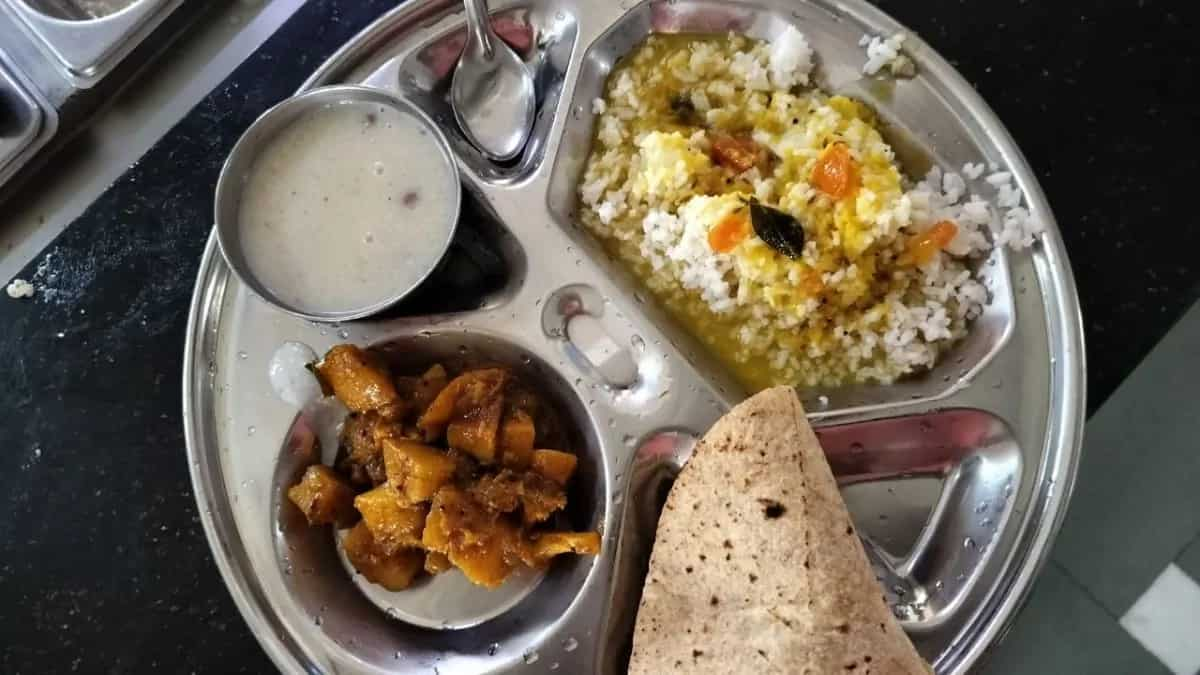
- Lunch brings a sabzi with dal, rice and chapati, such as cauliflower masala, cluster beans, brinjal masala, bhindi masala, toor beans or potato and cabbage, with occasional treats such as paneer butter masala, pulao and a sweet porridge.
- Evening snacks include fresh fruit, dates with rajgira ladoos, nuts, dry bhel, cupcakes and biscuits.
- Dinner might be soybean curry, gram curry, shev bhaji, aloo palak, vegetable biryani with papad and pickle, or methi with garlic served with jowar roti, chapati, dal and rice.
- Festive meals feature puri, suji halwa, potato curry, pulao, pakodas, puran poli and sweets made with milk and khoya.
Snehalaya also prepares idli, dhokla, vegetable sandwiches, groundnut and jaggery ladoos and rajgira sweets in-house, and on occasional treat days the children are served chaat, pav bhaji and vada pav, all made in the same kitchen.
Food That Responds To The Body
Because the kitchen serves people with very different needs, it aims for balanced meals that suit everyone, then adjusts where necessary. Hospital patients eat according to the diet prescribed by their treating doctors. Patients who need lighter food are offered dal-rice or sago porridge. "Haemoglobin and other health parameters are checked twice a year," says Dr Bhombe. "If any deficiencies are identified, iron- and vitamin-rich foods are incorporated into the diets of the children and adults concerned."
Much of what Snehalaya serves is grown or produced by its own community. Adults living with HIV at Himmatgram take part in farming and dairy work, and some of that produce goes straight to the kitchen. Vegetables come from Snehalaya's farms wherever possible, milk from its dairy, and other supplies from wholesale markets through vendors registered each year on cost and quality. Women and older girls help clean grains and remove husk and impurities. Behind the scenes is a surprisingly sophisticated supply chain. The kitchen raises tickets for groceries, the stores team checks stock, the purchase team buys what is missing and sends a monthly request to the fundraising team for in-kind donations or meal sponsors. Stock, purchases and accounts are tracked on integrated software. Funding comes from individual donors, corporate CSR programmes and in-kind gifts of grain. "In some months, support from individual meal donors may decline, or we may receive fewer in-kind donations of groceries and other food grains," Dr Bhombe says. "During such periods, Snehalaya draws on its reserve funds to purchase the food required to meet beneficiaries' daily nutritional needs."
India-AIDS NGO: Why No Single Diet Fits Every Patient
The India-AIDS NGO has worked with people living with HIV since the late 1990s. "We began with successful rehabilitation of HIV/AIDS affected people by creating awareness, promoting their care and facilitating their rehabilitation," says Archana Srivastav, Secretary of the organisation. It later extended its programme to cancer patients. Awareness was one of its earliest tools. The organisation published a fortnightly tabloid, AIDS Solution N Killer Diseases, which travelled from embassies to news stands and found a particularly wide readership in North-East India. Public sector undertakings such as PNB, GAIL, IOCL, ONGC and SBI supported the effort through advertising and by hosting awareness workshops for their staff. The organisation also ran awareness and peer education workshops in South Delhi schools, including DPS, Vasant Valley, Modern Convent and Guru Harkishan, with support from UNICEF and UNAIDS.
Drawing on years of working with patients, Srivastav is clear about what their meals should deliver. "We focused on providing meals containing essential nutrients, including proteins, vitamins, minerals and energy-giving foods, using locally available ingredients," she says. "Our approach was guided by the understanding that proper nutrition plays an important supportive role in the overall well-being of people living with HIV." Where required, the organisation also sought guidance from healthcare professionals at nearby hospitals to address individual dietary needs. Her biggest lesson echoes the clinical view. "It's very much challenging to create or fix a food/meal criteria for HIV patients, as they have regular changes in their body behaviour as the immunity deteriorates day to day," she says. "In every check-up they have different issues, either the immunity is gaining or losing. In every case, we have to take care of diet as per parameters."
There is no real contradiction between this and Humsafar's standard kit. A consistent basket of whole grains, pulses and healthy fats creates a reliable foundation that anyone can build on at home. What Srivastav and Arvind both stress is that, for people who are unwell or whose immunity is falling, that foundation needs to be adjusted with medical guidance, in texture, quantity and focus.
Beyond The Plate: Food, Belonging And Dignity
For many people living with HIV, food has also been a site of exclusion: separate utensils, a plate set apart, a neighbour who will not share a meal. Programmes that feed people well can quietly undo some of that hurt. At Snehalaya, the dining hall works on a counter-service system. Children and adults collect their own plates, serve themselves, then wash and return their plates to the shelves, with caregivers overseeing the counters. "Involving children in menu planning and considering their suggestions helps create a sense of belonging and family, rather than making them feel institutionalised," says Dr Bhombe. On special days, residents volunteer in the kitchen and help prepare festive meals. "These activities help them develop teamwork and make the process enjoyable and engaging," she says. "We believe that participation in such activities can also have a therapeutic value for people who have experienced trauma." Festivals are a high point. Everyone dresses up, the dining area is decorated and meals are shared. Children look forward to Diwali and Christmas, and on 15 August all the children at Snehalaya celebrate a shared birthday, with cake, music, dance and a special dinner.
The Stigma That Still Remains
Dr Bhombe is candid about how much remains to be done. "Misconceptions and myths about people living with HIV persist, including within parts of the medical fraternity, and we work every day to challenge them," she says. Snehalaya's hospital exists in part because people living with HIV are still turned away by private hospitals or priced out of care. When the organisation opened its English medium school in 2010, it was mainly for children in its care who struggled in mainstream schools, where their health needs and medication sometimes affected concentration and attendance. From 2015, children from nearby slums and the families of industrial and daily-wage workers began enrolling too. Children once refused admission because of their HIV status now study alongside classmates who are not living with HIV. "However, there is still a long way to go before such inclusion is universally accepted," says Dr Bhombe.
Discrimination follows people into adulthood, in jobs, housing and marriage. Snehalaya sees it persist in sectors such as hotels, restaurants and beauty salons, and responds with vocational guidance, language training and a matchmaking initiative that helps people living with HIV find life partners. India's HIV and AIDS (Prevention and Control) Act, 2017, makes it illegal to discriminate against people living with HIV in employment, healthcare, education and renting property, and bans HIV testing as a condition of employment. The law is clear. Attitudes are catching up more slowly.
One of Snehalaya's most worrying observations concerns young people. "Many young people who leave our care after turning 18 stop taking antiretroviral (ARV) medication because they fear being questioned about it," says Dr Bhombe. "They worry that disclosure of their HIV status could lead to the loss of friends, colleagues or even employment." The organisation is now working to support adherence as young people move into independent lives, and to raise awareness about testing, prevention and treatment among young people and key populations, including truck drivers, the regular partners of sex workers and LGBTQ+ communities.
Not A Death Sentence
If there is one thing Vivek Anand wishes more people understood, it is this: HIV is no longer a death sentence. With consistent treatment, the virus can be suppressed until it is undetectable in the blood, and people can go on to live long, full and beautiful lives. HIV is not yet curable, he says, but it is treatable, and society needs to see it that way. Young people diagnosed today can study, work, build careers and plan their futures. The science backs him. In 2023, the World Health Organization affirmed that people living with HIV who have an undetectable viral load and keep taking their medicines as prescribed have zero risk of passing the virus to their sexual partners, a principle known as Undetectable equals Untransmittable, or U=U. Reaching and staying at that point depends on taking medicines every day, for life, and that is far easier for someone who is well nourished, free of constant infections and not facing hunger or rejection at home.
How You Can Help This World AIDS Day
Across a Bengaluru hospital ward, a Mumbai community clinic, a Delhi awareness programme and a shelter kitchen in Ahilyanagar, the message is the same. Medicines control HIV, but food helps people stay strong enough to take them, recover from infections and live with dignity. A kilo of ragi, a bowl of moong dal or a glass of milk at the end of the day may not sound like healthcare, yet for millions of Indians living with HIV, that is exactly what it is.
If this World AIDS Day moves you to act, there are simple ways to help:
- Sponsor a meal or a nutrition kit. Organisations such as Humsafar and Snehalaya rely on individual donors and meal sponsors, and support often dips in some months.
- Donate good-quality food. As Humsafar's experience shows, quality matters. Clean grains, pulses and staples are a gift of respect, not just of calories.
- Volunteer your time. From distributing kits to helping in a kitchen, volunteers keep these programmes running.
- Challenge stigma where you see it. Share a meal, hire fairly, and speak up when someone is treated differently because of their HIV status.
- Talk about U=U. The more people understand that HIV is treatable and that undetectable means untransmittable, the less fear there is to fuel discrimination.
The science, as UNAIDS puts it this year, has done its part. Making sure every person living with HIV also has enough good food on their plate is part of what the rest of us can do.