Arbi is one of those vegetables that people either love way too much or ignore completely. For some, it carries memories of crispy masala fries that were packed into steel lunchboxes. In contrast, others remember it as cooked versions that turned slimy, sticky and slippery, making the experience extremely unsatisfactory. But when prepared appropriately, arbi can effortlessly become one of the most satisfying vegetables during the summer season. The trick has always been in the cooking process. It is traditionally boiled, dried thoroughly, and either roasted or shallow-fried to bring out its earthy, nutty taste and crisp texture.
You can pair arbi with simple meals such as dal, curd, rice and even plain parathas or rotis. Unlike other heavy gravies, arbi dishes often feel homely, particularly during hot days when you want comfort food without having to spend hours in the kitchen.
Health Benefits Of Eating Arbi In Summer
Arbi or Colocasia has fibre, potassium and slow-release carbohydrates that make it filling without feeling too heavy when cooked adequately. It is also naturally gluten-free, making it perfect for people who are looking to diversify grains and vegetables in everyday meals. Its resistant starch content may also help in digestion and gut health, particularly when eaten in balanced amounts instead of heavily fried versions.
Arbi Dishes Across India
Across India, different regions have their own variety of cooking arbi. Some make it crisp and spicy, others cook it with yoghurt, imli or coconut-based gravies.
Arbi Ki Sukhi Sabzi, North India
This is a very common variety of arbi cooked in North Indian households that many have grown up eating. Boiled arbi is sliced or lightly flattened before roasting it with turmeric, ajwain, coriander powder and chillies until it turns crisp from around the edges. The texture is what makes it even more comforting, i.e., crispy on the outside and soft from within. It tastes best when paired with dal rice and simple phulkas because the flavours remain earthy and also balanced rather than being too rich. To elevate the taste further, you can also add some dry mango powder (aamchur) or chaat masala when it is cooked, at the end, giving the dish a sharper, a bit tangy finish.
Patra Nu Shaak, Gujarat
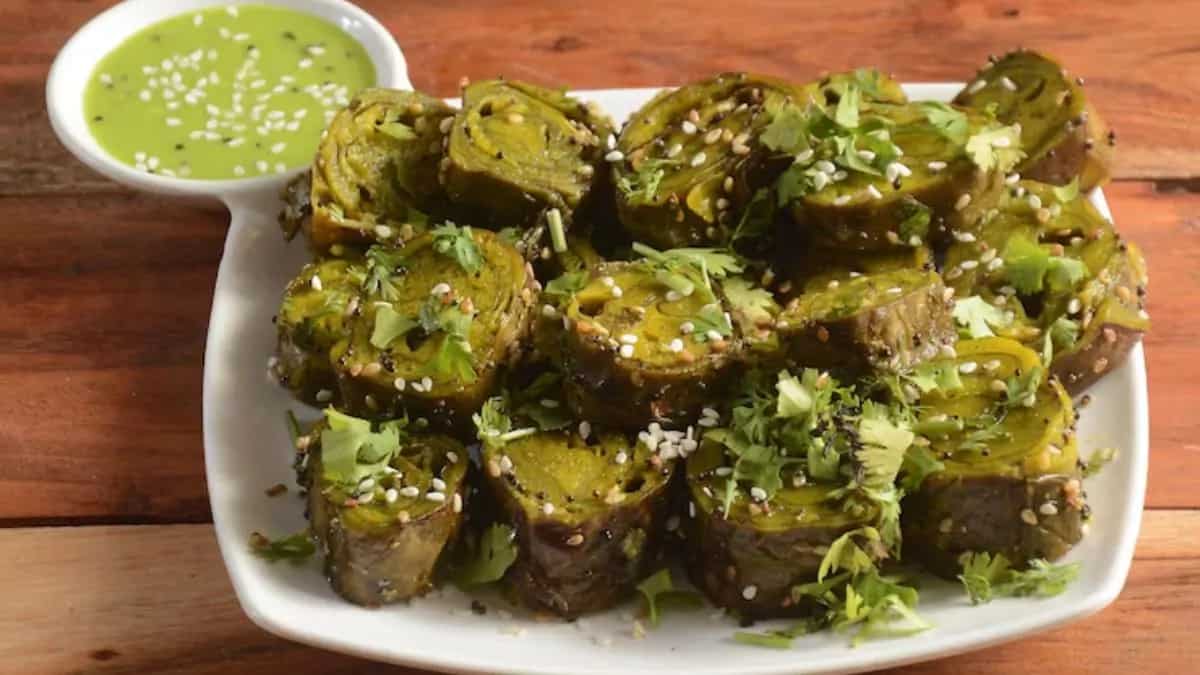
In Gujarat, not only arbi, but also its leaves are used in dishes such as patra. Gujarati patra nu shaak has a sweet, a bit tangy flavour. The colocasia or arbi leaves are layered with spiced gram flour or besan masala, rolled tightly, then steamed, cooked and later tempered. The outcome feels soft and a bit firm, having bursts of sesame, tamarind and jaggery in every bite, which feels extremly comforting. It pairs beautifully with even simple dal-rice because the flavours already feel layered on their own without having the need for any heavy side dishes.
(Image credit: Freepik)
Chembu Curry, Kerala
In Kerala, arbi is locally called chembu and is often cooked in coconut-based gravy that feels light and is also deeply full of flavour. The curry usually blends coconut paste, curry leaves, mustard seeds and light spices, making a creamy dish without becoming too heavy or rich. Unlike the North Indian crispy variety, this variety keeps the vegetable soft and satisfying. The slightly earthy taste of arbi mixes beautifully with coconut, making the dish feel cooling as well as balanced when the weather turns too humid or the heat is intense. It is commonly paired with steamed rice and sometimes also paired with fish fry or simple vegetable thoran on the side.
Seppankizhangu Roast, Tamil Nadu
Arbi, known as seppankizhangu in the local vocabulary of Tamil Nadu, is prepared in a roasted version and is loved for its bold texture and spice. Boiled colocasia or arbi is marinated with a mix of chilli powder, turmeric, rice flour and curry leaves before it is pan-roasted slowly until it turns crispy from the outside. The rice flour coating gives it an addictive crunch, making it an almost snack-like treat. It is commonly served on the side with rasam rice, curd rice or sambar meals because the spicy crispness perfectly balances the softer dishes. The flavour feels bold, savoury and comforting in the way many South Indian roasted vegetable dishes naturally accomplish.
Chamadumpa Pulusu, Andhra Pradesh
In Andhra cooking, arbi is known as chamadumpa and is often cooked in tamarind-based gravy called pulusu. This dish blends tanginess, spice and earthy softness all in one go. Tamarind gives the curry a sharp bite, while curry leaves and mustard tempering make the flavour feel bold and warming. Some versions of it are semi-dry, whereas others have more gravy that you can pair with rice. The dish feels particularly satisfying with plain steamed rice, with a side of curd, because the spice and tang remain strong but also balanced throughout the meal.
Tips To Cook Arbi Without Making It Slimy
One of the biggest reasons many people avoid arbi is due to its sticky or slimy texture when it is not cooked correctly. But most traditional kitchens have always depended on small cooking tricks to keep it crisp and dry.
- Arbi should feel as if it is just cooked and firm, not too soft. Overboiling will release extra starch and moisture, which will quickly make it sticky while roasting or frying. Pressure cook until 3 to 4 whistles and not more.
- Once boiled, let the arbi cool down thoroughly and dry for some time before you begin to peel or cut. Less surface moisture helps in roasting better and maintains its crisp texture.
- When the arbi is overcrowded while cooking, the steam gets trapped in the vessel you are cooking in and makes the texture soggy. Always use a wider pan to help the pieces roast evenly without turning mushy.
- Using dry mango powder (aamchur), lemon juice or tamarind helps balance the earthy texture of arbi. They also make the dish feel much lighter.
- Arbi creates the best texture when left undisturbed for a while on medium flame. Constant mixing breaks the pieces, which results in extra starch, making it slimy.