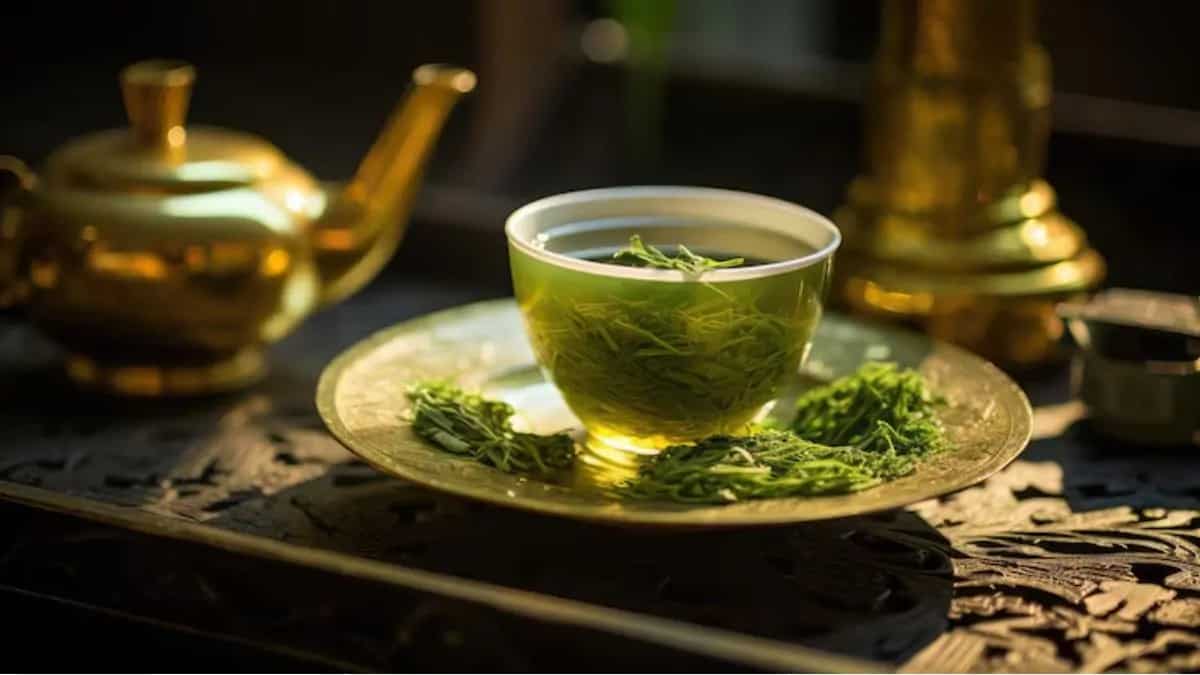
Gyokuro, Japan's premium tea, is taking the internet by storm, not just for its price, but also for how it is grown, brewed, and experienced. It is not your regular green tea. From shaded fields to careful brewing, everything about gyokuro feels slower, more conscious, and deeply connected to craft.
What Is Gyokuro?
Gyokuro, which translates to “jade dew,” is a premium Japanese green tea known for its in-depth green leaves and smooth, umami-rich taste. Unlike the regular green teas, it is produced under shade for about three weeks before it is harvested. Farmers cover the tea plants with straw or particular cloth, which reduces exposure to sunlight.
The result is a tea that tastes much softer, a bit sweet, and almost brothy, rather than too sharp or grassy.
Most high-quality gyokuro comes from regions such as Uji (Kyoto) and Yame (Fukuoka), where weather, soil, and farming practices are well-suited for this light process.
(Image credit: Freepik)
Why Is Gyokuro So Premium?
The price of gyokuro is not just about branding, but it mirrors the effort and accuracy behind it. Shade-growing itself is labour-intensive. Farmers have to typically monitor light levels, temperature, and the flow of air to save the plants without damaging them. This step alone decreases the production while improving the quality.
Then comes selective harvesting. Only the youngest, most delicate leaves are picked, often by hand and with great care. After harvesting, the leaves are steamed, rolled, and then dried in a way that maintains their structure and nutrients.
In simple words, gyokuro is premium because it blends lower yield, higher labour, and a very distinct flavour profile that cannot be rushed or easily copied.
How Much Does Gyokuro Cost?
Gyokuro is regarded as one of Japan’s most premium teas, and its price shows that. On average, gyokuro is much more expensive than just the regular green teas, such as Sencha, largely due to its labour-intensive cultivation and limited production.
In Japan, high-quality gyokuro can cost anywhere between ¥5,000 and ¥15,000 per 100 grams, with artisanal or competition-grade types going even higher. Globally, this roughly translates to somewhere INR 3,000 to INR 10,000 for small packs (30–100 grams), depending on the source and its quality.
In India, imported gyokuro is usually sold in smaller quantities, with prices that can range from INR 1,500 to INR 4,000 for only 30–50 grams. Premium, particularly sourced batches, mainly from regions like Uji or Yame, can cost significantly more.
How Is Gyokuro Different From Other Green Teas?
The biggest difference lies in how gyokoru is grown and how it tastes. Most green teas like sencha are grown in full sunlight, which gives them a bright, a bit bitter and grassy flavour. Gyokuro, on the other hand, is shade-grown, which diverts its flavour thoroughly, less sharp, more rounded, and extremely savoury.
Not only this, but it is also brewed differently. While regular green tea can tolerate hot water, gyokuro needs lower temperatures and more patience. The result is a thick, almost broth-like cup instead of a light, refreshing drink.
Even visually, gyokuro leaves are much darker and finer, and the liquor seems more vivid green. It is not just a stronger version of green tea, but it’s a different experience altogether, closer to tasting than just casual drinking.
(Image credit: Freepik)
Why Are More People Loving Gyokuro Today?
There is a growing shift towards mindful eating and drinking, and gyokuro fits naturally into that space. People are no longer just looking for caffeine, but they are looking for flavour, experience, and something that feels purposeful.
Gyokuro also appeals to those who find regular green tea a bit too bitter. Its smooth, umami-rich taste is easy to enjoy, even for beginners. At the same time, tea enthusiasts enjoy its complexity, the way flavours vary with each sip or infusion.
There’s also a curiosity factor here. As global food culture develops, more people are exploring the traditional ingredients with many deep stories connected to them. Gyokuro offers that mix of heritage, art, and a flavour profile that feels new but also enjoyable. It’s not just trendy, but it is also something that people come back to.
Ways To Have Gyokuro
Here are some ways in which gyokoru is sipped:
Traditional Low-Temperature Brew
Unlike everyday green tea, gyokoru needs cooler water, around 50–60°C, and a longer steep to gently draw out its essence. This slower process lets the amino acids shine, giving the tea its signature umami depth without any bitterness. The liquid turns out to be richer, almost velvety, with a soft sweetness that remains on your palate.
Small Sips, Not Large Cups
Gyokuro is not meant to be poured into big mugs and finished fast. It is typically served in small cups, nearly like a tasting portion. This changes how you experience it on the palate; you sip it slowly, let the flavour develop rather than just disappear. Each sip feels concentrated, with layers of sweetness and umami that develop on the palate. Drinking it this way also makes you more aware of its consistency, which is thicker than most teas.
(Image credit: Freepik)
Cold Brew For Summer
Cold brewing gyokuro brings out a different side of the tea. Rather than intensity, you get a softer, a bit naturally sweet flavour that feels extremely refreshing in warm weather. The process is also simple, just steep the leaves in cold water for a few hours, but the result feels elegant. The bitterness almost disappears, leaving behind a smooth, clean taste with a gentle umami note. It is lighter than the hot version but still feels layered.
Multiple Infusions From The Same Leaves
One of the most impressive things about gyokuro is how it changes with each brew. The first infusion is usually the most prosperous—deep, umami-heavy, and almost broth-like. But the leaves do not lose their value after that. With each following steep, the flavour shifts, becoming light, fresh, and softer. It’s like tasting different versions of the same tea. It adds slowly, rewarding you with light variations instead of just fading away quickly.