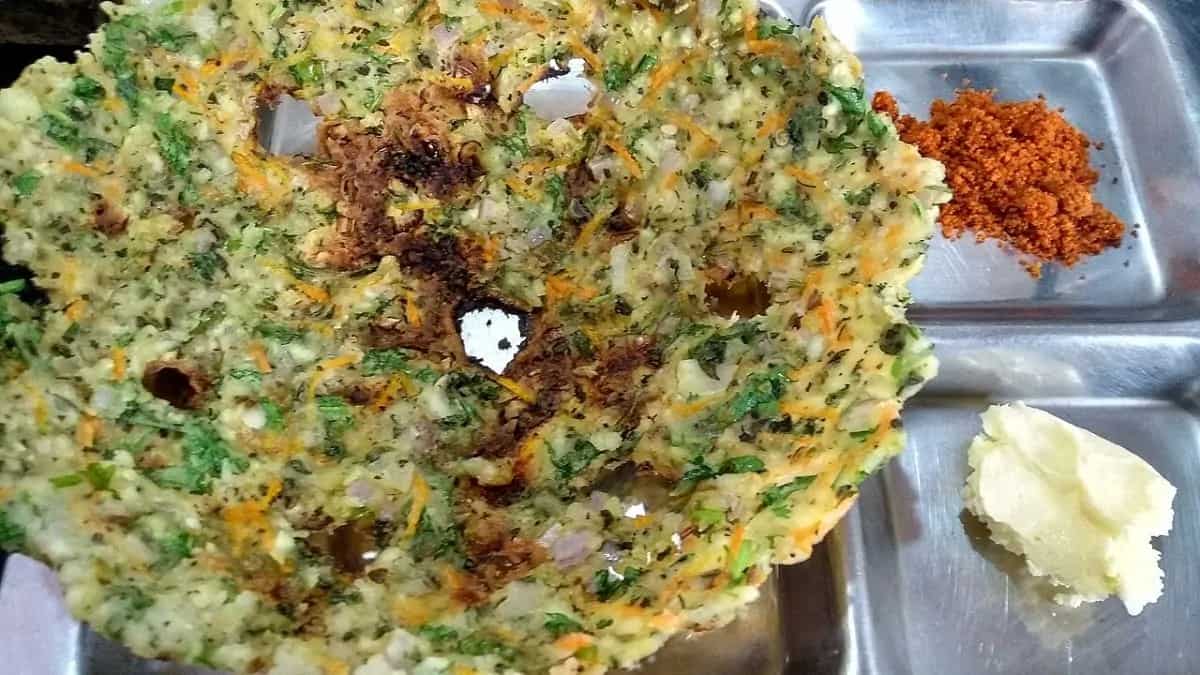
Akki roti is a traditional flatbread hailing from Karnataka, prepared by kneading rice flour. Unlike the regular wheat-based rotis, akki roti has a different texture. It is lightly crisp on the edges while being soft on the inside. The dough is generally prepared by mixing finely chopped onions, green chillies, fresh coriander, and fragrant curry leaves. Many people also add grated carrot, dill leaves, or bottle gourd to give it extra depth, more freshness, and a light sweetness.
What truly makes akki roti unique is the way it is shaped. Instead of just rolling out, like how the regular ones are done, the dough is carefully patted by hand, between the palms and directly placed onto a hot, sizzling tawa. Akki roti is cooked slowly until golden spots begin showing and the surface changes delicately crisp. Simple yet heartwarming, akki roti is often enjoyed for breakfast with coconut chutney, fresh butter, or cooling curd by the side.
How Healthy Is Akki Roti?
Akki roti is light and naturally gluten-free in comparison to the other regular flatbreads, since it is prepared from rice flour. One medium-sized roti has the ability to provide approximately 150–180 calories. Adding vegetables to its flour, like carrots or spinach, gives a boost of essential fibre, vitamins, and minerals. While akki roti is an energy-giving source, it tastes best when paired with protein-rich sides such as chutney prepared with lentil or curd to make a perfectly balanced meal.
Tips To Make Perfect Akki Roti At Home
Listed below are some tips on how to make perfect akki roti at home:
Use Warm Water To Knead Soft Dough
Rice flour does not behave the same as wheat flour. Always knead the rice flour with some warm water, not cold water. Add water little by little and knead with gentle hands until it feels soft but should not be sticky. The warmth from the water helps the flour in soaking up the moisture nicely, so that it becomes easier to roll out roties without cracking. If the dough feels too dry, sprinkle a little water from the top and then knead again. A well-hydrated and pliable dough is the key to making soft akki rotis that don’t break while you cook them.
(Image credit: Freepik)
Chop Ingredients Very Finely
If you desire to add ingredients such as onions, green chillies, curry leaves, and coriander, chop them very finely. If the pieces of vegetables are large chunks, it will result in an uneven dough, and the roti can tear while you roll it out. Fine chopping also guarantees every bite has a perfectly balanced flavour and is not uneven. Lightly crush the curry leaves between your fingers before you add them to the flour, so that they release their aroma beautifully. Keeping in mind small details like these makes a homemade akki roti taste like you have ordered it from a Karnataka-style cafe.
Pat Directly On The Tawa Or Banana Leaf
Instead of rolling out the roti with a rolling pin, take a ball of the prepared dough and lightly pat it flat with your fingers between your palms. Keep in mind to lightly grease your palm before this or use a banana leaf or plastic sheet, in case you have a fear that it might stick. Press slowly from the centre towards the outside. At this point, do not aim for perfection and consider cracks to be normal; don't let it bother you. The hand-patting method gives the akki roti its original texture and slightly rough, homely appeal.
(Image credit: Wikimedia Commons)
Cook On Medium Flame
If you cook akki roti on a very high heat, it will burn the outside, and the inside will remain raw. Instead, cook on medium flame, drizzle a little oil around the edges, and then cover with a lid for a minute. This process will trap the steam and ensure even cooking. Flip it gently once the bottom appears to be golden. The outcome should be lightly crisp on the outside and soft from within. Patience is the key here, as it makes a big difference, because slow cooking improves flavour.