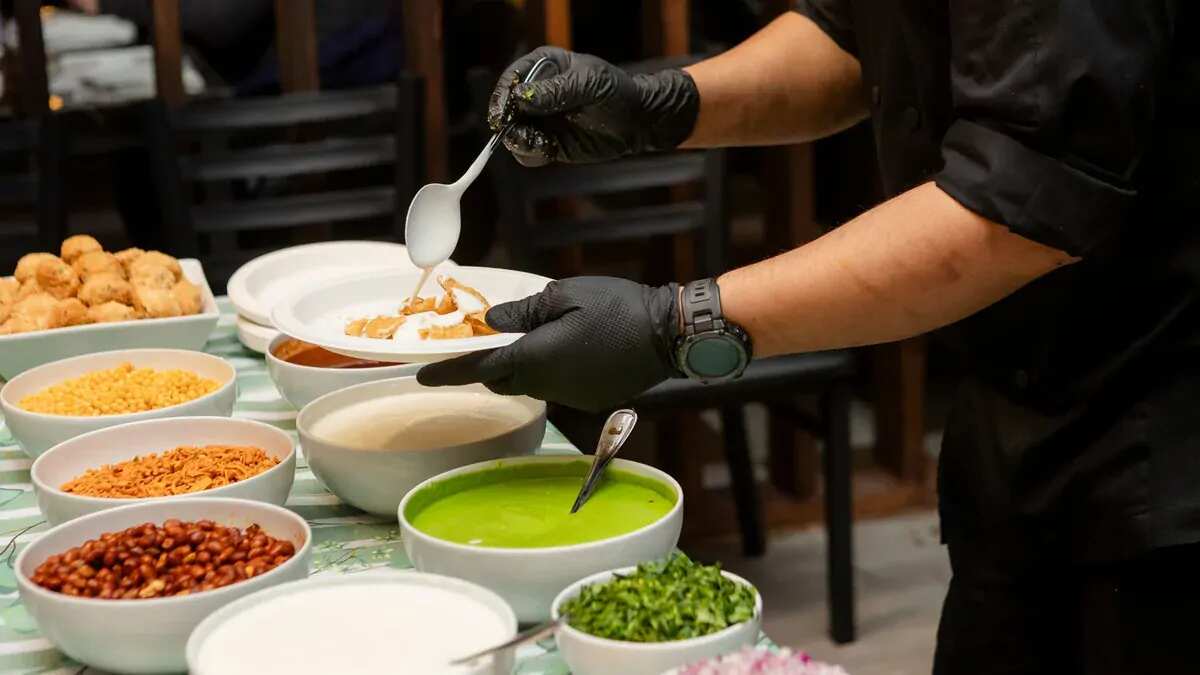
Kashi after dark: scooters squeezing through lanes, a bell ringing somewhere close, and that smell—hot oil, cumin, tamarind—pulling you toward the busiest counter. Don’t do the “top 10 stalls” marathon. Do a Varanasi chaat trail you can actually finish: a short walk, a few smart asks, and a full stomach that still lets you sleep.
A Doable Varanasi Chaat Trail After Dark
One-sentence plan: In 2–3 hours, walk-first, eat 3–5 plates total (shared): crunch → hearty → tangy/seasonal → one crowd-led counter stop, then quit while you’re still winning.
Who it’s for (quickly): first-timers who want the staples, solo travellers who don’t want to over-order, and small groups who can split and trade bites.
Trail rules:
- Share plates by default.
- Order half portions whenever possible.
- Keep one warm drink break as an optional reset (only if you need it).
What success looks like: you’re satisfied, not wrecked, and you remember 1–2 standout plates—not the fact that you survived 12.
Want more walkable itineraries like this? Start with Slurrp Food Trails.
Before You Start: Timing, Starting Areas, And Pacing Your Appetite
Timing (aim for the fresh cycle): go post-sunset when counters are in full swing—you want papdi getting topped fast and chole being ladled nonstop.
Queue tip: don’t chase the shortest line; pick the line that moves. If you see plates being built one after another and ingredients getting topped up, you’re in the right place.
Choose your base: Godowlia vs Assi/Lanka (decision-first):
- Godowlia-centric: tight, busy lanes and lots of options in a small radius—good if you want density and flexibility.
- Assi/Lanka-centric: good if you’re staying that side and want fewer lane-hops and simpler navigation.
Pacing checklist (so the night doesn’t get heavy too early):
- Light/crunch → hearty/legume → tangy/seasonal finish → optional one more fast-moving counter if you still have room.
Example sequence: papdi chaat → chole papdi → tamatar chaat (if available) → stop (or swap the last two depending on what’s actually moving).
Ordering basics (say it plainly):
- Spice: “Thoda teekha.” (A little spicy.)
- Curd: “Dahi kam / dahi zyada.” (Less/more curd.)
- Sweetness: “Meetha kam.” (Less sweet—useful if chutney runs sugary.)
Portions (simple target): plan ~2 plates per person if you’re sharing; go higher only if most orders are clearly half-plates.
The Required Chaat Trail
This is route logic, not celebrity-shop worship. Use the signals below in any lane.
Stop 1: Papdi-forward crunch starter
Order: papdi chaat (or any papdi-heavy chaat).
What “good” looks like: papdi that stays crisp at the edges after toppings, and a dahi/chutney balance that coats instead of flooding the plate.
Stop 2: Chole papdi anchor (the filling one)
Order: chole papdi (or chole chaat over papdi).
What “good” looks like: chole that’s cooked through (no chalky bite), masala that clings instead of running like soup, and heat that tastes like spice—not raw chilli.
If you want to steer the bowl: ask for more chole and less sweet (see script box).
Stop 3: Tamatar chaat (seasonal + worth skipping if it’s wrong)
Order: tamatar chaat only if it’s being served hot and fast.
Real-deal cues: it lands steaming, with a spoonable, jammy tomato base. If it’s lukewarm, runny, or clearly waiting around, skip it and move on.
Stop 4: Peak-turnover lane counter (choose by crowd + replenishment)
This is your flexible stop: pick the counter where you see steady assembly and fresh replenishment.
What to order if you spot fast-moving staples:
- Aloo tikki chaat (tikkis coming off the tawa in batches)
- Boiled kala chana chaat (lighter than another fried round)
- One more papdi-based half plate (only if papdi is staying crisp)
Mini script box (use any 3–5):
- “Half plate dena.” (Give a half plate.)
- “Thoda teekha.” (A little spicy.)
- “Dahi kam / dahi zyada.” (Less/more curd.)
- “Meetha kam.” (Less sweet.)
- “Papdi crisp rakhna.” (Keep the papdi crisp.)
- “Bas, itna hi.” (That’s enough—stop there.)
If you want to recreate components later (chole, green chutney, imli chutney), browse Discover Recipes.
How To Evaluate A Stall In 30 Seconds
Not a lab inspection—just enough street sense to keep the night fun.
1) Turnover + mise en place
- Look for visible refills (papdi tins reopening, chutneys topping up, fresh batches arriving).
- Prefer containers covered when possible, especially chutneys and garnishes.
2) Chutney + curd handling
- Green chutney should look herby; imli should be dark and pourable.
- Bonus sign: separate ladles for different chutneys/curd.
- For curd, favour stalls that keep it as cool as they reasonably can (and don’t leave the bowl sitting open in the heat).
3) Frying/oil cues
- If oil smells stale or papdi/tikki is over-dark and bitter-looking, walk away.
4) Cash handling + plating (mitigate, don’t spiral)
If the same hands are doing cash and food nonstop, a realistic move is to wait for a freshly assembled plate. If disposable/leaf plates or a separate bowl is available, you can ask—don’t demand it like a health inspector.
Micro-checklist:
- Green: moving line + active refills.
- Yellow: good crowd but messy handling → choose hot items.
- Red: no turnover + lukewarm components + stale oil smell.
Late-Night Kashi Cravings Beyond Chaat
Rule: choose only one add-on.
Pick your lane:
1) Savoury warm reset: a basic chai or another warm, plain drink/snack.
2) One small sweet finish: get one portion for the group.
3) Hydration/acid management: take a water break; avoid stacking sour + sweet repeatedly if throat-burn starts.
Stop-now signal: palate fatigue (everything starts tasting the same), heartburn, or you’re ordering out of habit—not hunger.
Optional tool: if you like a quick portion/balance reality check for a multi-stop fried/tangy night, use Nutrimeter.
Printable Mini-Checklist
| Step | What to do/order | Ask-for phrase | Quality cue | Stop/skip signal |
|---|---|---|---|---|
| Start | Pick base (Godowlia or Assi/Lanka). Start post-sunset when counters are busy. | “Half plate dena” (half plate) | Moving line, visible refills | Quiet lane + pre-plated food: relocate |
| 1 | Papdi-forward chaat | “Papdi crisp rakhna” (keep it crisp) | Crisp edges, balanced dahi/chutney | Papdi already soggy: skip |
| 2 | Chole papdi anchor | “Chole zyada, meetha kam” (more chole, less sweet) | Thick, masala-coated chole; no chalky bite | Watery chole, flat smell: skip |
| 3 | Tamatar chaat (only if hot + moving) | “Thoda teekha” (a little spicy) | Served steaming, spoonable tomato base | Lukewarm pot / no one ordering: skip |
| 4 | Peak-turnover lane counter (flex) | “Dahi kam/zyada” (less/more curd) | Fast assembly + replenishment | If you’re full, stop—don’t force it |
| Optional | ONE add-on: chai OR one small sweet OR water break | “Bas, itna hi” (that’s enough) | You feel reset, not heavier | Heartburn/palate fatigue: end |
What to note while you eat (so you can repeat the win):
- Timing: start time + when queues peaked
- Rough price band: cheap/moderate
- Must-order: the one plate you’d return for
- Queue length: short/medium/long (and whether it moved)
Post your quick update in Slurrp Community—base area, time, what you ordered, queue length, and whether it arrived crisp/hot/fresh. That’s how this stays accurate for the next person stepping into the lane hungry and undecided.
Conclusion
Treat this like a night walk with food breaks, not a checklist you have to “complete.” Cap it at 3–5 plates, keep asking for half plates and meetha kam, and end the moment you hit that stop-now signal. If you leave with one papdi plate you’d chase again and one chole bowl you’d defend in an argument, the trail worked—save the rest for tomorrow’s lanes.
Some parts of this article were created with AI assistance.