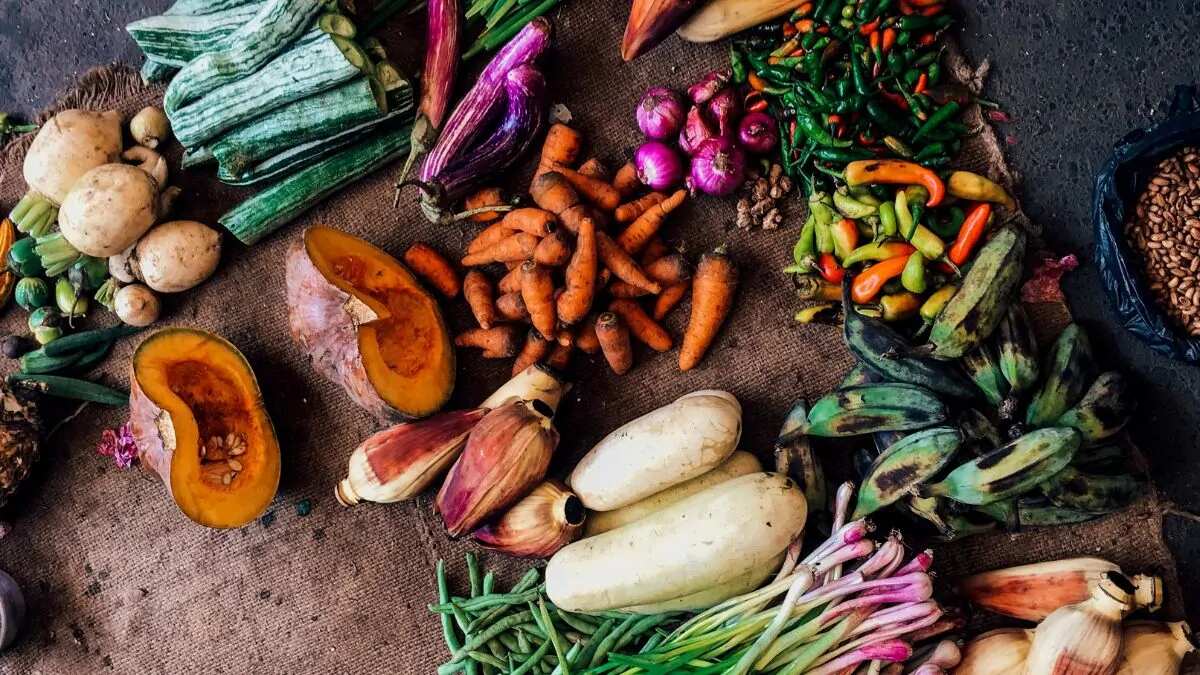
Within the scope of making sustainable lifestyle choices, organic food has a crucial role to play in enabling a longer lifespan with a healthier process of physical evolution - since it preserves maximum nutritional value as well as conserves nature. Due to chances of contamination being negligible, organic produce and the practice of organic farming forms a holistic chain of actions which are in tandem with the environment as well as the geography that supports adjacent species. While conventional farming relies mainly on chemical fertilisers for mass production of grains and vegetables, meat and dairy, organic production follows a slower process which is conscious about weather conditions, terroir and soil health.
For Health
Image Credits: Unsplash
The minimisation to complete exclusion of synthetic additives in organic food means that the intake of harmful pesticides or chemicals is reduced considerably. Lower pesticidal residues also mean lesser exposure to chemicals that cause lifestyle-related ailments while also being nutrient-dense and rich in essential vitamins, antioxidants and minerals. Similarly, organically produced meat, fish and dairy are known to contain up to 50% more Omega-3 fatty acids than their commerically distributed counterparts.
In addition to this, consuming organic ingredients over a prolonged period of time is known to be especially beneficial for womens’ health, thus reducing the risk of cancer types or obesity. Due to little to no chemical or genetic interference in organic food, chances of cell damage are reduced along with the risk of contracting chronic diseases while also shrinking the chances of intaking preservatives, flavours, artificial colouring and even GMO foods.
For Ecosystems
Image Credits: Unsplash
One of the primary advantages of organic farming practices is enabling spaces that are safe and functional for pollinators like butterflies and bees. Since pollinators are an essential aspect of the food production chain, commercial farming’s use of pesticides reduces their chances of survival drastically while also threatening their functions. Inevitably, not using toxic herbicides or insecticides also mean that wild habitats are safe from disruption that occurs due to chemical accumulation.
Irrigation on commercial farms which help water flow to natural bodies that intersect with the ocean also pollute the aquatic environment, disabling their thriving in clean, uncontaminated water. Moreover, organic farming practices are a great way to preserve seed diversity as opposed to producing similar kinds of crops notwithstanding climate change and diseases. This not only enhances genetic diversity amongst crops, but also exposes consumers to a wider variety of micronutrients that might otherwise be difficult to access within a limited pool of seed varieties.
Also Read:
For Environment
Image Credits: Pexels
Within a closed-loop system, waste management is as important to ensure minimal harm is caused to the environment. Amongst these, composting and crop rotation not only enhance soil health, but also decrease the emissions of greenhouse gases into the atmosphere. As a result, organic farms seize the production of carbon compared to conventional farms while also promoting biodiversity. The avoidance of toxic chemical fertilisers and insecticides prevent residues mingling with the air, water and soil - which is vital for the maintenance of healthy ecosystems. Moreover, organic products are also packaged in reusable materials like parchment, glass or recycled bamboo containers which not only minimises waste but also reduces carbon footprints.