Falling on 19 March 2026 this year, Ugadi is the new year for all the South Indians belonging to the states of Andhra Pradesh, Karnataka and Telangana. As per the Hindu calendar, this day coincides with the first day of Navratri, a nine-day long fast observed in Northern India. Simultaneously, the Maharashtrians also celebrate their new year as Gudi Padwa on the same day. It is interesting to note how a particular day can be special and hold a wide range of significance for different people. Astrologers study the positions of the Sun and Moon, marking the beginning of the new lunar cycle.
Image Credit: Wikimedia Commons
Ugadi marks the arrival of spring, which signifies new beginnings. It is believed to kickstart the season for prosperity and growth, especially for the farming community. Not only do people clean their homes, but they also decorate them, wear new clothes, perform venerations, and communities gather to celebrate. According to Hindu mythology, Lord Brahma is believed to have started the creation of this universe on Ugadi. Astrologers believe that planetary confluence on this day can have a significant impact on one’s life.
Now if it’s new year, can the celebrations be complete without food? The answer is a big, fat no. Indians love to eat and rejoice the day with some festive treats. Come Ugadi, devotees start prepping for the special Ugadi feast as well as decorate their floors with beautiful rangoli designs. From sweets to savouries, a plethora of delicacies are enjoyed on this day. Here are some of them that you can try at home too.
Bele Obbattu
Also known as Bele Holige, this is a special dessert that is prepared on Ugadi. It is a kind of flatbread or roti that is stuffed with a sweet filling. While the former is made from maida, the latter is a combination of jaggery, chana dal, coconut, cardamom and ghee.
Image Credit: Wikimedia Commons
Ugadi Pachadi
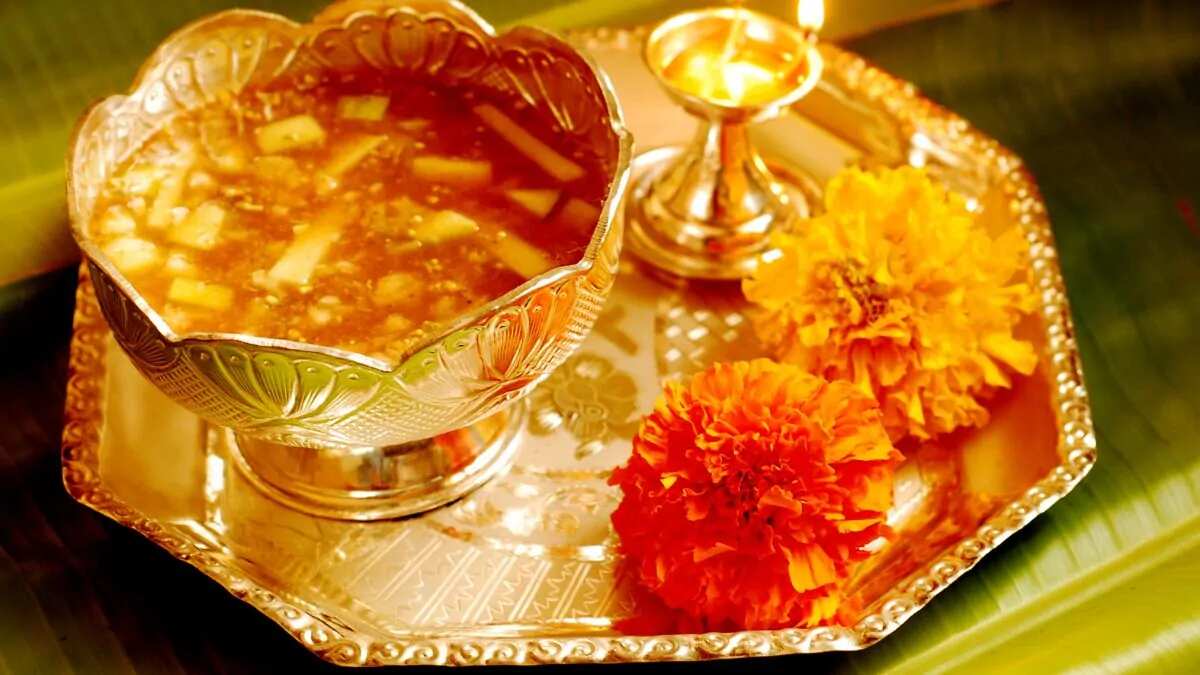
This is one of the most important dishes of the festival. The pachadi is a Telugu chutney that is delectable in taste. Now you may ask what’s so special about a chutney? Well, it is an explosion of six different flavours in the mouth and is eaten alone instead of being a side dish. Raw mango, neem, jaggery, tamarind and green chillies go into the making of this fabulous concoction.
Also Read: Mango More: A Gudi Padwa & Ugadi Special
Kosambari
This is a typical South Indian salad that consists of crunchy vegetables and pulses. Chopped cucumbers, mango and coconut are mixed with split green and black gram, mustard seeds and a host of spices. Doused with curry leaves and ginger, it has a very refreshing taste.
Sweet Corn Sundal
Sundal is a popular street food from Chennai that is usually made from black chickpeas and spices. This is a special Navratri recipe that involves sweet corn and vegetables. Add carrots, pomegranates, coconut and mustard seeds and toss it all together in coconut oil.
Mavinkai Chitaranna
Summers are the season of mangoes and would be unfair to welcome the new year without a mango dish in the feast. A simple preparation of mango-flavoured rice, Mavinkayi Chitranna is significant to Ugadi celebrations. The tartness of raw mangoes makes the rice dish a splendid delight.
Image Credit: Wikimedia Commons
Pulihora
Pulihora is a tangy South Indian rice preparation in which grains are cooked with tamarind and other regional spices. It has peanuts that make the recipe protein-rich, and it is a must-have on the festive spread. This comforting rice preparation can be enjoyed throughout the year. Whether you have a busy weekday or a relaxing weekend, you can prepare it in under 30 minutes.
Payasam
Any celebration in India seems incomplete without sweets, especially payasam. Made from milk, jaggery, nuts, rice or vermicelli, and flavour enhancers like saffron and cardamom, it completes the meal. This dessert is also offered to Gods and Goddesses while seeking blessings from them.