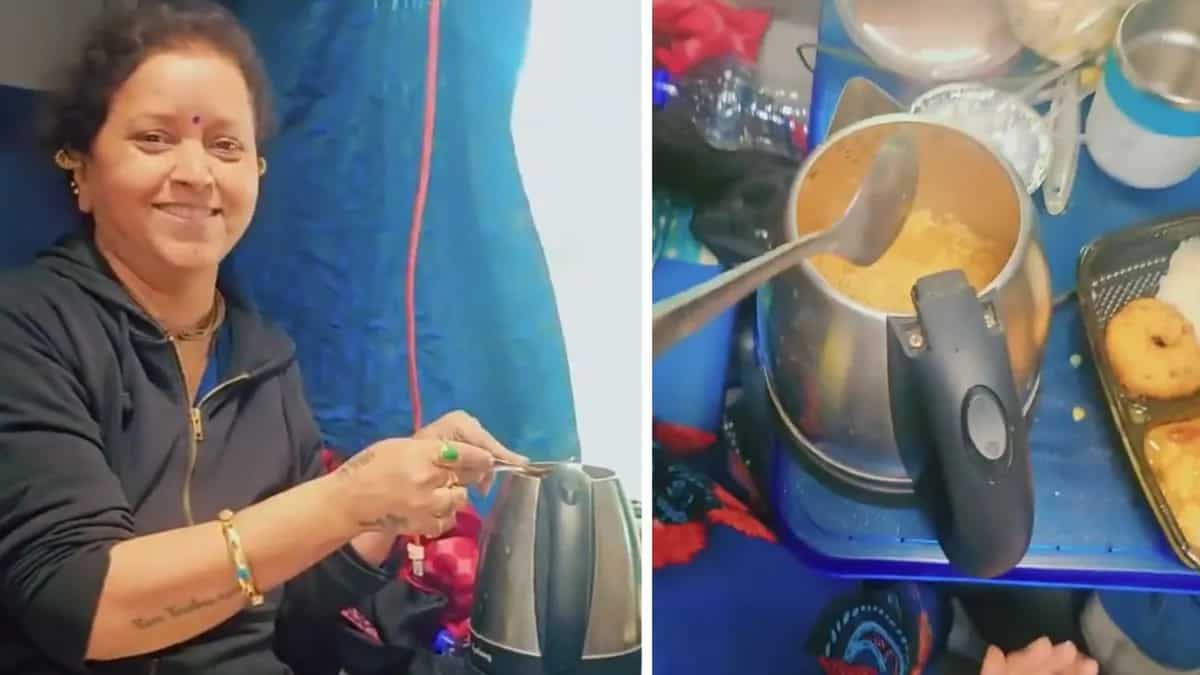
If you travel on Indian Railways often enough, you eventually realise that an AC coach is a strange ecosystem. It is a comfortable bubble where strangers politely avoid eye contact, everyone pretends to be asleep while the ticket collector approaches, and at least one uncle believes the entire coach has been waiting for him to take a phone call on loudspeaker. Then someone tries to cook Maggi at their seat, and suddenly the entire country remembers that common sense is not as common as one might hope. Food is a big part of train journeys, and the AC coach has its own unwritten rules. If you have ever wondered what is acceptable, what is borderline, and what is definitely going to get you into a viral video, here is a clear, food-centric guide to help you travel peacefully.
Do: Bring Food That Travels Well
Homemade parathas, theplas, poha packed in a steel dabba, theachha in a tiny bottle, lemon rice, stuffed rotis, dhokla, samosas, idlis, sandwiches; these foods have been the backbone of Indian train travel. They smell good, they keep well, and they do not require cooking, boiling, sautéing, or asking for a spare plug point. Bringing your own food is not only allowed, it is encouraged, because railway food can be a gamble. So yes, bring food. Just don’t bring a kitchen.
Don’t: Try To Cook Maggi, Omelettes, Pasta, Poha, Or Anything Else
The AC coach is not a campsite. There is no open fire policy, no burner policy, no giant-parcel-of-onions policy, and absolutely no “let me boil water for two minutes” policy. The viral Maggi incident reminded us that a coach is a confined space with limited ventilation, wonky fittings, and people who did not sign up for the smell of masala at 11 pm. Cooking on board is unsafe, messy, and guaranteed to attract the kind of attention you would rather avoid. If you crave Maggi that desperately, order it at home, at the station, or at a dhaba where the cook actually knows how to make it al dente. Your fellow travellers will thank you. Some coaches also offer cup noodles, so ask the catering staff.
Do: Pack Neat, Non-Smelly Snacks
Chips, chakli, khakra, dry fruits, makhana, biscuits; these snacks are practical, quiet, and easy to share with your seat neighbours if you are feeling friendly. These are the foods that do not crumble into the upholstery or leave a trail that makes the cleaning staff reconsider their life choices.
Don’t: Carry Strong-Smelling Food
Fish curry, fried fish, egg curry, jackfruit in any form, overly spiced gravies, and that one achaar your grandmother made using 12 garlic pods per tablespoon; these should stay at home, especially in an AC coach where air circulation is more theory than practice. The moment the container opens, the entire coach becomes aware, including the person sleeping in the top berth with earphones plugged in. Train journeys work best when everyone’s olfactory senses remain calm.
Do: Order From IRCTC Or Station Vendors If Needed
One of the perks of modern train travel is that you can order decent food without drama. IRCTC e-catering now works with local kitchens and restaurants, so you get fresh chapati-sabzi, thalis, pulao, cutlets, puris, and sometimes even desserts without leaving your seat. Another option is grabbing something during a station halt. Just be mindful of the halt duration. Running behind a moving train holding a packet of aloo pakodas might look heroic in movies, but real life has more consequences and lesser background music.
Don’t: Turn The Coach Into A Picnic Ground
Picnics are great; in gardens, on beaches, at farmhouse parties, on terraces. Not so great in an AC coach where space is limited, people are trying to sleep, and an army of ants is waiting for even a single breadcrumb. Avoid laying out giant thalis, plastic table spreads, pickle jars, or tiffins stacked so high they could qualify for a structural engineering award. The idea is to enjoy your journey without stress or spillage.
Do: Keep Your Trash To Yourself
No matter how delicious your meal was, wrappers, boxes, tissues, chutney pouches, and banana peels must stay with you until you can throw them in an actual dustbin. Leaving them in seat pockets only guarantees that the next passenger will find a surprise they did not ask for. Carrying a small disposable bag is an underrated life hack. It keeps your space clean and your co-passengers less judgmental.
Don’t: Offer Food Without Asking & Don’t Force Anyone
Indians are naturally hospitable, and train journeys often create temporary families. But offering food has etiquette. Offer politely once. Do not guilt-trip someone who says no. Some passengers have dietary restrictions, allergies, or simply prefer to keep to themselves. Also, if someone is quietly eating, do not stare like you are observing a wildlife documentary. Everyone deserves privacy, especially when eating.
Do: Drink Responsibly (Water, Tea, Coffee)
Water bottles, flasks of chai, and instant coffee sachets are perfectly normal for train travel. Hydration is essential and encouraged. Just avoid spilling anything on the bedding because nothing ruins a journey faster than sitting on a mysteriously damp mattress.
Don’t: Use The AC Coach Plug Point For Food Gadgets
No induction stoves. No kettles that look like they belong in a hostel. No toasters, mixers, blenders, waffle makers, or anything that can make the TTE raise an eyebrow. Plug points are for charging phones, laptops, and occasionally a medical device. Everything else risks short-circuiting the coach and becoming a national headline.
Do: Practise Basic Decency While Eating
Eat neatly. Don’t drop sabzi on the seat. Try to avoid crunching loudly when the coach is asleep. Basically, behave like a functioning adult. The bar is low, but it must be maintained.
Don’t: Assume You Are In Your Own Dining Room
Feet away from food containers. No clipping nails. No combing hair while someone is eating. No using the table tray as a chopping board. No tasting sauces straight from the container. Train etiquette is simple; behave in a way that keeps your fellow passengers comfortable and the coach clean.