Bone marrow dishes gain popularity during winter because they are rich, warming, and nutritionally dense, making them well suited for colder months. Marrow is high in natural fats and collagen, which provide sustained energy and a comforting mouthfeel that aligns with seasonal cravings for hearty foods. In many food cultures, winter cooking traditionally favours slow-roasted or braised dishes, and bone marrow fits naturally into this pattern. Its deep, buttery flavour pairs well with warm spices, toasted bread, and robust broths, creating dishes that feel indulgent and restorative in cold weathe
Despite their appeal, bone marrow dishes are considered challenging to prepare. Marrow has a narrow window between perfectly creamy and overcooked, where excess heat can cause the fat to melt out completely. Sourcing quality marrow bones is also critical, as freshness directly affects flavour and texture. Proper cleaning, soaking, and precise temperature control are essential to avoiding strong odours or greasiness. These factors make bone marrow rewarding but technically demanding to cook well.
1. Seolleongtang – South Korea (Ox Bone Marrow Soup)
Seolleongtang is a traditional Korean soup made by simmering ox bones for many hours until the broth turns milky white. The marrow slowly releases into the liquid, giving the soup a deep, rounded richness without heavy seasoning. The taste is clean, mildly meaty, and comforting rather than intense.
Preparation relies on patience rather than spices; bones are boiled, cleaned, and simmered repeatedly to extract collagen and marrow. Popular in winter, it is valued for warmth and nourishment and often eaten as an everyday restorative meal. The marrow provides body and depth, making the soup filling yet gentle on digestion.
2. Nihari – India & Pakistan (Goat Or Buffalo Marrow)
Nihari is a slow-cooked stew traditionally eaten on winter mornings. Goat or buffalo marrow bones are central to its richness, dissolving into the gravy during overnight cooking. The taste is deeply savoury with warm spice layers, yet the marrow keeps the texture smooth and velvety.
Preparation involves low heat and long hours, allowing marrow and collagen to naturally thicken the stew. Historically associated with labour-intensive lifestyles, nihari remains a cold-weather staple, valued for sustained warmth and comfort.
3. Khash – Armenia
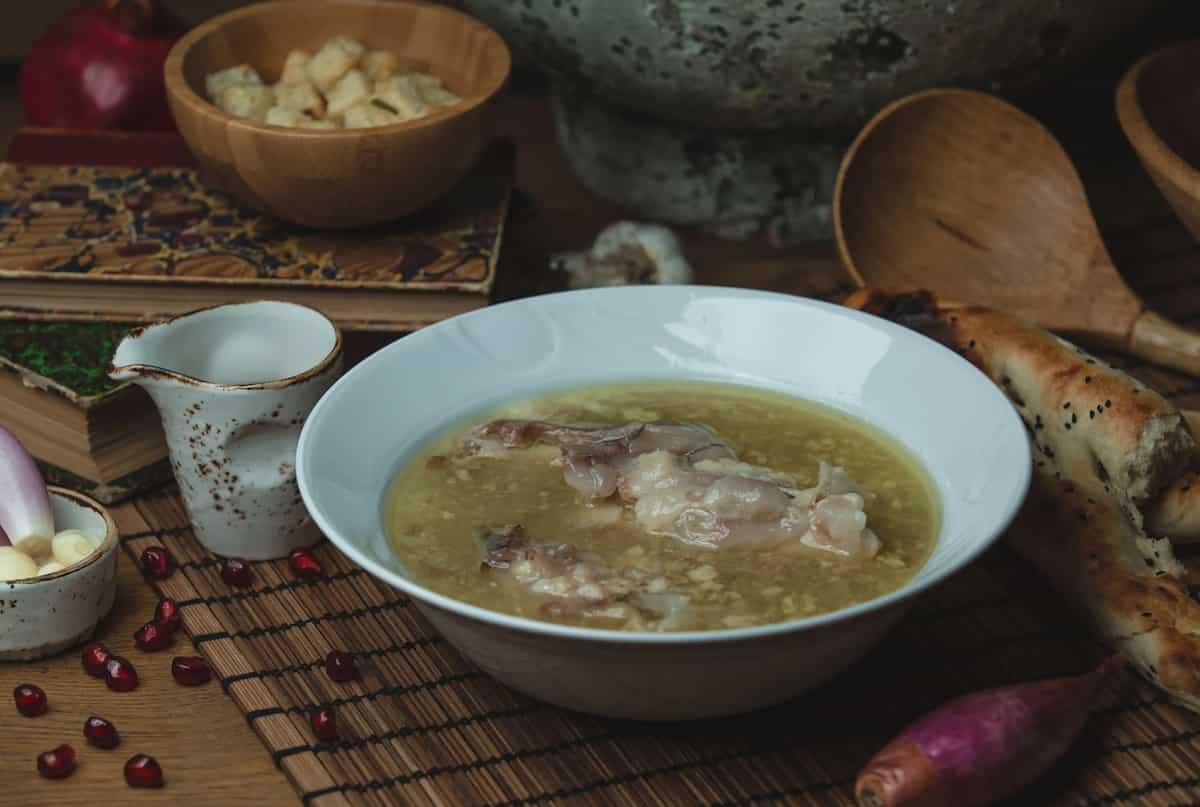
Khash is a centuries-old Armenian dish built entirely around bones and marrow. The broth is made by simmering cleaned bones for many hours until the marrow and gelatin fully release. The taste is mild, earthy, and deeply comforting, with richness coming purely from marrow rather than spices. It is traditionally eaten on winter mornings with garlic, salt, and flatbread added at the table. The simplicity allows the marrow's texture and warmth to take centre stage. Khash is valued not for complexity but for nourishment and tradition.
4. Shorba Laham – Middle East (Lamb Marrow Soup)
Lamb shorba is a traditional Middle Eastern soup prepared using lamb bones rich in marrow. The marrow gives the broth softness and subtle sweetness, balancing the gentle spice profile. Preparation involves slow simmering with onions, herbs, and mild spices, allowing marrow to enrich the liquid naturally. Commonly consumed during winter or after fasting, lamb shorba focuses on warmth, hydration, and comfort. The marrow provides depth while keeping the soup light and digestible.
5. Tonkotsu-Style Bone Soup – Japan (Pork Marrow)
Traditional Japanese pork bone soups rely heavily on marrow for richness. Pork bones are simmered for extended periods, releasing marrow and collagen that create a creamy, opaque broth. The taste is deeply savoury, with a natural sweetness from the marrow. Unlike spiced stews, seasoning is minimal, allowing technique to define flavour. In colder months, it is valued for its ability to feel indulgent while remaining comforting. The marrow acts as the backbone, transforming simple bones into a deeply satisfying dish.