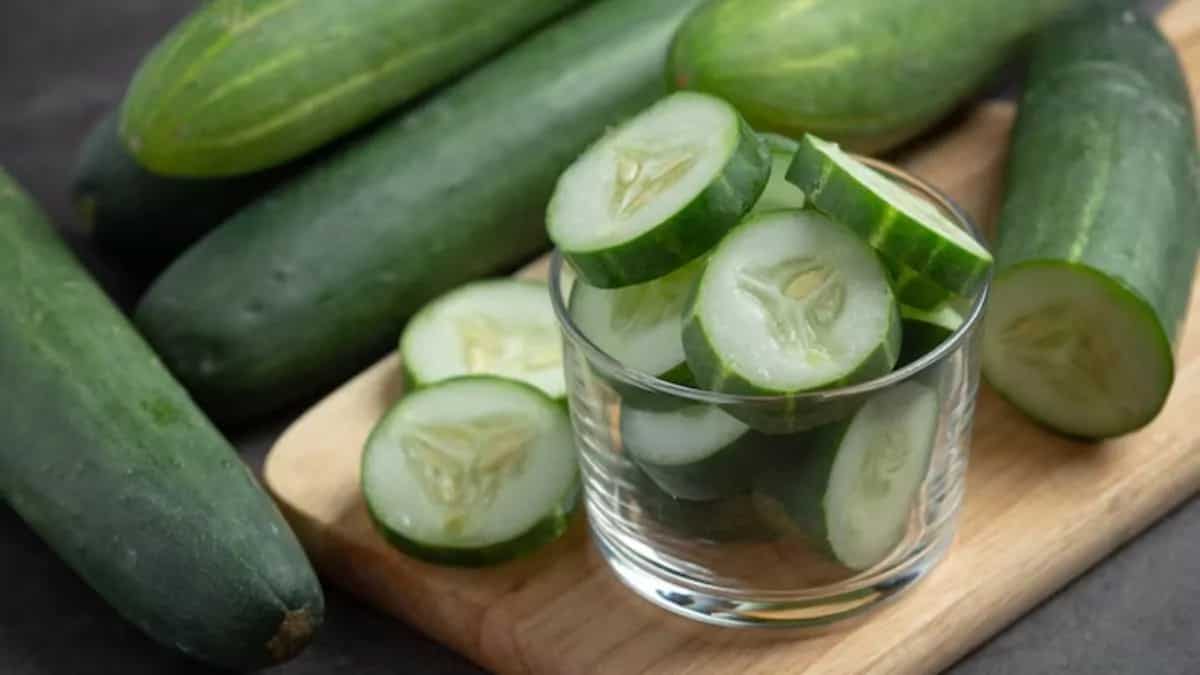
Come summer season, the markets get flooded with cucumbers. They appear everywhere, packed in lunchboxes, sliced in everyday salad bowls, and blended into detox drinks or sold by vendors sprinkling with chaat masala. Their cooling nature, high water content and freshness make them one of the most effortless ways to survive the rising mercury. That is exactly why cucumbers are used so casually and also very frequently without much doubt.
But a recent video that went viral on social media shows two women allegedly dipping cucumbers in artificial green colour, leaving many people concerned online. Fresh vegetables naturally differ in colour, texture and appearance depending on climate, farming conditions and also the storage. Yet, in many markets, it is sometimes artificially polished or coloured just to look fresh, greener and also visually appealing. The real problem is that these add-ons may not be food-safe.
Food safety authorities like the Food Safety and Standards Authority of India (FSSAI) have banned the use of artificial colours, mineral oils and harmful dyes on fresh vegetables. Chemicals such as Malachite Green or Sudan dyes are particularly considered unsafe because they are not meant to be used for direct consumption. While permitted edible wax coatings do exist under controlled conditions, raw vegetables should never have any artificial colouring just to improve their appearance.
The issue becomes more worrisome during the summer season because cucumbers are often eaten raw without any cooking. That means whatever stays on the surface enters the body directly. This is exactly why knowing how to identify suspicious-looking cucumbers is more important to know.
Why Do Cucumbers Matter So Much During Summer?
Cucumbers have high water content, which helps in keeping the body hydrated during severe heat conditions. They are also naturally light, cooling and light on the stomach, making them commonly used in salads, raitas and also in summer drinks.
A clean, natural cucumber can feel refreshing and nourishing during the hot summer season, but an artificially treated one may be exposed to extreme chemicals. That balance between cooling comfort and safe eating is precisely why consumers should pay closer attention while buying them.
How To Spot Artificially Coloured Cucumbers At Home
Fresh cucumbers naturally have a slight colour variation, uneven patches and a softer green look. If a cucumber appears to be unusually glossy, perfectly bright or oddly shiny, a few simple checks at home can help determine whether something feels fishy.
The Colour Looks Unnaturally Bright
Fresh cucumbers are not meant to look perfectly glossy and neon green. Natural produce usually has uneven shades, pale streaks or a bit of dullness depending on how it was grown. If the cucumber looks too shiny, uniformly bright or almost like it is painted, it deserves a second glance. Artificial colouring often makes a strangely flat appearance without the natural surface variations that fresh vegetables usually have. Many people mistake this extreme greenness for freshness, but in reality, too vibrant vegetables can often signal cosmetic tampering rather than freshness.
(Image credit: Freepik)
Rub The Surface With Tissue Or Fingers
One of the most effortless ways to check doubtful cucumbers is by rubbing the surface gently with a tissue, cloth or a bit of wet fingers. Artificial colour often transfers lightly, particularly around the scratches or the rough patches. Natural cucumber skin should not leave visible green stains when you take it in your hand. Vendors often spray or wipe colours unevenly, which becomes even more noticeable near the edges or the stem regions. Even if colour does not transfer immediately on hands, a slippery artificial coating or distinctive residue can still feel distinct from the natural matte texture that fresh cucumbers usually have.
Watch Out For Chemical Smell
Fresh cucumbers usually have a watery smell, mild and clean. Artificially coloured vegetables may have a faint chemical odour, a paint-like smell or an unusually sharp fragrance when scraped a bit near the peel. This becomes even more manageable to detect once the cucumber warms up slightly, rather than being refrigerated. The smell may not always feel too strong, but if the vegetable smells oddly artificial or unpleasant rather than fresh and earthy, it is better to avoid it. Summer vegetables that are eaten raw should feel naturally refreshing, and not chemically polished for the visual appeal.
Check The Inside After Cutting
Sometimes the exterior appears too green while the inside appears extremely pale, dry or inconsistent. Natural cucumbers typically maintain balanced freshness throughout the vegetable. Artificial colouring may impact the outer surface, so the difference becomes more straightforward to notice after it is sliced. If the peel seems unnaturally dark but the flesh feels old, yellowish or dehydrated, the appearance may have been artificially improved. Summer produce naturally loses freshness quickly in heat, which is why cosmetic colouring is misused to make older vegetables appear as freshly harvested.
(Image credit: Freepik)
Buy Seasonal Produce From Trusted Sellers
Summer vegetables tend to spoil faster because of the extreme temperatures, making appearance-based marketing more attractive in crowded markets. That is why purchasing from trusted local vendors, farmer markets, or reliable grocery stores becomes particularly significant. Fresh cucumbers do not need unnaturally shiny surfaces to taste good. In fact, imperfect-looking cucumbers often taste fresher and more natural than artificially polished ones.