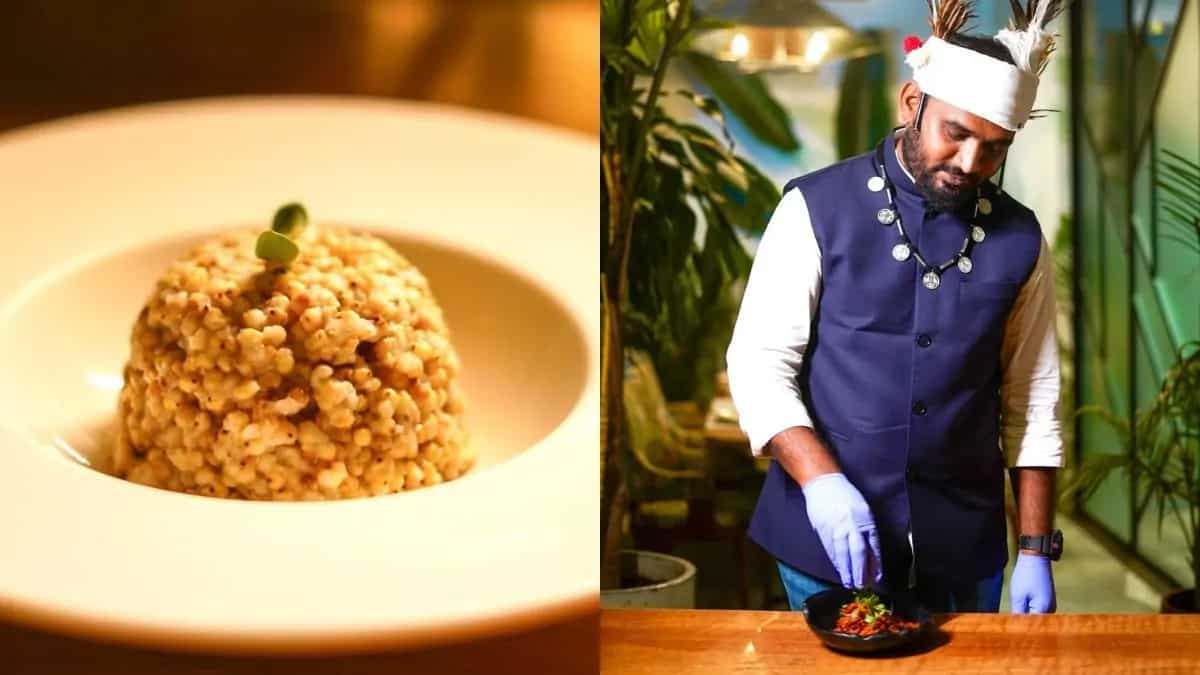
India is, quietly but unmistakably, getting serious about what it eats. Across the country, menus are being rewritten. Chefs are sourcing from local farms, foraging for forgotten greens, and championing ingredients that once lived only in grandmothers' kitchens. Sustainability is no longer a niche concern - it is becoming the defining narrative of Indian dining. And yet, for all the reverence we now pay to the idea of eating local, there is a vast and largely untouched world of culinary tradition that rarely makes it onto a restaurant plate. The cuisines of India's tribal communities - rich, ancient, and deeply rooted in the land - have, for the most part, gone unnoticed beyond the borders of their own states.
That is precisely what a new pop-up at Ishaara in Mumbai hopes to change. Founded by Prashant Issar and Anuj Shah of Stratix Hospitality, in collaboration with Riyaaz Amlani of Impresario Handmade Restaurant, Ishaara has, since its inception, been a hub for acceptance, education and celebration of India’s rich culture. Staffed primarily by speech and hearing-impaired individuals, they have become known for their inclusive pop-ups and meals that educate as well as entertain. The Heritage & Roots pop up is the latest addition to that line up. In collaboration with Samvaad, the premier annual tribal conclave initiated by the Tata Steel Foundation in 2014 and held each year in Jamshedpur, Jharkhand, the Ishaara Kitchen brings together cuisines from tribal communities across India. It is not simply a menu. It is an invitation to learn.
Samvaad - Culture Through Connection
Samvaad, which translates to "dialogue," was conceived as a space for tribal communities to share stories, celebrate cultural heritage, and showcase art and cuisine on equal terms. The conclave has, over the years, become one of the most significant platforms for tribal culture in the country. The Ishaara Kitchen draws directly from that ethos, translating it into something intimate and experiential, a table set not in Jamshedpur, but now in the heart of Mumbai.
Behind the menu are six cooks, each a keeper of their own tradition. Sodem Kranthi Kiran Dora, of the Koya tribe in Andhra Pradesh, and Jorlin Taropi, of the Karbi tribe in Assam, bring dishes shaped by the forests and hills of their respective homelands. Neelam Usha Minj and Laxmi Hansda - of the Asur and Santhal tribes of Jharkhand - represent two of the state's most ancient communities, their recipes born from the mineral-rich plateaus of eastern India. And from the mountains of Himachal Pradesh come Panma Lamo and Chhewang Dolma, both of the Negi tribe, whose kitchen traditions are as much about altitude and endurance as they are about flavour.
The dishes on offer are prepared with care, rooted in tradition, and presented with dignity. They are not dressed up or deconstructed for metropolitan palates. They are, simply, food as it has always been made in villages, during festivals, on ordinary evenings. And that honesty is what makes them so striking.
A Menu Shaped By Generations
The menu is organised around the communities that created these dishes. From the Koya tribe of southern India comes the Broad Bean Wada, a humble, lightly spiced fritter, deep-fried until crisp and served hot, a hearty, homely bite, perfect to kickstart any meal. Next up were Pahari Momos, familiar and yet so different from what urban centres are used to. Paired with a truly moreish chilli garlic chutney and a mild but distinct green almond chutney, it was a hark back to mountain kitchens where warmth and sustenance are not luxuries but necessities.
The Kila Nanjhu from the Koya tribe, a slow-roasted chicken cooked with local spices, showcases the kind of restrained, aromatic cooking that tribal cuisines do so well: minimal ingredients, maximum flavour, and a technique refined over centuries. The Kochi Calamari also deserves its own mention for the buttery-soft squid and creamy curry.
Perhaps the most intriguing entries come from the Karbi tribe of the northeastern hills. The Hanmoi, vegetables prepared using an alkaline extract, is a dish eaten during sacred rituals as well as on ordinary days - a reminder that in many tribal cultures, there is no sharp line between the sacred and the everyday. It is served with Hanserong Amanthu Chutney, made from fermented roselle seeds, which is both deeply flavourful and remarkably good for the gut.
The Gatka (a jowar ‘rice’) along with chicken curry from the Koya tribe was also a reminder that millets and alternative grains are no fad, simply a forgotten staple. The steamed jower with a delicious wholesome chicken curry was just what you’d crave at the end of a long week. Nutritious, filling and packed with flavour.
For dessert, the Cassava Steamed Cake - grated cassava mixed with coconut and jaggery, then steamed, is mildly sweet and quietly dense. It is the kind of dish that does not announce itself, but stays with you long after the meal is over.
More Than A Meal
What sets the Ishaara Kitchen apart is not merely novelty. It would be easy (and rather cynical) to frame this as another instance of the culinary world discovering something that has existed for millennia. The point, rather, is connection. Food has always been one of the most direct ways in which cultures make themselves known to one another. A shared meal does what a museum exhibition or a documentary rarely can: it places you, however briefly, inside someone else's daily life.
The tribal cuisines represented here are not relics. They are living traditions, practised and evolved by communities that continue to inhabit the forests, hills, and plains of this country. To eat them - to taste the jowar rice of the Koya tribe, or the alkaline-cooked vegetables of the Karbi - is to acknowledge that India's food story is far larger and more layered than any single cuisine can capture.
Ishaara's pop-up is, in the end, a simple but meaningful gesture. It asks its diners to do something that costs nothing but attention: pause, taste, and listen. In an age when we have grown rather good at talking about the importance of local food, it is a welcome reminder that some of the most local food of all has been waiting, patiently, for us to notice.
Dates: 21st January - 1st February, 2026
Address: Senapati Bapat Marg, Lower Parel, Mumbai, Maharashtra 400013