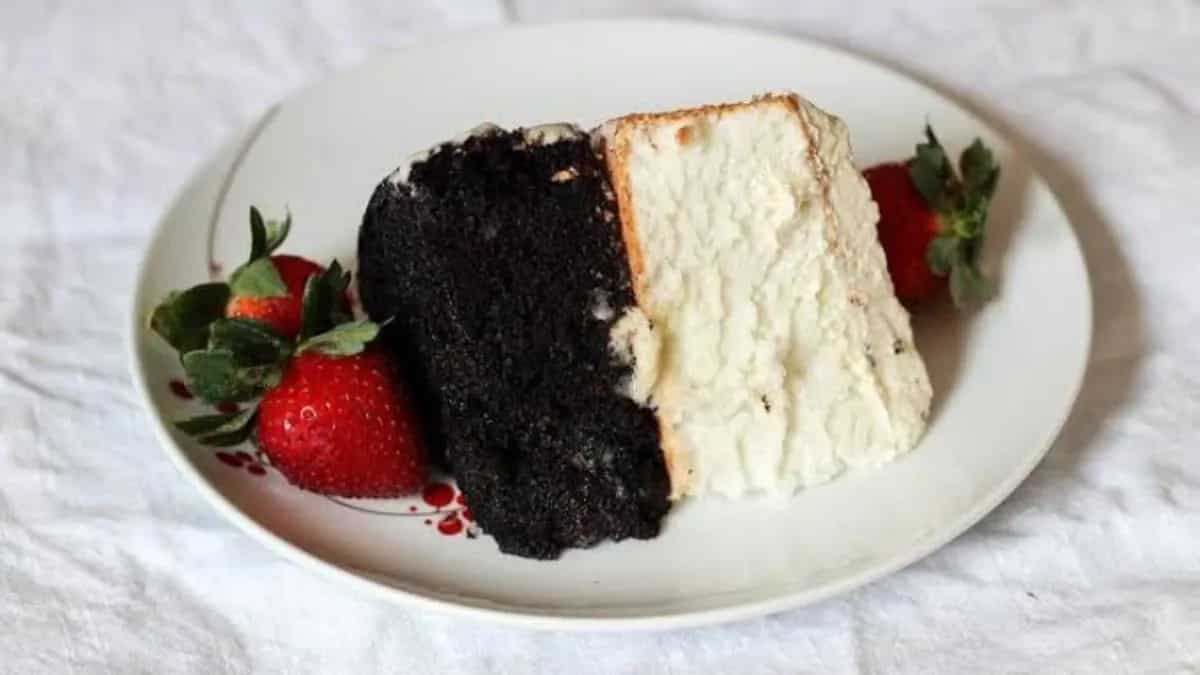
In the world of baking, few double acts are as iconic as angel food cake and devil’s food cake. They represent a fundamental dichotomy in the kitchen: one is a celebration of lightness, air, and ethereal sweetness, whilst the other is a tribute to depth, richness, and indulgent cocoa. These cakes are more than just desserts; they are historical markers of nineteenth-century innovation and the cultural penchant for naming food with moral or religious undertones. To understand their place in the culinary canon, one must look back to a time when beating eggs was a manual labour of love and chocolate was transitioning from a rare luxury to a household staple.
The Origin Of The Angelic Sponge
Angel food cake is a uniquely North American invention that gained prominence in the late nineteenth century. Unlike traditional European sponges that often include butter or egg yolks, angel food cake is a fat-free confection made primarily from whipped egg whites, sugar, and flour. Its rise to fame was closely tied to technological advancements in the kitchen. Before the invention of the rotary egg beater in the mid-1800s, whipping a dozen egg whites to the necessary stiff peaks required immense physical stamina and a significant amount of time. Once the mechanical whisk became a common household tool, the labour involved in creating such a delicate structure was greatly reduced.
Image credit: Adobe Stock
The first published recipes appearing under names like Snow-Drift Cake or Silver Cake paved the way for the official title. In 1878, a recipe for Angel’s Food Cake appeared in The Home Messenger Book of Tested Recipes, and by 1884, Mary Johnson Bailey Lincoln included it in her famous Boston Cook Book. The cake quickly became a favourite for its snowy white appearance and its ability to provide a sweet finish to a meal without the heaviness associated with traditional fruit cakes or dense puddings.
Image credit: Adobe Stock
The Rise Of The Devilish Rival
If angel food cake is the pinnacle of restraint, devil’s food cake is the height of indulgence. It emerged slightly later than its pale counterpart, with recipes becoming popular at the turn of the twentieth century. The first official mention is often credited to Sarah Tyson Rorer in 1902, though variations of rich chocolate cakes had been circulating for decades.
Image credit: Adobe Stock
What distinguishes a true devil’s food cake from a standard chocolate sponge is its texture and colour. It is traditionally darker, moister, and fluffier. This is achieved through a specific chemical interaction. Most traditional recipes call for an increased amount of bicarbonate of soda. When this alkaline ingredient reacts with acidic components like natural cocoa powder, buttermilk, or coffee, it deepens the colour of the crumb to a rich mahogany or even a reddish tint. This reaction creates a tender, velvety texture that feels significantly more decadent than the average bake.
Image credit: Adobe Stock
The History Behind The Names
The names themselves are a classic example of culinary contrast. In the Victorian and Edwardian eras, it was common to assign evocative titles to food. Angel food cake was named for its weightlessness: a sponge so light and white that it was considered fit for angels to eat. The purity of the egg whites and the lack of fat suggested a celestial quality.
Image credit: Adobe Stock
Devil’s food cake was named as the deliberate opposite. Because it was dark, rich, and sinfully delicious, it was viewed as the diabolical counterpart to the airy angel cake. There is also a practical element to the naming: the word devilled was often used in the nineteenth century to describe dishes that were spicy, dark, or particularly piquant. When applied to chocolate cake, it referred to the intense, concentrated cocoa flavour and the dark, almost black appearance of the crumb. The naming convention turned the two cakes into a legendary pair, often served together to provide guests with a choice between the light and the dark.
Recipe: Traditional Angel Food Cake
This cake requires a specific type of tin, often called a tube pan, which is ungreased. The lack of grease allows the delicate batter to cling to the sides of the tin as it rises, preventing it from collapsing under its own weight.
Ingredients
• 120g plain flour, sifted three times
• 300g caster sugar
• 10 to 12 large egg whites, at room temperature
• 1 teaspoon cream of tartar
• 1/4 teaspoon fine salt
• 1 teaspoon vanilla extract
• 1/2 teaspoon almond extract
Image credit: Adobe Stock
Method
1. Preheat your oven to 180°C or 160°C fan. Ensure your tube pan is completely clean and free of any grease.
2. Sift the flour with 150g of the caster sugar. Repeating this process several times ensures the flour is aerated.
3. In a large, clean bowl, whisk the egg whites until they become frothy. Add the cream of tartar and salt, then continue whisking until soft peaks form.
4. Gradually add the remaining 150g of sugar, a tablespoon at a time, whilst continuing to whisk. The mixture should become stiff and glossy.
5. Gently fold in the vanilla and almond extracts.
6. Sift a third of the flour mixture over the egg whites and fold it in very gently using a large metal spoon. Repeat with the remaining flour until just combined, taking care not to deflate the air.
7. Pour the batter into the tin and smooth the top. Bake for 35 to 40 minutes until the top springs back when touched.
8. Immediately turn the tin upside down. If the tin has feet, rest it on those; otherwise, balance it over the neck of a bottle. Leave it to cool completely for at least an hour before running a knife around the edge to release it.
Recipe: Decadent Devil’s Food Cake
This version uses coffee to bloom the cocoa powder, which intensifies the chocolate flavour without making the cake taste of coffee.
Ingredients
• 75g high-quality cocoa powder
• 180ml boiling water or hot black coffee
• 225g plain flour
• 1 teaspoon bicarbonate of soda
• 1/2 teaspoon baking powder
• 1/2 teaspoon salt
• 175g unsalted butter, softened
• 350g light muscovado sugar
• 2 large eggs
• 1 teaspoon vanilla extract
• 120ml buttermilk
Image credit: Wikipedia
Method
1. Preheat the oven to 180°C or 160°C fan. Grease and line two 20cm sandwich tins with baking parchment.
2. In a small bowl, whisk the cocoa powder into the hot coffee or water until smooth. Set aside to cool.
3. Sift together the flour, bicarbonate of soda, baking powder, and salt.
4. In a large bowl, cream the butter and muscovado sugar together until the mixture is pale and fluffy. This may take several minutes.
5. Beat in the eggs one at a time, followed by the vanilla extract.
6. Stir the cooled cocoa mixture into the buttermilk.
7. Add the dry ingredients and the liquid ingredients to the butter mixture in three stages, starting and ending with the flour. Fold gently until the batter is uniform.
8. Divide the batter equally between the tins and bake for 30 to 35 minutes, or until a skewer inserted into the centre comes out clean.
9. Allow the cakes to cool in the tins for 10 minutes before transferring them to a wire rack to cool completely. This cake is best served with a thick chocolate fudge frosting.