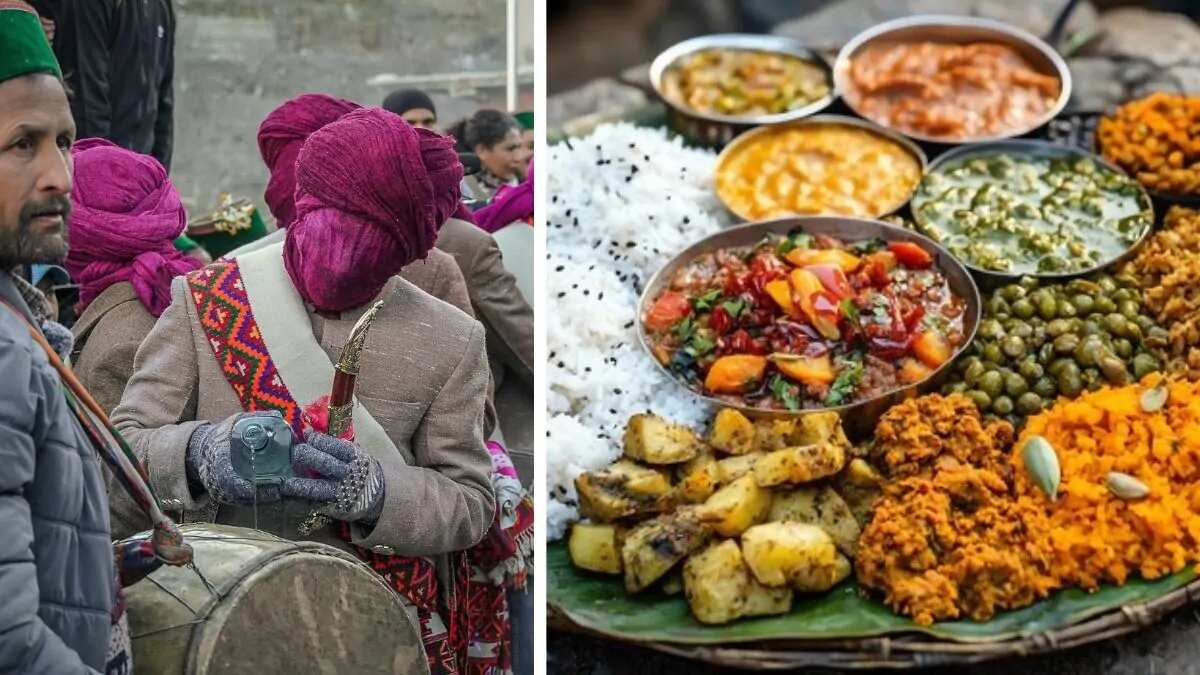
The Raulane Festival takes place in one of India’s high Himalayan valleys where the winter season imposes deep cold and extended isolation. Villagers of Kinnaur believe in guardian spirits called Sauni that protect the land during the harsh months. The festival includes masked men who embody these spirits in ceremonial roles of “bride” and “groom”, known as the Raula and the Raulane. These rituals take place in cold valleys where the people’s food supplies and seasonal stores play a practical role in survival as well as in celebration. Although much of the focus is on costume and dance, local food customs underpin the festival, anchoring the ritual in everyday life.
Image credit: Ashwin Katariya
Mountain Staples And Winter Stores
In Kinnaur’s high altitude terrain the food culture adapts to the climate and isolation. According to descriptions of villages such as Kalpa, the staple foods include wheat, barley, maize and pulses such as peas and black peas. Vegetables such as potatoes, turnips and beans appear in the diet, and grains are often stored for winter use. This kind of provisioning frames the context in which a festival like Raulane occurs: after months of snow or cold the food stores become part of the ritual. The preservation of dried fruits and pulses, and the preparation of hearty meals, reflect both sustenance and communal readiness for ceremony.
Preparation For Ritual Meals
During the festival period the community gathers to honour the Sauni spirits and to ask for protection as winter gives way to the next phase. This context calls for food that is shared, warming and symbolic. Among the preparations found across Himachal Pradesh, Dham stands out for its ceremonial role. Dham is a structured meal prepared during important occasions, and it usually includes rice, moong dal cooked in a gentle, prolonged manner and accompaniments suited to the season. The communal nature of the festival encourages families to host guests, share meals and renew social bonds around food. This kind of food-sharing aligns with the ritual’s purpose of gratitude and connection.
Image credit: Freepik
Ceremonial Food Items And Specialities
Alongside Dham, the region prepares dishes associated with both celebration and winter. Aktori is one such item, made from buckwheat leaves and wheat flour. The texture resembles a festive pancake or cake, and it is served during important days in the calendar. Its ingredients, tied to local agriculture, make it suitable for winter, and its mild sweetness fits the mood of gatherings where families welcome visitors and mark the ritual sequence of Raulane.
In Kinnaur one traditional drink is Lugdi, a fermented cereal-based alcohol made from barley or rice consumed in winter and in festive gatherings. Although it is not explicitly cited for Raulane, the drink’s regional role suggests that similar celebratory items may accompany the festival meals. Additionally, local dried fruits such as the native pine-nut variant “chilgoza” feature in harvests and may enter festival foods. The layering of ghee, nuts and dried fruits with cereal bases likely marks the difference between everyday meals and festival fare during Raulane.
Image credit: Freepik, Distant Frontiers
Challenges And Contemporary Change
As interest in the festival grows, the food culture faces gradual transformation. Greater mobility, changing tastes and new ingredients influence local practice, although grain-based preparations remain central in winter. Younger generations encounter wider cuisines, yet dishes such as Dham and Aktori continue to hold meaning because they connect the community to its land and its ritual calendar. Festivals in high-altitude regions preserve these customs by giving them a defined place in winter gatherings. In this way the Raulane Festival supports the survival of older food traditions while allowing households to adapt them according to their evolving needs.