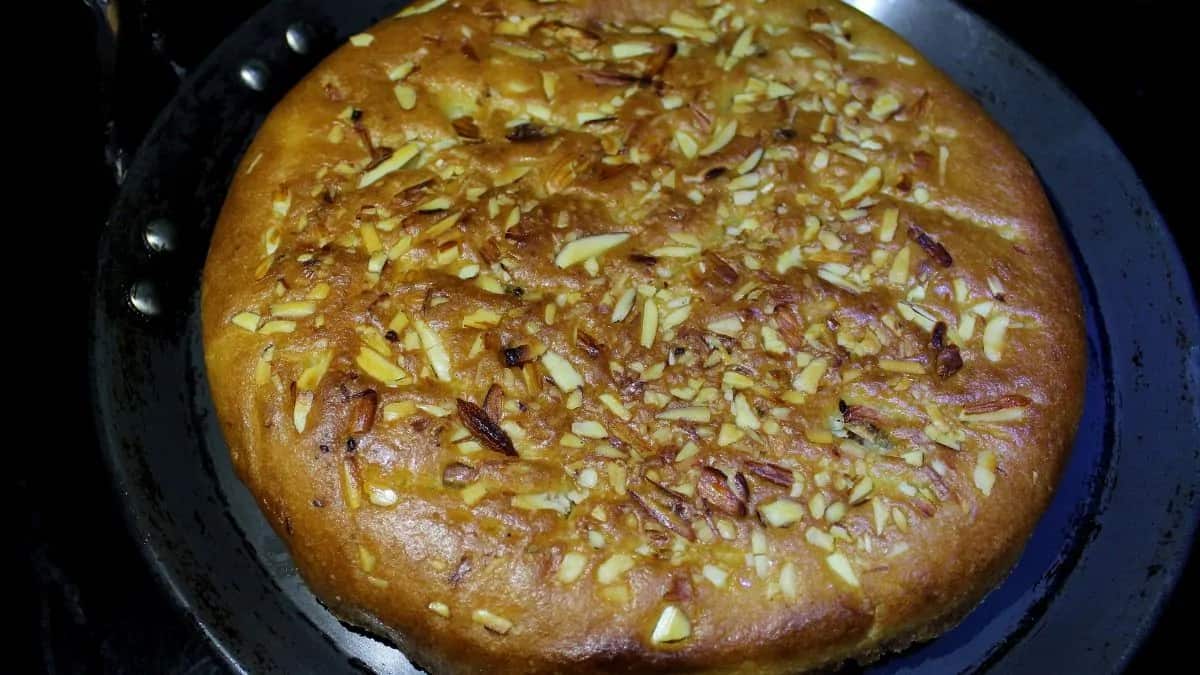
At many Iftar tables during Ramadan, you would have noticed a faintly golden, lightly sweet flatbread set beside curries, which is usually much softer than regular naan and richer than everyday roti. That bread is known as sheermal. While it may appear to be simple and just another bread, it carries a layered history that is shaped by migration, royal custom, and regional transformation.
Sheermal is not your regular everyday bread. It was historically linked with royal kitchens, celebratory dinners where milk, saffron, and slow baking were symbols of luxury. Over the past centuries, it travelled from Persian culinary practices into Indian royal kitchens, especially in Awadh, before becoming a part of festive food culture in cities like Lucknow and Hyderabad.
To fully know sheermal, you need to know beyond just the recipe and into its travels across regions, absorbing new identities while still maintaining its original character unchanged.
The Persian Roots
The name “sheermal” is derived from Persia. In the Persian language, sheer means milk and malidan means to rub or to knead. If history is to be believed, sheermal was a milk-enriched flatbread that was prepared mainly in Iran and some parts of Central Asia. What made it different from the traditional bread was the addition of warm milk, sugar, and sometimes saffron to it, which made it special. The milk made the bread soft and fluffy, whereas the addition of sugar gave it a faint sweetness, and the addition of saffron made it appropriate to serve as a royal and festive flatbread rather than for daily consumption.
How Sheermal Came To India
Sheermal reached India when there was Persian influence during medieval times. When the Delhi Sultanate was founded in the 13th century, rulers and nobles from Central Asia and Persia brought their cooks, food habits, and baking styles with them to India. Later, during the Mughal Empire, this influence became even stronger. Royal kitchens were areas of culinary experimentation, where Persian breads were adjusted, adapted and twisted using Indian ingredients and tastes.
(Image credit: Freepik)
Sheermal slowly started to become popular in North India, particularly in the city of Lucknow under the Nawabs of Awadh, who were well-known for classy cuisine. From royal kitchens, it moved to local bakeries and markets, ultimately becoming a part of festive food traditions.
Why Sheermal Matters During Ramadan
During the month of Ramadan, the Iftar spread is not only about food but also about nourishment, meaning. You find some dishes on the iftar spread every year because they carry a legacy. Sheermal is one such bread, as it is lightly sweet, fragrant, and feels rich in every bite without being too heavy.
Unlike regular rotis, sheermal feels festive. Its saffron shade, brushed surface with ghee, and delicate crumb make it appropriate to pair with kormas, nihari, or even plain, paired with a cup of tea.
How The Indian Version Of Sheermal Evolved
The Indian version of Sheermal evolved as a little thicker than the usual and more sort of biscuit-like as compared to its Persian variant. The saffron tint became more prominent, and in some places, the sweetness increased, as per the preference.
In Lucknow, you will find it slightly crisp on the outside and a bit soft from within. In Hyderabad, you will find it softer and richer. Different places have different tastes. But one thing remains common everywhere: how festive and indulgent it tastes in every bite.
(Image credit: Freepik)
How To Make Sheermal At Home During Ramadan
Here is a simple, step-by-step process to make this festive favourite bread in your own kitchen during Ramadan for Iftar or Suhoor.
Ingredients
2 cups maida (all-purpose flour)
½ cup warm milk
2 tablespoons sugar
3 tablespoons melted ghee
½ teaspoon salt
½ teaspoon yeast (optional for softer texture)
A pinch of saffron soaked in 1 tablespoon of warm milk
Step 1
If you are using yeast, dissolve it in warm milk with some sugar and keep it aside for about 5–10 minutes until it becomes frothy.
Step 2
In a bowl, mix flour and salt. Add the milk yeast mixture, saffron milk, and a little ghee. Knead to make a soft, smooth dough out of it.
Step 3
Cover the kneaded dough and keep it resting for at least an hour. This will allow the gluten to form, providing structure and tenderness to the dough.
Step 4
After an hour, pat the dough lightly with your fists and divide it into equal balls. Roll each one into thick discs with the help of a rolling pin. It should be a bit thicker than the parathas. Prick it lightly with a fork so that it doesn't puff up.
Step 5
Bake at around 180°C for about 12–15 minutes until it turns lightly golden. Otherwise, cook in a heavy pan, covered from the top, on low heat.
Step 6
Brush the warmly baked sheermal with some melted ghee and keep it for a rest for some time before serving.
Serving Tips
Serve the warm sheermal alongside mutton nihari, chicken korma, or even with some sweetened milk during Suhoor. You can also pair it well with evening tea or after Taraweeh prayers. If you are serving for Iftar gatherings, slice the sheermal into wedges; this will make the sharing and eating easier.