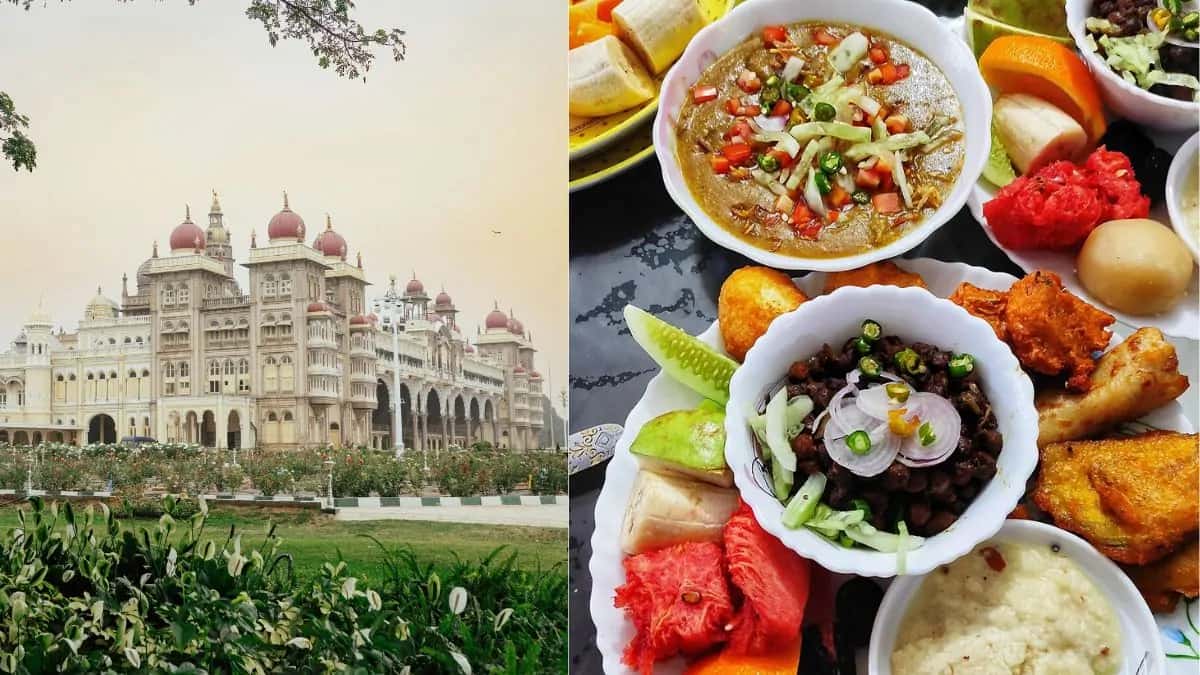
Ramadan 2026 is a time of thought, prayer, and community, during which fasting from dawn to dusk strengthens spiritual discipline. Food becomes a potent symbol of togetherness as the sun sets, uniting family and friends for Iftar. Each day's fast concludes with traditional dishes, sweet desserts, and filling dinners. In Mysore, the pulsating markets, mosques, and communal feasts that radiate kindness and giving bring the spirit of Ramadan to life. This guide can help you in discovering the tastes and essence of the season in Mysore for your Iftar food trail, if you're interested in experiencing or replicating this at home.
Meena Bazaaar Street Food
Meena Bazaar on Sawday Road in Mandi Mohalla, Mysore, awakens every evening to the commotion surrounding Iftar during the holy month of Ramadan. The call for namaaz may be heard from Masjid E Dargahi, which is illuminated for the evening. The roadside cafes serving everything from samosas, cutlets, vadas, biryanis, and meat dishes will eventually overtake the fruit vendors as the street fills with people going out to dine. The area is teeming with food vendors and hawkers by late evening, offering the most delicious street food for Iftar.
Image Credit: Pexels
Falooda Carts
Just outside Masjid E Dargahi are falooda carts. These are a Chinese grass concoction that is supposed to chill the body after a day of fasting, not the ice cream faloodas. This weather is refreshing, and the temperature in Mysore is slowly skyrocketing. Three varieties of falooda, each in the colours white, yellow, and pink with a sprinkle of saffron on top, are available for just INR 10 or INR 20 a cup.
Samosas & Ash At Sawday Road
The demand-supply chain is the only one that knows why samosas dominate the street scene, especially creative ones during Ramadan 2026. There are keema, chicken, veg, egg and bheja (brain) samosas at Sawday Road. Experimenting with different samosa fillings such as paneer tikka, chilli chicken, etc. The cutlets and vadas are not far behind. It’s greasy and fried, not the best food during fast, but guess that’s what everyone likes. Among Dakhni Muslims, ash is a particularly popular dish. In South India, the Dakhni, Dakhani, or Deccani are Muslims who speak Urdu and are primarily found in towns like Hyderabad and Mysore. Moong dal, chicken or keema and rice sooji are the ingredients of ash, a soupy broth. The ash is made with a variety of ingredients, including onion, tomato, ginger, garlic, and spices. It can also be made without meat.
Image Credit: Wikimedia Commons
Teetar & Phall
In these streets, quail, beef, and mutton are favoured. Perfectly fried teetar is a flaming red that retains the suppleness of the meat, which is nearly juicy to the bite, even if the outside is crunchy. Another famous meat recipe in Mysore and Bangalore is Phall, which is acidic and spicy.
With their ready-to-order iftar packs that include dates, chopped fruits, savoury snacks like samosas and vadas, and a selection of main courses, certain well-known eateries have made iftar simple for Mysoreans. But nothing beats digging into special menus and delicacies from the streets, where the community welcomes everyone to celebrate with Iftar food.