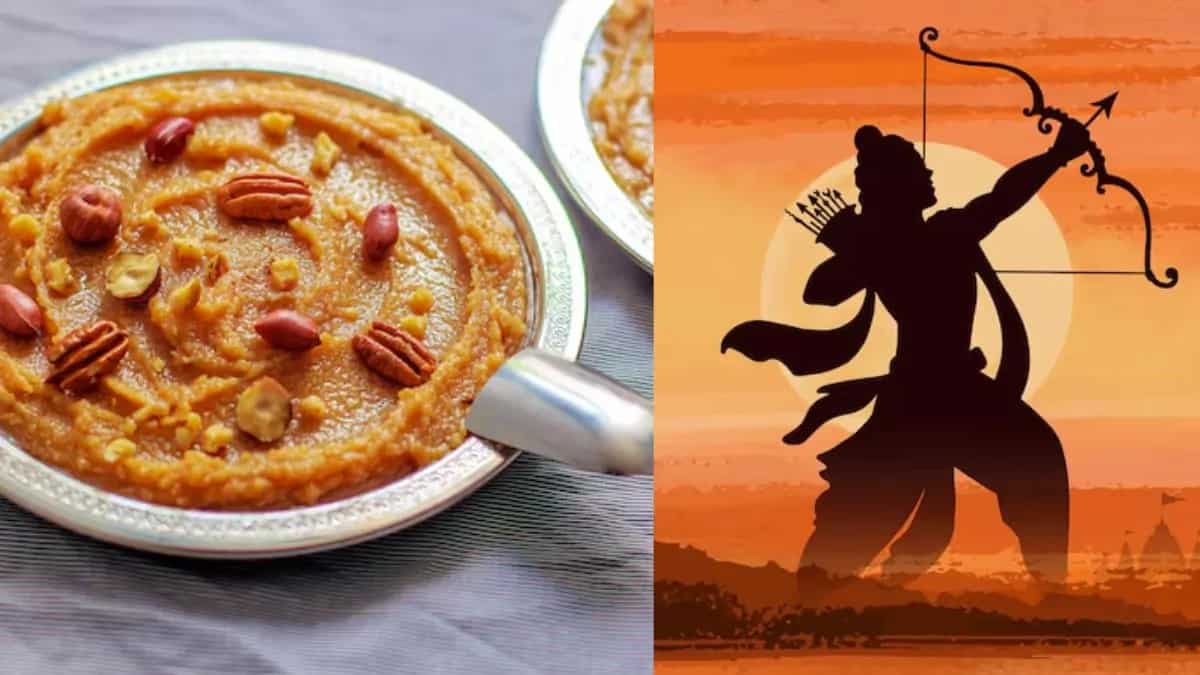
Ram Navami, which marks the birth of Lord Rama, will be observed on March 27, 2026. Observed on the ninth day of Chaitra Navratri, the festival is as much about prayer as it is about mindful offerings. Across India, many households and temples make simple, seasonal bhog or offerings that are free from onion and garlic, but are still full of flavour and significance.
What makes Ram Navami bhog unique is its association with the ongoing season. It falls in the peak summer season, and the bhog often has cooling drinks, salads, and foods that can be easily digested. These are not complicated dishes but thoughtful preparations that are embedded in balance as well as simplicity.
Regional Bhog Prepared On Ram Navami
From jaggery or gur-based drinks in the South to fruit-based prasad in the North, these dishes show how devotion is defined differently across India, yet remains deeply connected through the idea of purity and nourishment.
Halwa-Poori-Chana & Panjiri, Uttar Pradesh
In many homes across UP, Ram Navami bhog is centred around the traditional trio of halwa, poori, and kala chana. Along with this, panjiri, which is also prepared with wheat flour, ghee, and sugar, is often made, particularly in temples. Often, seasonal fruits are also included to perfectly balance the whole bhog. While this spread feels rich, it is still sattvic and thoughtfully paired together, offering both nutrition and tradition that has been followed for ages.
(Image credit: Freepik)
Panakam & Neer Mor, Tamil Nadu
In Tamil Nadu, Ram Navami offerings are often shaped by the summer heat, which stresses cooling and hydrating drinks. Panakam, which is prepared by mixing jaggery in water with some ginger powder and spices, helps in regulating the body temperature while helping in digestion. Neer mor, on the other hand, is a lightly spiced buttermilk that completes it by preventing dehydration and exhaustion. These drinks are often served in temples and homes, making a simple but thoughtful bhog. Instead of heavy meals, the focus here lies on keeping the body light and hydrated, showing how traditional foods are closely linked with both climate and comfort.
Kosambari, Karnataka
Kosambari is a light salad, which is protein-rich and is made from soaked moong dal, grated coconut, and cucumber. What makes kosambari impressive is how simple it is to make; it does not depend on a heavy cooking process, making it perfect to have during the hot weather. The soaked moong dal gives its nutrients, whereas coconut and cucumber add to the freshness and hydration. Kosambari reflects the sattvic guidelines of keeping food light but is also nurturing, providing that the offering can be both wholesome and easy for the body to digest.
Shrikhand, Gujarat
In Gujarat, shrikhand is one of the most popular offerings during Ram Navami. Prepared from hung curd, sugar, and flavoured up with cardamom or saffron, shrikhand is creamy, cooling, and very lightly sweet. Given the warm climate, shrikhand acts as both a dessert and a relaxing dish, making it easy to digest. Often served alongside puri or enjoyed on its own, it shows the region’s choice for balanced, flavourful sweets. Shrikhand is loved for its simple texture, showing how dairy-based dishes can be both indulgent and seasonally fit for festive offerings.
(Image credit: Freepik)
Sabudana Kheer, Maharashtra
Sabudana kheer is a pleasant, lightly sweet dessert that is prepared during fasting periods, also during Ram Navami. Prepared by combining milk, sugar, and cardamom, sabudana kheer has a soft, light texture and is also easy to make. Sabudana is known for supplying fast energy, which is very essential during fasting. Sabudana kheer strikes a perfect balance between indulgence and being light, making it a favoured choice for bhog.