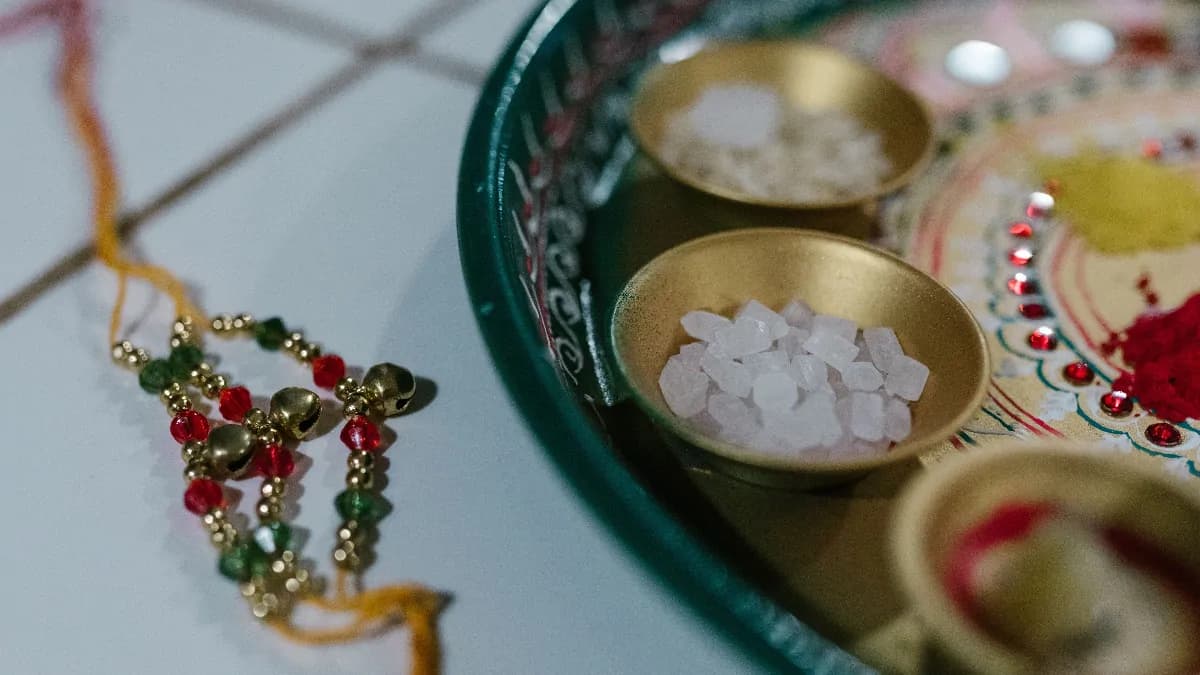
There is a particular kind of magic to a Raksha Bandhan gathering at home. Before the first guest arrives, the house already feels different; the puja thali is being arranged, sweets are appearing mysteriously on serving plates like at Hogwarts, cushions are being straightened for the third time, and somebody (probably you or your sibling) is being inevitably warned for the third time, “Don't touch that, it is for the ritual.” And then there is Mum.
She somehow knows when the mithai needs to come out, which relative prefers savoury snacks, who has diabetes yet refuses to give up on sweets, where the extra chairs are stored, and exactly how much food is required for people who insist they are ‘that hungry’. Hosting Rakhi may look effortless when she does it, but there is usually a great deal of planning hiding behind that effortless smile. So, as she grows older and you grow up, it may be time to give her a break and host a Rakhi party on your own. She has supervisory powers, of course!
In 2026, Raksha Bandhan will be celebrated on Friday, 28 August, on Shravana Purnima. The Purnima tithi begins at 9:08 am on 27 August and ends at 9:48 am on 28 August; the precise ceremony timing can vary by location, so families should follow their local Panchang. Raksha Bandhan traditionally centres on the tying of the rakhi, with prayers, blessings, sweets, and gifts forming part of the celebration. The ritual as well as social mindset has also evolved across families and communities, with cousins, sisters, and other loved ones being included in the festivities over the years.
So, if you are planning to host Rakhi this year, perhaps the trick is not to imitate Mum exactly. It is to borrow her best habits while making enough room for the younger generation to have some fun.
Raksha Bandhan Hosting Tips: Throw A Rakhi Party Like A Pro, Aka Mom
Start With The Ritual, Not The Party
Before thinking about cocktails and music playlists, decide how you want the traditional ceremony to flow. That is the primary occasion, after all. Keep the rakhi thali ready with the essentials your family normally uses, such as rakhi, roli or kumkum, rice grains, diya, sweets, and any other customary puja items. A traditional Raksha Bandhan ceremony commonly includes aarti, tilak, rakhi tying, and blessings, followed by sweets and gifts.
Image credit: Pexels
This is particularly essential when older family members are present. Instead of trying to squeeze the puja between two party games, give it its due respect and moment. And yes, ask your parents or grandparents about their preferred family customs beforehand. Rakhi traditions are not the same in every household, and there is no prize for replacing a beautiful and traditional family ritual with something copied from social media.
Make Mum's Food Strategy Your Own
If there is one lesson you can wholeheartedly copy from Indian mothers, it is this: never cook everything at the last minute. Especially when a lot of food needs to be prepared for a festive occasion full of people. Always choose dishes that can be prepared in stages. If the dish you want to make does not have this breakdown, take a few extra hours. Sit down with your menu, decide the recipes, and then work on breaking them down into various preparation stages.
This will save you a lot of time in the entire culinary process. Make chutneys, dips, various dessert components, and marinades beforehand. Chop vegetables in advance, if possible. Keep drinks chilled. And prepare anything that needs refrigeration early in the day. For the Rakhi menu, think in layers rather than attempting a restaurant-sized spread on your first try.
A simple Rakhi table could have:
- One or two savoury Indian snacks, such as samosas, dhokla or paneer tikka
- A chaat or snack station
- One or two filling main course options
- A couple of fresh salads or raita
- Two or three beverages (a mix of hot and cold, or just chilled ones, your pick)
- One modern dessert for younger guests and a couple of traditional sweets such as kheer, laddoo or gulab jamun, for the elders and youngsters alike.
Image credit: Pexels
Do not be overwhelmed; that is why the preparatory stages are there. Also, you do not need to make an elaborate spread on your first attempt, especially all on your own. Mum's secret was never “make 27 dishes”. It was knowing what her guests would actually enjoy eating.
Build A Menu That Keeps Generations Happy
The easiest way to make a multi-generational party work is to avoid making the entire menu either extremely traditional or aggressively modern. Instead, try creating a bridge between the two. For example, serve puran poli alongside a small chocolate dessert, put aloo tikki chaat next to a bowl of tortilla chips and homemade salsa, make classic nimbu pani but also offer a mint-and-cucumber cooler or cocktail option for grown-ups, or serve a familiar pulao with a lighter salad option on the side, for the calorie-conscious.
Image credit: Pexels
For grandparents and older relatives, always keep familiar flavours or dishes available. For cousins and younger siblings, remember to add a couple of playful desi dishes or global culinary options. That way, nobody feels as though Rakhi has been turned into either a formal family lunch or a generic house party.
Also, create DIY snack and drink counters instead of offering and serving snacks and beverages continuously. Arrange mini samosas, kachoris, paneer skewers, dhokla, kebabs, roasted makhana, or chaats in small portions. Make the presentation aesthetic but practical. Add bowls of chutneys and salads, and let everyone assemble their own plates.
In case of beverages, you can either keep a cooler full of cans and mini bottles, or use fancy-looking drink dispensers for a stylish yet useful self-service option. At the same time, do keep plain water easily accessible rather than hiding it behind the fancy beverages. That is exactly the sort of practical detail Mum would notice.
Image credit: Pexels
The arrangement also gives you one important advantage: you can stop answering the door with one hand while holding a tray in the other. Plus, the guests get to move around, interact and have fun, while getting to determine their own food and beverage portion. To be a smart host, serve small bowls, labelled platters and bite-sized portions. Then guests can graze without filling themselves up before lunch or dinner.
Give Everyone Their Own Space
Once the rituals are completed, it is time to mingle and enjoy food, while letting each generation have their own space. Make sure grandparents and older relatives have comfortable seating areas away from loud music and selfie zones, to ensure they do not get disturbed by the excitement. They are always welcome to join the fun, but at their own comfortable pace.
Image credit: Pexels
Also, ensure the dining area is easily accessible for all and avoid making anyone stand around for the entire ceremony. If someone follows a particular dietary practice, fasting tradition, or food restriction, check beforehand rather than making assumptions. Keep foods and vrat-friendly alternatives for them. That is what a good host does: notice these little things before somebody has to ask.
Now, it is time for the younger generation to have fun. Set aside a corner for photographs, games, and gifts. It does not need to look like a professional event backdrop. A simple floral arrangement, fairy lights, colourful dupattas, or family photographs can make the space feel festive and familiar. And do not underestimate the value of old photographs. They can spin conversations and bring back memories worth a million. It can also lead to unexpectedly funny outcomes.
Image credit: Pexels
For instance, ask your siblings to recreate one childhood photograph. Put the original beside the new version. It costs practically nothing and usually produces far more laughter than an expensive decoration. Now, for a little competition, try a “Which Sibling Is It?” quiz. The game is similar to 20 Questions, but here you have to ask questions to determine the identity of the person. Questions can range from favourite childhood snack to the most embarrassing school memory. Just establish one rule beforehand to avoid in-fighting: Mum gets veto power over anything genuinely embarrassing
Let The Party Become Less Perfect
Finally, leave some room for chaos. Someone will arrive late. A child may spill something. The chutney can run out. Your carefully arranged dessert shall definitely and mysteriously lose three pieces before dinner. But that does not mean the party has failed. In fact, these little imperfections are usually what people fondly remember along with the immediate fallout of the incident: did someone overreact and make a fuss, or did everyone have a good laugh?
The real lesson from Mum is not that every Raksha Bandhan needs to run exactly like clockwork. It is that someone should care enough to make everyone feel at home. So this Raksha Bandhan, keep the rakhi ceremony rooted in tradition, let the food carry a little nostalgia, give the younger crowd space to have fun, and do the practical things that make older family members comfortable. And remember to sit down and eat with everyone. Because the most important hosting rule of all is that the person who cooked the feast deserves to enjoy it too.