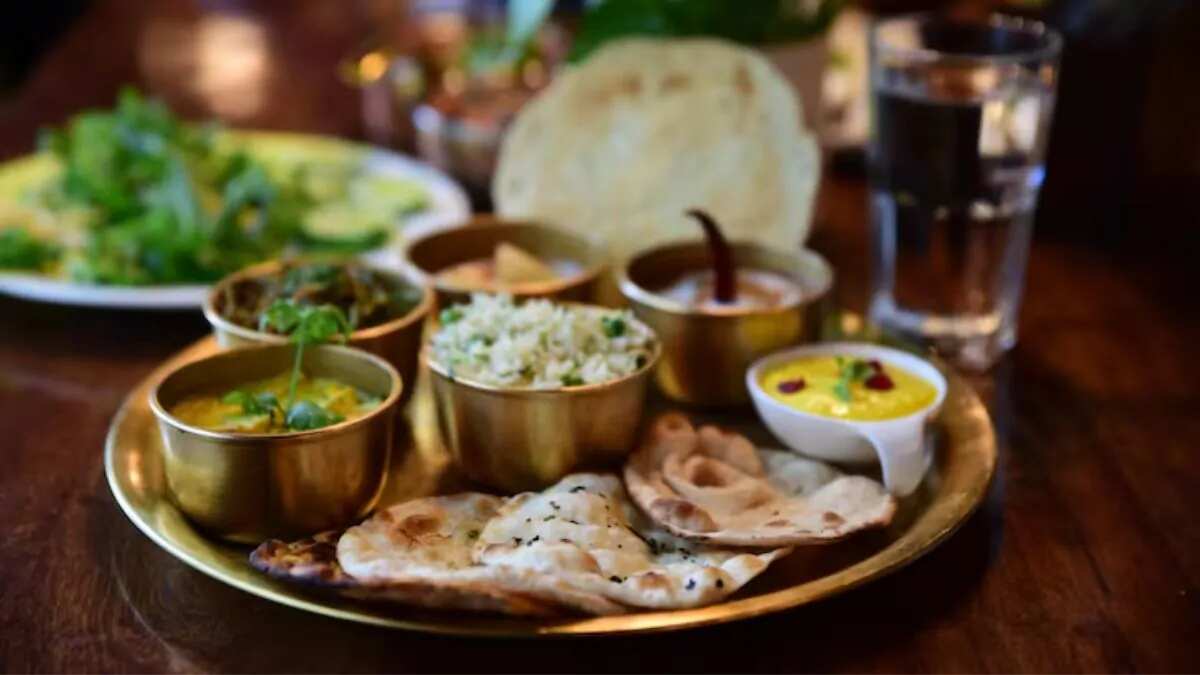
When Paryushan starts, food rules become an essential part of everyday life in many Jain households. This year, the Shwetambar Paryushan will start on September 8 and will come to an end on September 15, 2026. This eight-day festival is a time for fasting, prayer, and self-discipline, with food choices that are shaped by the Jain principle of ahimsa, or avoiding harm to any living beings. Some people observe a complete fast, whereas others follow simpler meals and avoid certain ingredients and cooking processes. However, these practices often vary between Jain families and traditions.
Different Jains follow different levels of fasting and dietary rules, so dietary practices vary significantly across Jain communities and families. What connects these practices is the attempt to reduce harm, attachment and unnecessary indulgence. That is why the food rules of Paryushan go more in-depth than simply saying no to onion, garlic or potato.
Boiled Water Is Preferred
One of the most unique practices during Paryushan is drinking boiled and cooled water, especially for people undertaking tapasya like upvas, ekasana or ayambil. The practice is derived from the Jain concern about minimising harm to any living organisms linked with water.
Boiling is traditionally understood to lessen the life forms that may be present in water, after which it is consumed within the set time. It is essential to keep in mind that this is a religious observance rather than a dietary practice adopted for health reasons. The exact rules about when and how much water may be consumed depend on the type of fast that is being observed.
(Image credit: Freepik)
Root Vegetables Leave The Kitchen
Many Jain communities avoid root vegetables such as potatoes, onions, garlic, carrots and ginger during Paryushan, as Jain ahimsa puts special importance on not uprooting plants. However, practices may differ. According to Jain beliefs, root vegetables are also associated with numerous one-sensed living beings, making their harvest quite difficult.
That is why Paryushan kitchen traditional dishes are modified by replacing restricted ingredients and removing the potato from them. Even regular bases like onion-garlic masala are not used during this time. Rather, ingredients such as grains, pulses and permitted vegetables are used, using basic spices and hing to make flavour without the usual onion-garlic base.
Green Vegetables And Certain Fresh Foods May Be Avoided
The rules can go beyond root vegetables. Some Jain communities or individuals following stricter observances may avoid using green vegetables and, on special observance days, fresh fruits and herbs also. The logic again comes back to ahimsa: leafy vegetables can carry tiny organisms that are hard to see or remove with the naked eye, whereas harvesting fresh plant matter concerns taking life. This is why some Paryushan kitchens lean towards grains, pulses and dried ingredients.
However, this is one area where traditions vary considerably. Some communities follow stricter restrictions only on specific tithis (religious dates), while others observe them throughout Paryushan. It is thus better to fit the family's tradition rather than assume every Jain observes the same list.
Food Is Finished Before Sunset
For many Jains, the kitchen is closed before sunset. This approach is known as chauvihar (complete abstinence from food and often water after sunset). It is linked to avoiding harm to insects or any other small organisms that become more difficult when small organisms may be difficult to see, especially around lamps and the cooking spaces.
It also alters the rhythm of the whole day: dinner is no longer a late-evening meal, but something that is well planned before dusk. Some people may follow more stringent practices in which even water is not consumed after sunset, whereas others have different allowances depending on their pachkhan or beliefs.
(Image credit: Freepik)
Fermented Foods May Also Be Left Out
This is a Paryushan rule that can easily surprise many because it involves foods that otherwise seem quite ordinary. Fermented foods and preparations are avoided because fermentation involves microorganisms getting multiplied in the food. That can mean cutting foods made with naturally fermented batter, yeast or even for the prolonged fermentation. Some practitioners avoid fermented foods such as idli, dosa, dhokla and handvo because of concerns related to microbial growth, as they involve overnight fermentation.
Rather, some observant households make batters or foods fresh within the allowed period, while stricter practitioners avoid them altogether.