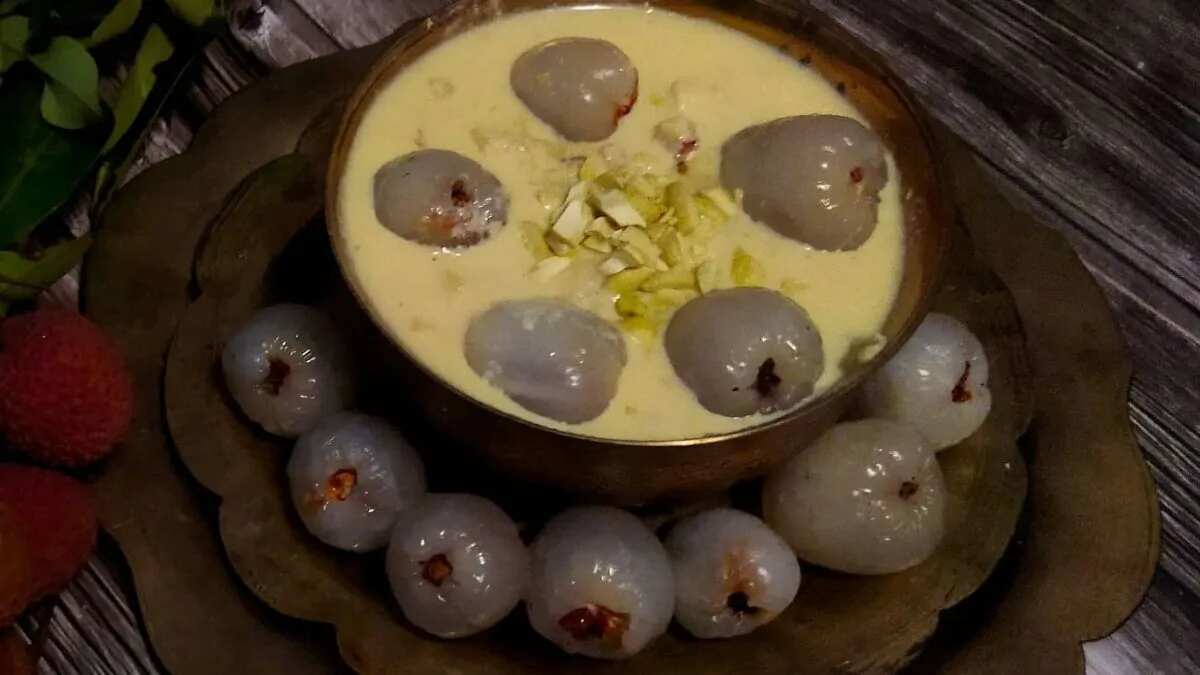
Bengalis love sweets. Every meal or celebration usually ends with one. Payesh is a rice pudding made at home with milk and sugar, or with nolen gur. Seasonal fruits, when available, are added int the payesh. One such version is litchi payesh. Litchi payesh is a mix of old and new. It tastes both familiar and a bit different. Payesh is always served in bronze bowls, shared with family, and offered first to the household gods on birthdays before candles and cakes took over. Many people still associate the flavour with their early years, when mothers would carefully stir milk over a low flame, filling the room with the sound of silent expectation and the scent of caramelising sugar.
Image Credit: Canva
In Bengal, payesh is a big part of birthdays and special days like Annaprashan — the baby’s first rice ceremony. Using litchis in payesh connects the dish to Bengal’s harvest seasons, when litchis are found in plenty. People in areas like Murshidabad and Nadia grew litchis in orchards, and that’s how the fruit became part of this sweet. The simple rice-and-milk dish got a new twist when litchi was added. The fruit pieces give it a light, uneven texture, unlike regular payesh, which is smooth.
Since litchis grow widely in Bengal and Bihar, they are easy to get during the season and are used as an ingredient for a couple of desserts and other dishes. The fruit is sweet and soft, which makes it good for desserts. The idea for litchi payesh comes from Thakurbarir Ranna, the cookbook from Rabindranath Tagore’s family kitchen. The book also explains how to stop milk from curdling when you add litchi, as the fruit can make it sour. It has many special recipes that mix Bengali and Western cooking styles. Rich families, like zamindars and rajbaris, used such recipes to show off their access to rare foods like fruits and nuts. Common families made simpler versions with just rice and milk.
Image Credit: Canva
Bengal’s ever-growing beauty is captured in this creamy, delicately flowery dessert that many kitchens try to make nowadays. Before adding the sweetness of fresh litchis, the rice and milk must boil gently until they are smooth and thick, which requires some patience. Similar to other fruit-based Bengali desserts like kheer kamla and aam doi, it has a distinct flavour all its own. Mango pulp is blended into thick, creamy yoghurt to make aam doi, or mango curd. Kheer kamla, on the other hand, is a delightful winter treat that adds a brilliant citrus burst to each taste by folding juicy orange segments into rich, thickened milk. Usually they used to be served during the summer, but now, with different types of added flavours and preservatives or canned fruits, these desserts are available almost all year round. Litchi payesh is served cold, is a favourite often made for birthdays, anniversaries, and family gatherings when litchis fill the markets. Together, these desserts reflect Bengal’s love for simple ingredients, seasonal fruits, and the quiet joy of sharing sweetness at home.
Image Credit: Canva