Onam is Kerala’s main annual festival, which is celebrated for a span of ten days, with Thiruvonam marking its most significant day. Onam 2026 will start with Atham on August 16, 2026, and will end with Thiruvonam on August 26, 2026. At the core of the celebrations is Onam sadhya, the elaborate vegetarian feast that is served to the family as well as guests paying a visit.
While many recognise sadhya as a meal with lots of dishes, served on a banana leaf, it is something beyond that. Its nature lies in the way everything is set together, like parboiled rice, aviyal, thoran, olan, sambar, pickles, pappadam and a variety of payasams, with every dish served in a sequence.
Amidst all this, even before the first bite is eaten, there is another typical ingredient- the big green banana leaf that is spread before every guest. If you have also ever wondered why the Onam sadhya is served typically on the green banana leaf and not on ordinary plates, scroll down to read.
Why Is Sadhya Served On A Banana Leaf?
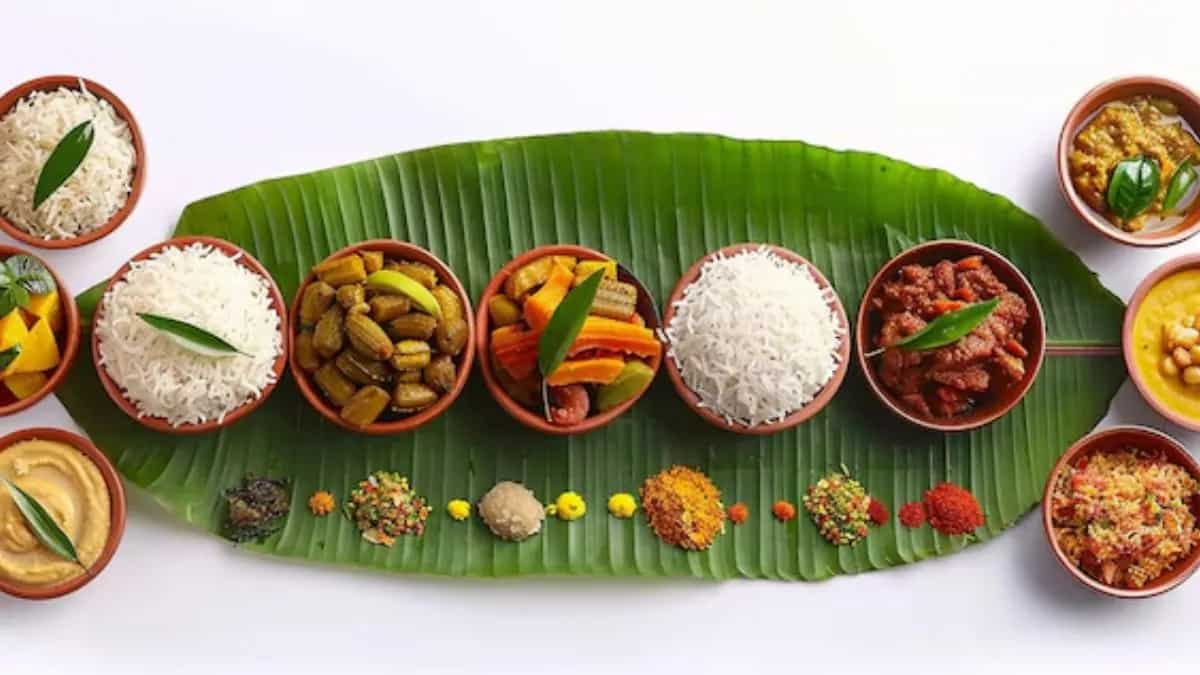
To answer the question, it is easier than tableware; it is also part of the tradition and presentation of the meal. The leaf is traditionally placed with its tapering end pointing towards the left of the guest, while rice is served on the lower portion as it is much closer to the diner.
The broad leaf also turns out to be a natural canvas for the many parts of the feast. Pickles and small complements take the set areas, whereas vegetables, curries and savouries are placed around the leaf before the rice is added.
(Image credit: Freepik)
Its Natural Antibacterial Properties Are Part Of The Appeal
Banana leaves have naturally occurring plant compounds. This is one reason leaves have traditionally been used to cover and serve food in many parts of South and Southeast Asia.
However, that does not mean a banana leaf makes food automatically safe to eat on it. The leaf still needs to be cleaned thoroughly, fresh and properly handled when serving on it.
Why It Makes Sense For A Large Feast
Sadhya is planned around abundance. Rather than serving one large plate full of dishes, diners are served small portions of every dish, having a contrast of salty, sour, spicy, sweet and creamy tastes. A banana leaf gives enough space to arrange these accompaniments neatly without making a pile-up of bowls and plates.
It also makes serving a large crowd much simpler. Once the meal is completed, there is no pile of individual plates left to wash, nor the small serving dishes. The used leaves can only be collected and tossed off for composting or disposal.
A Tradition That Connects Food With Nature
This practice also connects to nature. Banana leaves are easily biodegradable, unlike plastic containers and many other disposable food materials. They can break down naturally and can be turned into organic matter.
For a festival embedded in agriculture, seasonal surplus and gratitude towards nature, using banana leaves is a symbolic connection. The leaf comes from the same landscape that delivers many of the ingredients used in Kerala's traditional cooking.
(Image credit: Freepik)
Why The Banana Leaf Still Matters
The banana leaf stays a part of the sadhya meal not because it has been used for a very long time, but because many things work at once. The leaf perfectly complements the large meal with a variety of dishes and adds a light, earthy aroma to the food. Not only that, but it also reduces reliance on manufactured disposable dishes and links the feast to Kerala's farming traditions.