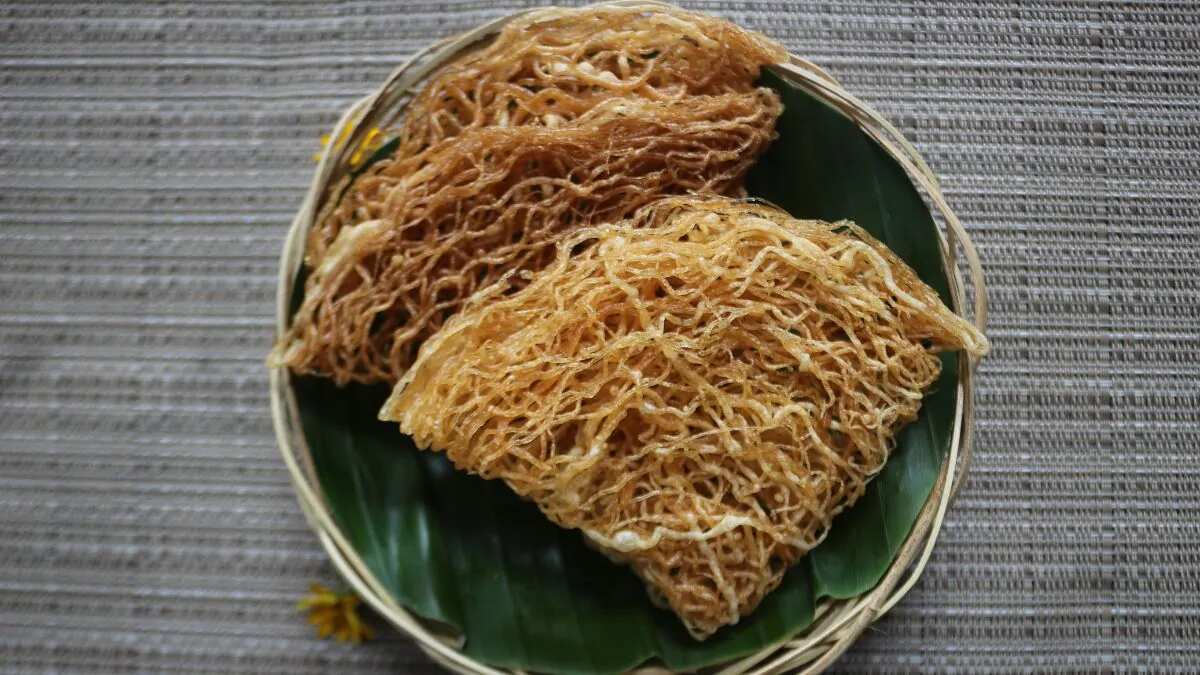
The owner of a 160-year old sweet shop located in Sambalpur, Odisha has been in the endeavour to earn the Geographical Indication (GI) tag as a way to protect the legacy of the sarsatia - a lesser-known sweet made from the resin of the Ganjer tree. Prabhu Lal, the third generation proprietor - also known as Minchu kaka - was quoted saying that the recognition was important due to the limited availability of the delicacy, which he claims is available nowhere but in his shop. The traditional craft associated with making the pitha, involves combining the resin with powdered raw Arua rice and sugar before it is deep-fried into clusters of vermicelli-like strands.
Given harsh environmental destruction due to deforestation, the delicacy has reached a point of extinction in recent years. According to Bhubaneshwar-based researcher and author, Sweta Biswal, “The demand for sarsatia has surged in recent years but the status of Ganjer plants’ availability is unknown. With a GI tag in place , the proper identification and conservation of the plant can be carried out. Plus, more people can be trained in the preparation technique which is almost an art in itself.” A type of pitha or rice cake, the sarsatia is typically relished with some milk or even savoury curries for maximum flavour.
Also Read:
Although not exclusive to Sambalpur, the making of the sarsatia is limited to only a handful of sweet shops in the region; along with being a sought-after snack in Khamgaon as well as Bargarh - where it is offered as prasada at the Ramchandi Mandir during Dusshera. Upon quizzing Biswal about the scope of the sweet treat being preserved for future generations, she believes that, “Survival depends both on the conservation of the Ganjer plant and the visibility of this recipe in the public domain. If the current graph of rising popularity continues, the future generations should not have any problems in accessing and enjoying this unique delicacy.”
As for Lal’s shop, which has been a recipient of multiple awards, the process of conserving the traditional craft and mastering the technique have been passed down through generations. The mildly sweet delicacy starts off by collecting twigs of the Ganjer tree from the Barapahad hill range which are peeled and fermented in water over a few days, before it is dissolved, strained and combined with rice flour and sugar to form a batter that is fried into odd shapes until golden-brown and crisp.