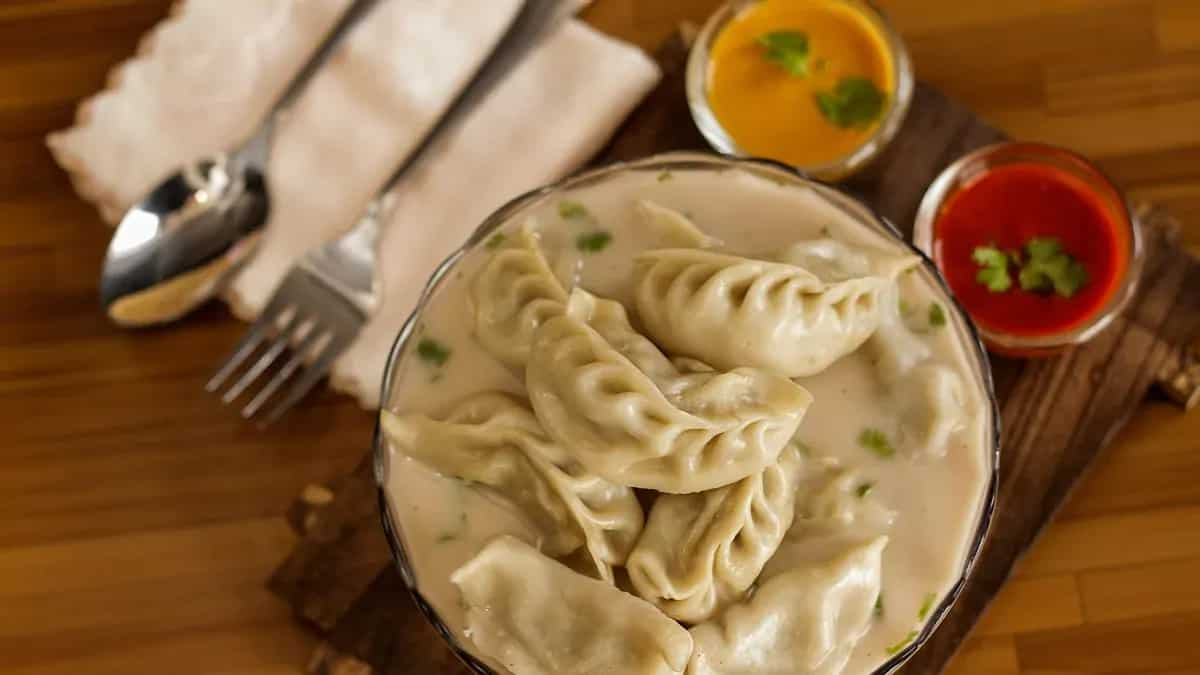
A bowl arrives hot enough to fog your glasses—tomato-red jhol, sesame in the steam, with momos hiding under the surface like smooth river stones. One spoonful, and the menu stops looking like a crossword. Nepalese food in Gurugram (Gurgaon, if you still call it that) doesn’t need guesswork if you order with a simple spine.
Order Nepalese Food In Gurugram Without Guessing
This guide is for first-timers—Gurugram diners, Delhi-NCR explorers, solo-lunch hunters, and small groups—who want to order Nepalese/Nepali food confidently (dine-in or delivery) without learning an entire new vocabulary.
Use this one-sentence framework: order 1 saucy-soup item (jhol momo) + 1 balanced plate (a Nepalese thali) + 1 cooling finish (juju dhau). It’s a clean way to get comfort, variety, and an ending that calms spice—without over-ordering.
What this guide won’t do: no exhaustive restaurant list, no deep culinary history, no “top 25” anything. The goal is 60-second ordering confidence, because NCR menus often share familiar anchors (momos, achar/pickles, chowmein-style noodles) while the labels and heat levels can shift by restaurant.
If you want curated where-to-go ideas without turning this into a list, try Slurrp Food Trails.
Start Here: Jhol Momo
Jhol momo = momos served in a tangy tomato-sesame soup/gravy (the “jhol”). Think dumplings plus a warm, spoonable sauce that tastes brighter than a typical Indian gravy—tomato tang, toasted sesame, and heat that can climb fast if you don’t ask.
How it tastes (so you know what you’re signing up for)
- Tangy, warm: tomato leads, then a sesame finish.
- Texture: the jhol can be thin like soup or thicker like a pourable chutney-gravy.
- Spice: highly variable—two restaurants can serve “jhol momo” at very different heat levels.
How to choose your filling (without overthinking)
- Veg: a safe start if you’re here mainly for the jhol.
- Chicken: a crowd-pleaser, especially if you want it to feel like a meal.
- Buff (water buffalo), if offered and you’re comfortable: confirm once, then move on.
Customise like a regular
Ask these three things and you’ll avoid most first-timer surprises:
- Spice level: “less spicy” / “medium spicy.”
- Consistency: “more soupy jhol” vs “thicker jhol.”
- Sides: “extra achar/dip on the side” (separate is safer if you’re cautious with heat).
Portion cues (no hard numbers): jhol momo can be a solo comfort meal if you’re not ordering a thali, but it’s also a shareable starter when you’re building a bigger table.
Easy pairings (one-line decisions):
- Want a full spread? Jhol momo + thali (momo for fun, thali for balance).
- Want light and snacky? Jhol momo + sel roti (one saucy, one crisp-sweet).
Next Step: Thali Decoding
On Nepalese menus in Gurugram, thali usually means a balanced plate: small portions arranged to make a complete meal, good for beginners because you taste multiple things without committing to one mystery curry.
What typically shows up on a Nepalese thali
Expect some combination of:
- Rice (your base)
- Dal (comfort, body)
- Seasonal veg sides (often sautéed or lightly spiced)
- Greens (a bitter-fresh counterpoint)
- Achar/pickle (the flavour switch—often the hottest bite)
- Sometimes papad or simple salad-style sides depending on the restaurant
How to order thali like a pro (even if you’re brand new)
- Ask what’s included today—thali is often menu-driven.
- If you’re spice-sensitive: ask for achar on the side so you control the heat.
- Confirm veg/non-veg (some places do chicken/non-veg thalis; some don’t).
A single question that does a lot of work:
“What’s included in today’s thali, and what makes the son-in-law thali different from the regular one?”
So what is a ‘son-in-law’ thali?
On NCR menus, “son-in-law thali” is best treated as a house label, not a fixed definition. Many restaurants use it to indicate a more “special” or expanded thali (more items, a richer side, or a non-veg add-on), but what you actually get depends on that kitchen.
Your low-friction move: ask what’s different—extra dish, different protein, or just larger portions—then decide.
Don’t over-order: one rule of thumb
- Solo: choose *thali or jhol momo as your main*.
- Two people: one thali + one jhol momo is usually a smart split.
You may also see names like Thakali or Newari thali on some menus. Same strategy: ask what’s included and how it differs from the regular thali.
If you like learning the components after you’ve tried them, explore Discover recipes.
Don’t Skip Dessert: Juju Dhau
Juju dhau is best understood as a thick, set-style yoghurt dessert—typically sweeter and richer than plain dahi, served chilled. After jhol and achar have done the loud talking, juju dhau is the quiet reset.
Expect a creamy, set texture—more spoonable set yoghurt than loose curd. Sweetness depends on the kitchen: some keep it lightly sweet; others push it closer to dessert.
How to order it without surprises:
- Ask: “Is it plain or sweetened?”
- Confirm portion size if you’re ordering for a group.
- For delivery: request a spoon/cutlery.
Nice-to-have (not a requirement): some places serve it in an earthen cup, which keeps it cool and faintly earthy.
Ordering Scripts For Gurugram
Use these as-is on a call or app note. Confirm availability and what’s included (especially for thali and “son-in-law” labels), because menus vary.
1) Solo lunch (fast, filling, not too spicy)
Hi! One jhol momo (veg/chicken), medium-to-less spicy, and please keep achar on the side.
If possible, pack the jhol separately.
2) Date/night-out (shareable spread + dessert)
We’ll do one jhol momo (medium spice), one thali (please tell us what’s included today), and one juju dhau to share.
Can you bring extra small bowls/plates?
3) Group order (mix veg/non-veg, crowd-pleasers)
For the table: 1 veg jhol momo + 1 chicken jhol momo (one mild, one medium), and 2 thalis (please confirm veg/non-veg and today’s items).
Add 2–3 juju dhau for dessert.
4) Preferences/allergies (egg-free, dairy-light, mild spice)
We need egg-free and mild spice. Please confirm if the momos/jhol contain egg or peanuts.
Keep all achar/sauces separate, and suggest a dairy-light option if available.
Share what you found (and what “son-in-law thali” meant at your spot) in Slurrp Community.
Optional Add-Ons: Sel Roti, Chowmein Plates, And Achar
If you want one extra item—without turning your order into a buffet—pick from these:
- Sel roti: a lightly sweet, ring-shaped fried bread. Add it when you want a snacky side (good with tea) or to round out a lighter momo order.
- Chowmein-style plates: stir-fried noodles—savoury, often spicy—sometimes with veg or chicken. Ordering note: ask the heat level (“mild/medium”).
- Achar/pickles: bright, tangy, sometimes fiery. If you’re unsure: “mild achar, on the side.”
Conclusion: If you only remember one move, make it the three-part order—jhol momo, thali, juju dhau—then adjust spice and sides with one clear question. Start with jhol momo, graduate to thali when you want range, and try juju dhau once so “King of yoghurt” becomes a taste, not a phrase.
Some parts of this article were created with AI assistance.